

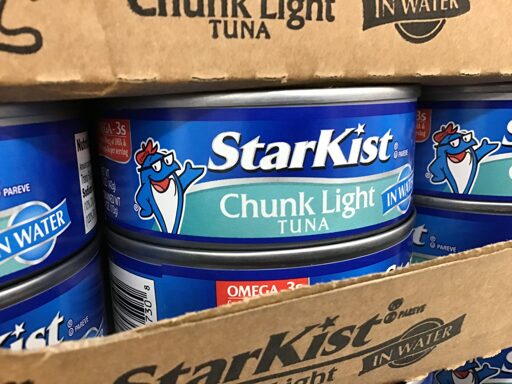
U.S. tuna brand StarKist has announced a halt on purchases from fishing vessels linked to forced labor practices in a recent report. It also says it has hired an outside firm to investigate after an Indonesian migrant fishers’ union demanded a binding labor agreement with the company. In a statement sent to Mongabay on Nov. 10, StarKist said it has “zero tolerance” for forced labor and human rights violations throughout its supply chain. “We take all allegations of labor and human rights violations seriously, including those recently raised by FOSPI and Global Labor Justice (GLJ),” Matthew Hall, StarKist’s head of global sustainability, said in the statement. The statement was issued nearly two months after U.S.-based GLJ published a report as part of a campaign with the Taiwan-based Indonesian migrant fishers’ union, FOSPI-PMFU. The report, “On the Hook: Forced Labor in StarKist’s Supply Chain,” said it found indications of forced labor among Indonesian migrant fishers working on board Taiwanese vessels in StarKist’s Pacific albacore tuna supply chain. Taiwanese fishers unload albacore from a tuna longliner. Image courtesy of NOAA Central Library Historical Fisheries Collection. StarKist, owned by South Korean seafood giant Dongwon Industries, sells Pacific albacore tuna in the United States. The brand accounts for 42% of the U.S. market share of processed tuna imports, “making its sourcing practices significant for the wider industry,” GLJ said. In the StarKist statement, Hall said the company had appointed an independent third-party firm, Key Traceability, to conduct a probe and had opened its internal…This article was originally published on Mongabay
From Conservation news via This RSS Feed.