

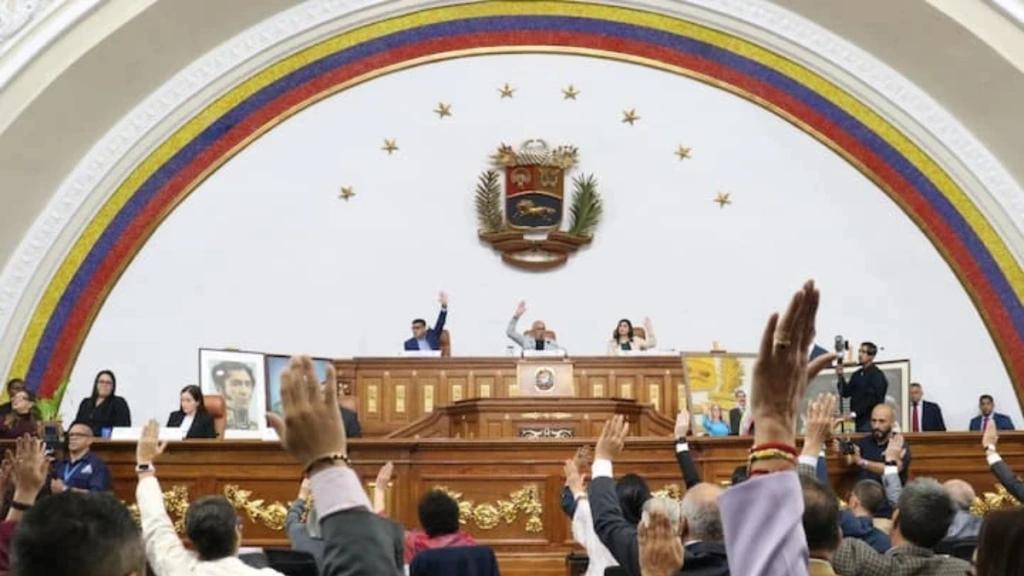
Venezuela’s National Assembly approved on Tuesday in second discussion a partial reform of the Organic Law of the Power Grid and Energy Service, aimed at modernizing infrastructure, optimizing service nationwide, and allowing private sector participation, according to NA President Jorge Rodríguez, who clarified the law does not promote privatization but rather an opening for private generation and self-generation.
The legislation, given final approval after committee modifications, updates oversight mechanisms, promotes efficient energy use, and strengthens distribution and generation networks. Concessions will be granted by the Ministry of Electric Energy for generation exceeding 50 megawatts, or when involving public domain assets, trunk transmission systems, exclusive service areas, or integrated regional systems. Once a concession ends, the operator must transfer all assets free of liens to the state-owned Corpoelec or its designee.
RELATED: PDVSA and ExxonMobil Sign Venezuela Oil Memorandum
The law creates a special Superintendency to oversee service provision, tariffs, self-generation, and network protection, and establishes a sanctions regime with fines up to 2% of previous-year gross income for non-compliance. Prison sentences of two to five years are set for equipment theft, and two to six years for electricity theft for profit through unauthorized connections exceeding 5,000 kWh per month.
Rodríguez said the main goal is to increase energy supply for large consumers, industries, and shopping centers in exchange for an established tariff. The law requires oil companies to guarantee continuous, reliable energy for their primary activities through self-generation, cogeneration, or third-party contracts, without needing state authorization for internal networks unless connected to the national power grid.
From teleSUR English via This RSS Feed.