

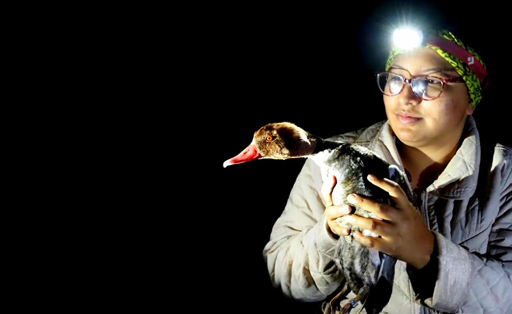
For more than a decade, Kazi Zenifar Azmiri has played a crucial part in protecting wildlife in Bangladesh. Zenifar is a program associate at the International Union for Conservation of Nature (IUCN). Her work centers primarily on the rescue and rehabilitation of threatened vultures like the white-rumped vulture (Gyps bengalensis) and Himalayan griffon vulture (Gyps himalayensis). Bangladesh’s vulture populations have declined steeply over the years, largely because of exposure to veterinary painkillers that are toxic to the birds when they feed on the carcasses of treated cattle. Today, however, populations have shown signs of stabilization, aided by conservation efforts such as the establishment of vulture safe zones and a ban on drugs that can kill vultures feeding on the animals’ carcasses. Zenifar’s work involves tracking migratory birds, fitting them with identification rings and satellite tags that reveal their journeys. The collected data help researchers understand what threats the birds face. She also helps conserve ducks, dolphins, crocodiles and turtles across Bangladesh. From wetlands where these migratory birds gather to river systems and coastal areas that sustain these dolphins and crocodiles, she is often found doing fieldwork in remote corners of the country. On many of her trips, she says, she is the only woman in the group. In the local communities she works alongside, she has sometimes encountered attitudes that question her presence in the field. “I remember this fisherman we were working with locally,” she recalls. As they walked to meet a family she needed to interview, he asked…This article was originally published on Mongabay
From Conservation news via This RSS Feed.