

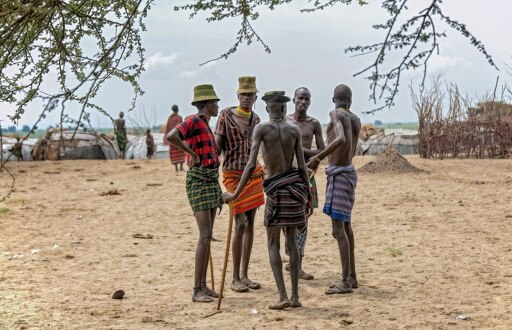
The Daasanach people in the Turkana Basin of northern Kenya experienced the worst drought in 40 years between November 2020 and March 2023. The Daasanach are pastoralists who have lived semi-nomadically for roughly 6,000 years, supported by herds of livestock including cows, camels, donkeys, and goats. A group of researchers worked with the Daasanach to study the effects of the drought on their culture and access to food. They examined water and food access as well as coping and dietary strategies for 515 adults and 384 children in communities around Lake Turkana in Kenya. During the drought, livestock herds dropped precipitously, with little recovery by 2024. Prior to the drought in 2019, each household had an average of 24 sheep and goats; by 2022 and 2023, they had just eight on average. Similarly, before the drought, the average family had six cows, and during the drought, just two. Such livestock are central to the economy and food security of the Daasanach pastoralists. With fewer animals to feed themselves, many Daasanach families moved to the town of Illeret during the drought to be closer to food aid. As the drought progressed, nutrition worsened for the Daasanach amid a drop in milk and meat consumption. Researchers found that children who had access to milk had significantly better nutrition over time compared to children without access to milk. The study also found an increase in water insecurity during the drought, compounding food insecurity challenges. “The lived experience of Daasanach is important to understand…This article was originally published on Mongabay
From Conservation news via This RSS Feed.