

By: , Lucy Dean Stockton, Court Fuller, Trevor Hayes
Who or what was the biggest loser in the midterms? Data centers.
Of the 47 data center moratoriums on ballots across America — all but one passed, with eight still being counted. And candidates that backed national or statewide data center moratoriums won at all levels of government.
In those ten states that considered ballot measures, those measures passed with overwhelming majorities and massive margins, reflecting the public’s widespread data center backlash and growing sentiment against Big Tech.
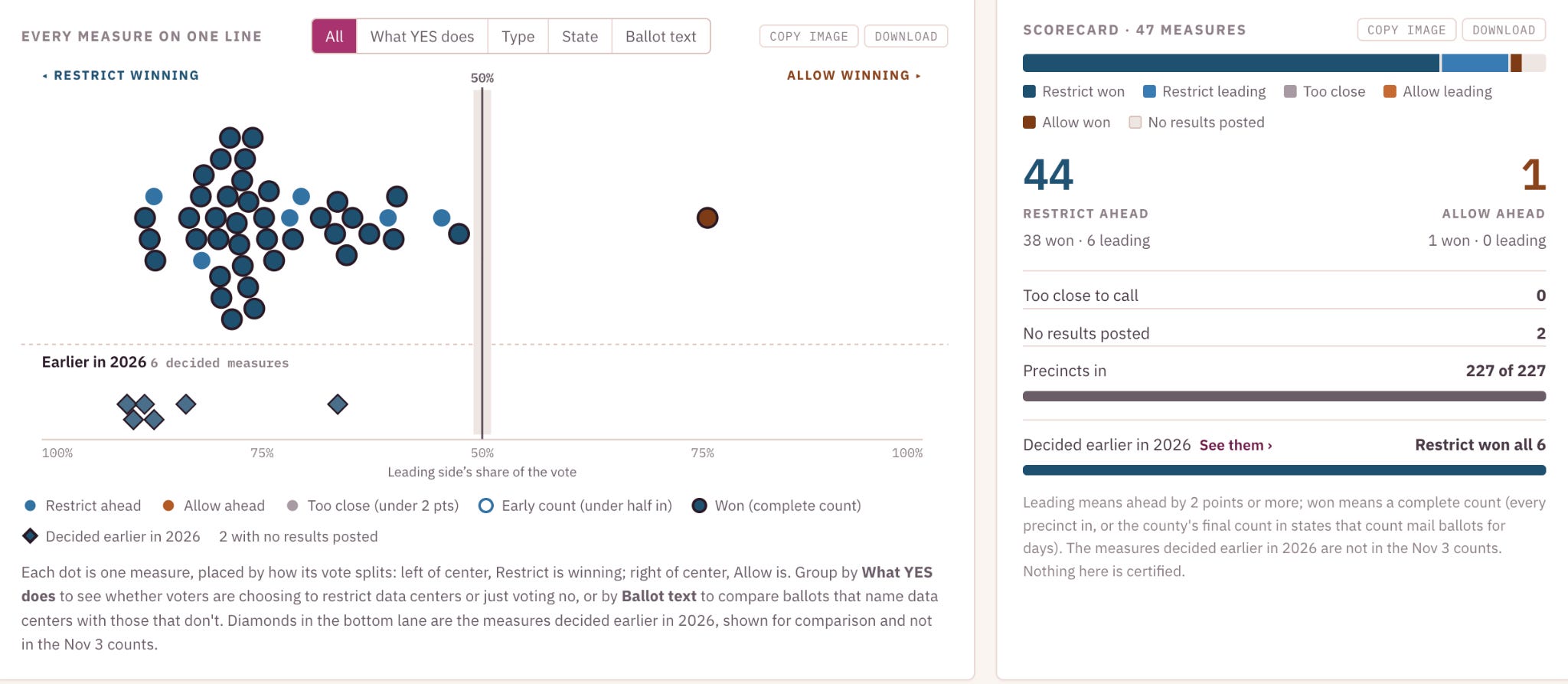
Across all 265,967 votes cast on local moratoriums, 77 percent of voters agreed on restricting data center development in some capacity. Ohio voted on 21 ballot measures to restrict data centers, and most of them passed with an overwhelming majority. 44 of 47 measures across the country passed.
Data centers are unpopular across the country. 70 percent of Americans disapprove of data centers, according to a March Gallup poll, with 72 percent of respondents citing environmental or quality-of-life concerns. Data center contentions became an animating issue for voters frustrated with Big Tech, political abandonment, and higher electricity rates.
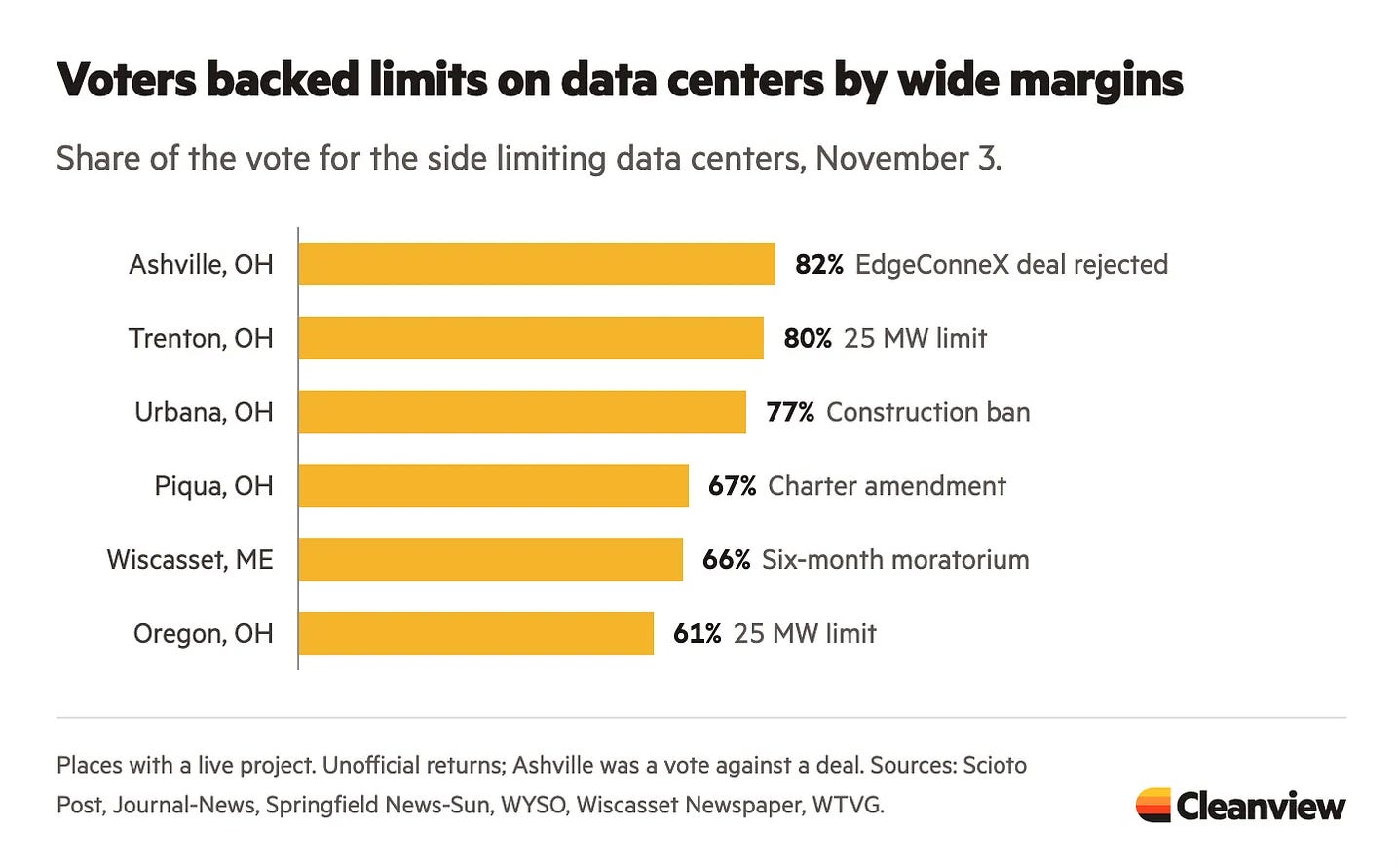
Across Ohio, many regions implemented a 25-megawatt limit, enough to continuously power around 18,000 homes.
But the biggest shock comes from the candidates who capitalized on the data center backlash — winning highly competitive races and generating stunning upsets.
An analysis by More Perfect Union found that out of at least 47 Congressional candidates who ran on federal-level data center moratoriums and won, 17 flipped their seat blue. Six pro-moratorium governors also won big,fourof whom flipped their seat from Republican to Democrat — posing an incoming threat to the 41 percent of America’s data centers awaiting construction.
Here are some of the midterm’s biggest (data center) losers.
TEXAS
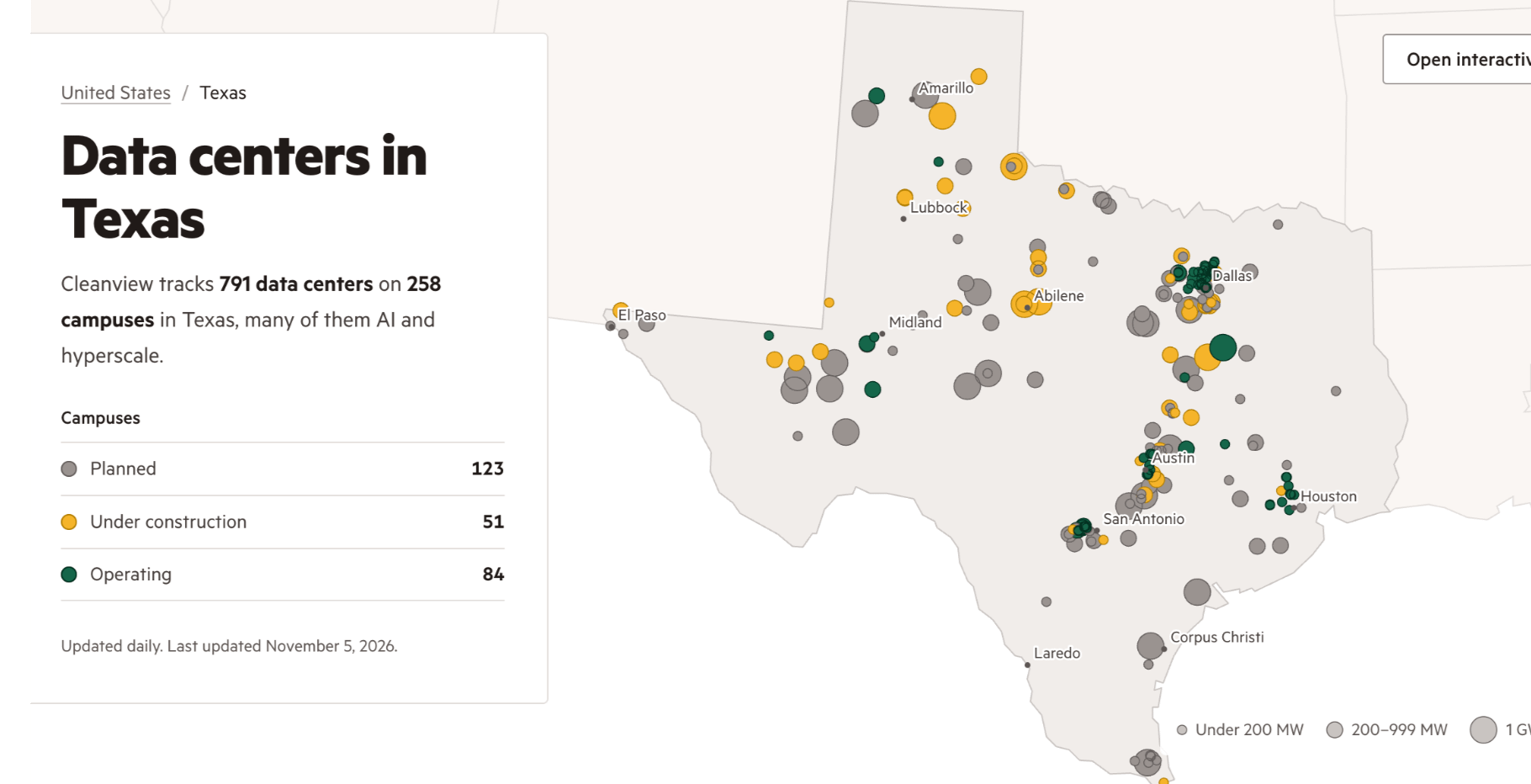
SOURCE: Cleanview
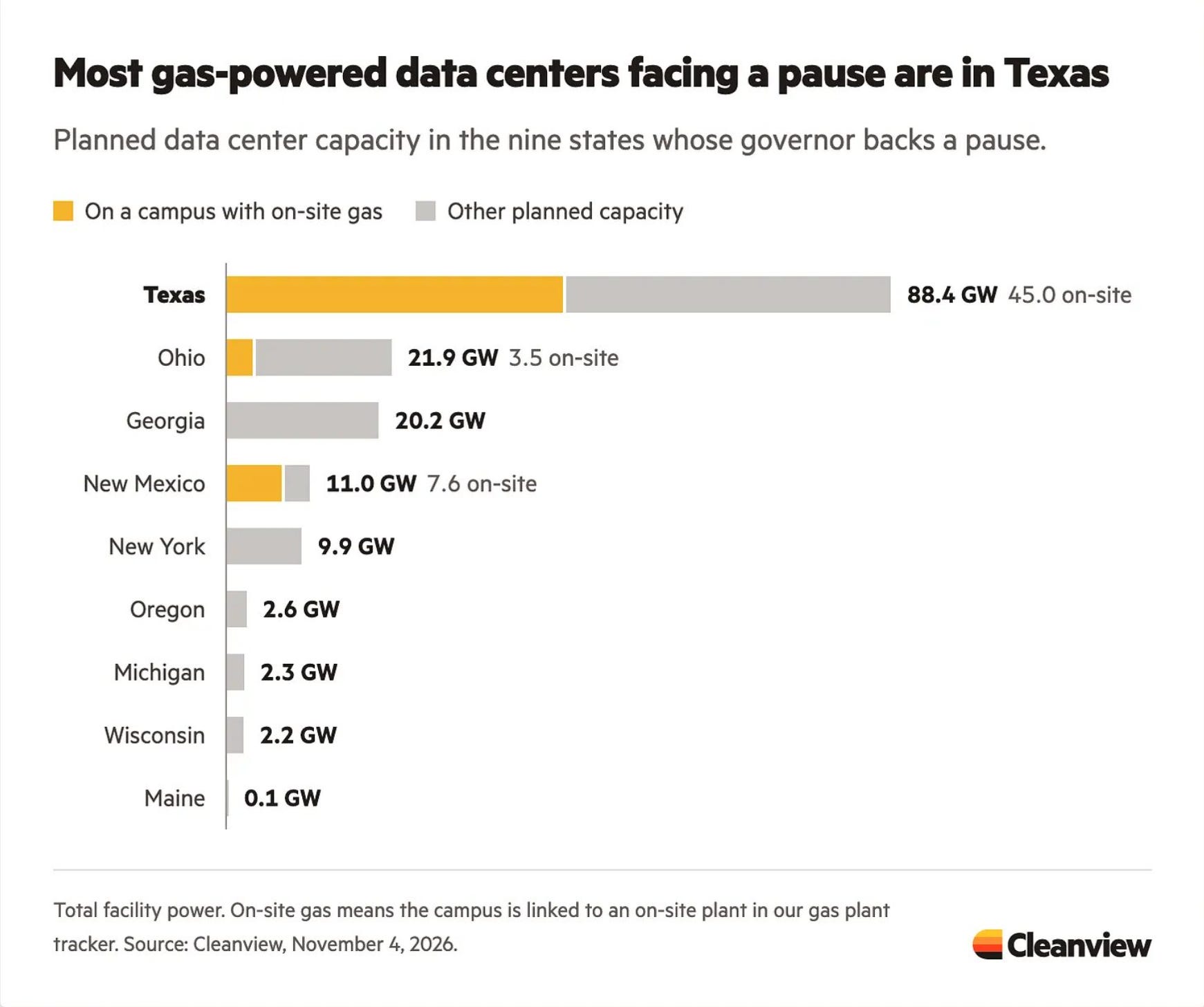
The Lone Star state hadn’t elected a Democratic governor in 31 years until State Rep. Gina Hinojosa (D), a vocal data center critic, ousted Gov. Greg Abbott ®. Hinojosa promised voters an immediate statewide moratorium on new data center approvals and construction. Also backing the anti-data center sentiment is Sen.-Elect James Talarico (D), who advocated for tighter data center restrictions.
Texas is home to more than 400 data centers and, as of this August, the state surpassed Virginia in data center growth. The industry has strained the grid, and Gov. Abbott paused all new data center connections to the power grid while it undergoes an energy audit — after incentivizing them to move to the state. Data centers already consume 8 percent of the state’s power.
The latest Democratic sweep could further stymie data center developers, including Texas politicians’ biggest individual donor and the country’s largest individual midterm donor, trillionaire tech mogul Elon Musk.
The morning after the midterm elections, Musk-owned SpaceX and Tesla stocks fell 4 and 5 percent, respectively, both of which are headquartered in Texas. As the biggest midterm spender, Elon Musk invested $224 million in Texas elections, though both of his preferred candidates lost.
In 2021, Musk fled from California to Texas to avoid the state’s regulatory policies. He built up his Starbase program, introduced a massive Starlink manufacturing facility, and encouraged California-based SpaceX employees to move to Texas. He also announced a 100-million-square-foot chip manufacturing space for his new company Terafab in Grimes County, Texas.
Musk’s xAI data centers in Memphis are still the largest complexes in the country and are actively poisoning lower-income, majority-Black communities without oversight.
After his massive loss, Musk is eyeing a new frontier for data centers:
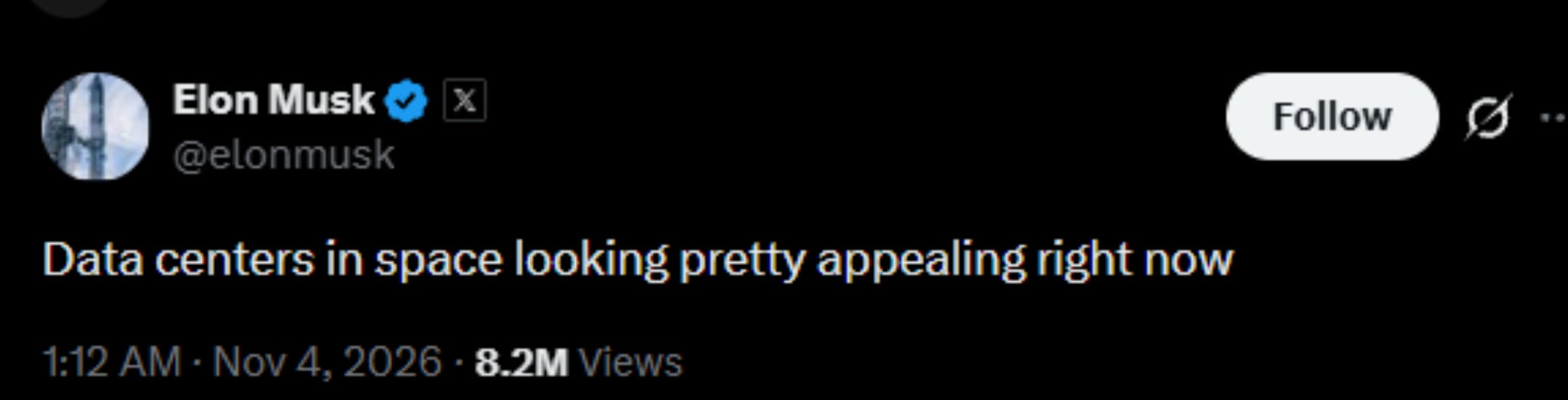
As election results began rolling in, Elon Musk posted on his social media platform about building data centers in space.
OHIO
Over in Ohio, working-class advocate and former Sen. Sherrod Brown (D) reclaimed his Senate seat and ousted Sen. Jon Husted ®, flipping that seat back to blue. Brown called for a data center moratorium and used political ads to criticize Husted for facilitating the construction of the state’s 226 data centers.
Across central Ohio, towns like Ashville, Grove City, Granville, Pataskala, and Sunbury all passed resolutions on large-scale data centers.
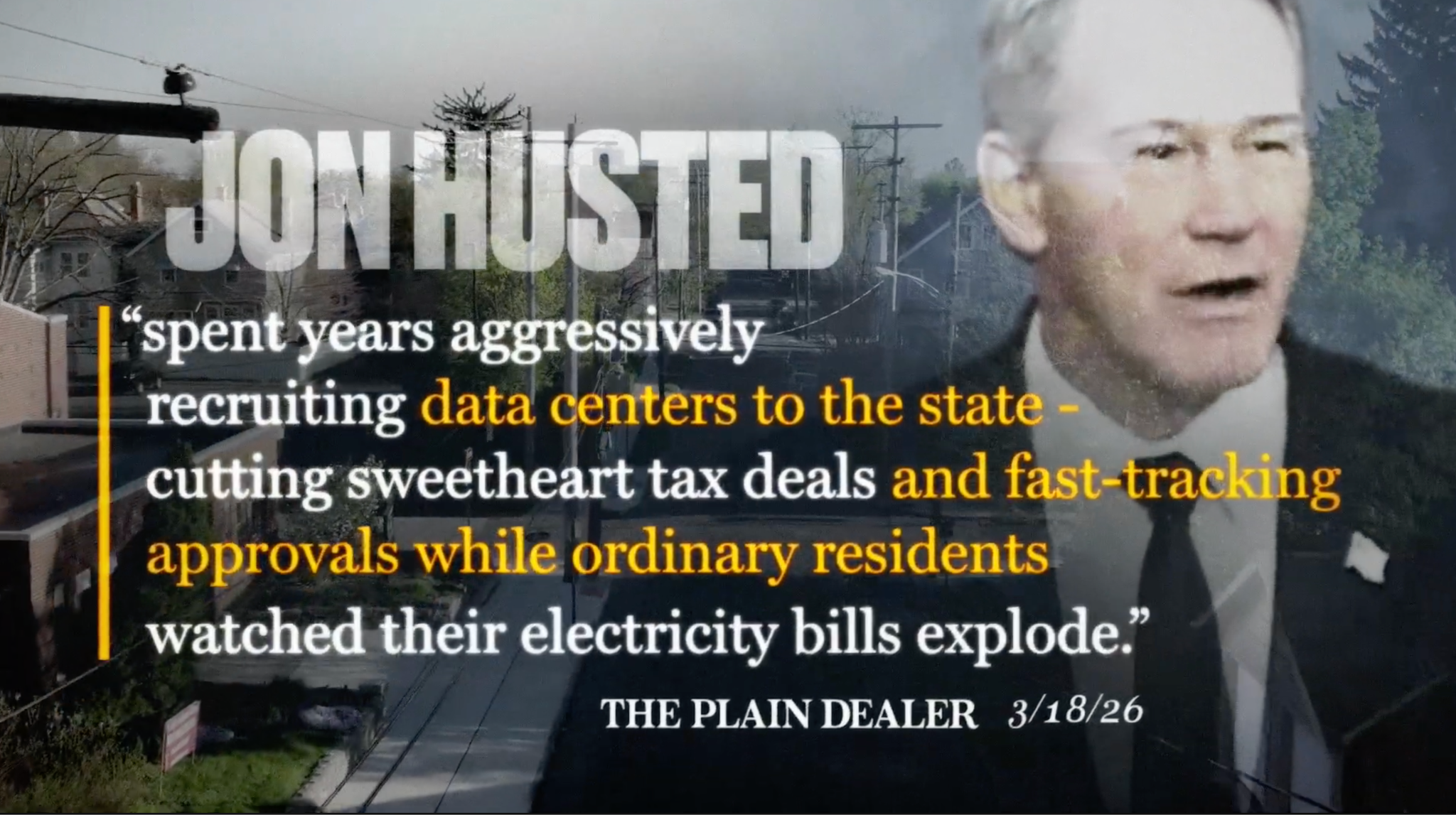
Since 2019, data center developers have flocked to Ohio during Husted’s tenure as Lieutenant Governor under Gov. Mike DeWine’s administration. He greenlit more than $2.5 billion in tax exemptions for developers to build in Ohio — exemptions that the Ohio Chamber of Commerce said placed the state “among the top-tier U.S. data center markets.”
Husted also voted for Trump’s One Big Beautiful Bill Act last year, the same megabill that allowed for federal tax provisions for large capital investments like data centers to move in on rural land. Ohio has the fifth-highest concentration of data centers in the nation.
The average Ohio energy bill rose 34 percent between 2022 and 2026, and the state’s largest power utilities company, AEP Ohio, contracted out more power to data centers than it ever had before. One research firm estimates that data centers could add $16 billion to Ohio’s energy costs by 2034.
Musk donated another nearly $7 million to support Husted, making the Senate race the most expensive in the state’s history.
MICHIGAN
Another surprising red-to-blue flip came from Michigan’s 7th congressional district as Sunrise Movement co-founder Will Lawrence (D) unseated Rep. Tom Barrett ®. Lawrence ran on Americans’ growing frustration with Big Tech and data center expansion — an electricity burden that raised residential utility costs by 35 percent since the state’s first data center touched down, 17 percent higher than the national average.
Plant Detroit estimates that a one-gigawatt data center, which uses twice the energy of the city of Pittsburgh, Pennsylvania, used in 2025, could raise prices for ratepayers by 5 to 10 percent without regulatory protections.
Musk was another major spender in Michigan, investing more than $1 million through his PAC to oppose Sen.-elect Abdul El-Sayed (D), who said he’d support a local moratorium and wants to see federal regulation to manage Big Tech.
Lawrence plans to implement a moratorium on new data centers, enact regulations to protect residents and the environment, and create a national program to help those whose jobs were eliminated by AI advancements.
–
In 2024, Big Tech spent $61.5 million on pro-tech lobbying efforts. Trump used his second term in office to enable an explosive expansion of data centers around the country. AI and data centers subsequently became a decisive midterm issue. Voters signaled to Democrats that reining in industry power and standing with the working class is one of the most popular — and successful — stances to take. The AI oligarchs are already taking note and have made a massive pivot before the polls closed.
The data center victories in midterms reflect a massive civilian pushback against the AI takeover.

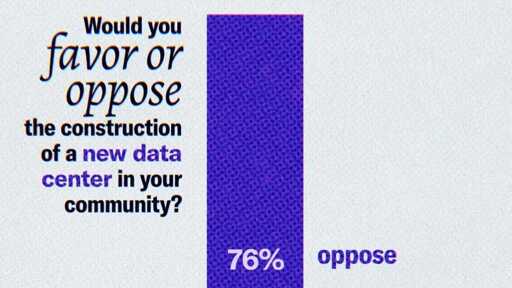
In a post-midterm exit poll, 67 percent of respondents said they believe AI will hurt society, and 76 percent opposed new data center projects in their community. Another exit poll saw 56 percent of voters citing AI as a “crucial or major” factor in their vote.
After their unsuccessful midterm season, Big Tech and the GOP are now scrambling to regain constituents’ support and fortify the AI industry. Democrats and progressive candidates built their campaigns against unchecked data centers, and voters listened.
From More Perfect Union via This RSS Feed.