

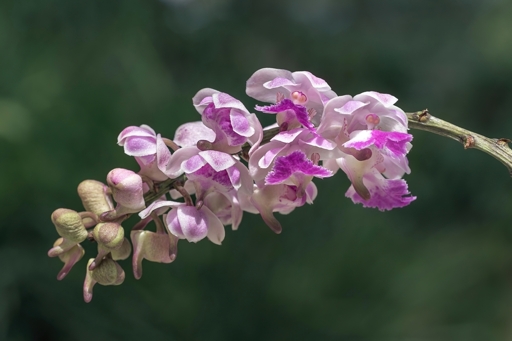
An emergency effort to rescue tens of thousands of orchids from being razed for a road-building projects in southern India has been hailed a success in a recent study. Many species of orchids are classified as epiphytes, which means they grow on trees, using them as physical support frames. When these host trees are killed, the orchids can die along with them. Researchers in the state of Kerala collected more than 27,000 such orchids from trees that had either been felled or were scheduled to be cut down for road development. The rescued orchids were then planted on trees in two public wetlands and a beach. About two years later, nearly three-quarters of those orchids were still alive, researchers found. Among the rescues were 12 orchid species endemic to the region. Eleven of those 12 aren’t even listed on the IUCN Red List, meaning their conservation status isn’t known. “There is a kind of silent extinction going on with some of these orchids,” Viswambharan Sarasan, study co-author and an expert in orchid conservation at the Royal Botanic Gardens, Kew, in the U.K., told Mongabay in a video call. “We don’t know how many of these orchids are being lost to road-building program over the last 15-20 years.” Kerala is an orchid hotspot, with 271 known species. Many grow on trees in forests, roadsides, and tea and coffee plantations in the biodiverse Western Ghats mountain range. Sarasan and his colleagues planted the 27,324 rescued orchids in three public areas: Kappad Beach;…This article was originally published on Mongabay
From Conservation news via This RSS Feed.