

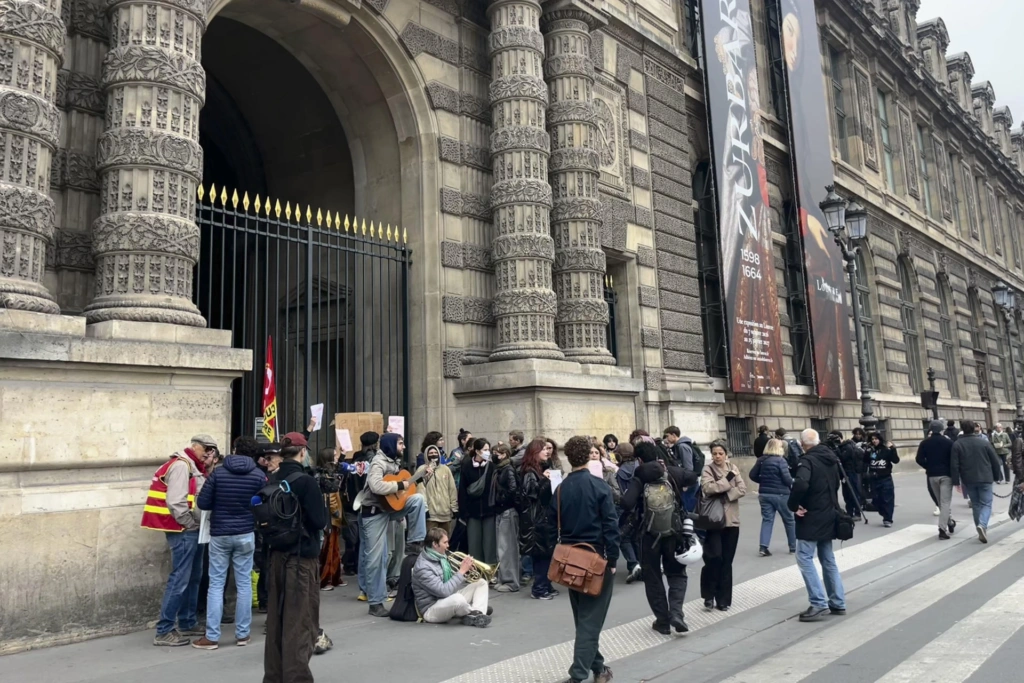
High school students blocked the entrances of at least 30 swchools across France on Monday, demanding better teaching conditions, resources and infrastructure for public education amid a deepening cost of living crisis.
The coordinated action affected nearly 0.8% of the country’s 3,700 secondary schools, according to the Ministry of National Education. Access was blocked at the start of the school day, while officials insisted that classes continued normally in the great majority of departments.
RELATED: France: Unions Call for a National Strike Over Wage Measures
Students are demanding substantial improvements in teaching and learning conditions, as well as in the infrastructure and resources of public education. The blockades open a new front in a protest wave that has kept French streets in turmoil since September 18, when the first demonstrations broke out in the suburbs of Paris.
What began as grievances over education has since merged with broader anger over steadily rising prices and the cost of living, a combination that amplifies the discontent. The mobilization now brings together tens of thousands of young people and questions the domestic policies of the French government.
The unrest reflects a double crisis. Schools complain of inadequate staff and resources, while households struggle with inflation that has pushed up fuel and everyday prices. That mix has drawn students, workers and activists into the same streets.
The scale of that anger was visible on Saturday, November 7. The government counted about 170,000 marchers nationwide, including 60,000 in the capital, while youth unions put the national figure at 250,000. Between the two counts lies a gap of 80,000 protesters.
BREAKING:
The student riots continue this morning in France.
Riot police can be seen advancing through a cloud of pepper spray toward young rioters in Paris pic.twitter.com/pmumEbI3w5
— Visegrád 24 (@visegrad24) November 9, 2026
Police Repression Mounts
The weekend marches ended in harsh police action. The executive deployed 70,000 police officers and gendarmes across the country, and officers moved with force against crowds at Place de la Nation in Paris and in cities such as Bordeaux, Brest and Lyon, leaving scores detained, beaten and injured in the street.
The charges and the use of riot equipment came at the close of demonstrations called by the General Confederation of Labour (CGT), student unions and yellow vest collectives. They are protesting the high cost of living, rising fuel prices, austerity budgets and the economic policies of President Emmanuel Macron.
More than 4,914 people have been detained, according to a recent report by the justice minister, and 329 of them, presented as 70%, are already facing criminal proceedings that carry prison sentences.
Protests that started over education have long since spilled beyond the classroom. Union members, activists and yellow vest supporters now march side by side, and at times the demonstrations have turned violent under the pressure of the police. The progressive escalation has turned a student movement into a broader social conflict.
Students argue that public schools lack adequate staff, supplies and upkeep. Monday’s blockades are the clearest signal yet that the education demands remain unanswered after weeks of street pressure.
The mobilization keeps spreading across French territory, and no new round of negotiations has been announced. With unions and students both pledging to keep up the pressure, the coming days will test whether the government offers any response to grievances that have now reached the school gates.
🔴 BREAKING: Students and teachers in France have called for another strike amidst continued unrest in the country’s education sector. pic.twitter.com/kkki12MWiR
— Al Arabiya English (@AlArabiya_Eng) November 7, 2026
From teleSUR English via This RSS Feed.