

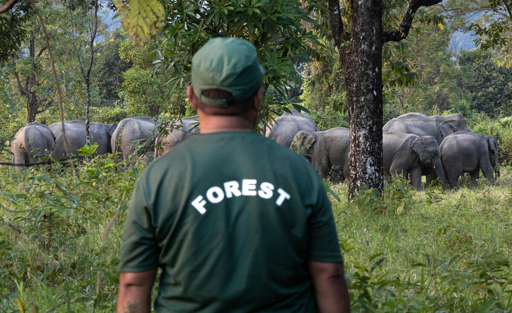
At the COP17 biodiversity summit in Yerevan, Armenia, conservation leaders from around the world gathered to conduct the first global review of progress toward the ambitious goals adopted in 2022 under the Kunming-Montreal Global Biodiversity Framework (KMGBF). Among them is Target 3, a commitment to effectively and equitably conserving 30% of the planet’s land and waters by 2030 (30×30). But achieving a shift in land and sea management on this scale will depend on something in conservation policy that has too often been overlooked: a large portion of the people responsible for actually making it happen — rangers. For years, the world has debated how much land to protect and how much money to invest in nature, while paying far less attention to the workforce needed to turn those commitments into results. Rangers play a central role in managing protected and conserved areas and delivering commitments on biodiversity, climate, and land degradation. Yet our latest research shows they remain largely absent from the policies and frameworks meant to guide this work. Why rangers matter Effective conservation requires people on the ground who can monitor ecosystems, manage protected and conserved areas, and ensure that rules governing their use are upheld. The International Ranger Federation defines a ranger as any person, regardless of title — wildlife warden, forest guard, game scout, marine ranger, park guard, and others — working in situ to safeguard nature and preserve cultural and historical heritage. Rangers work under many different governance systems and are not limited to government…This article was originally published on Mongabay
From Conservation news via This RSS Feed.
Rangers show all be rewilders.
