

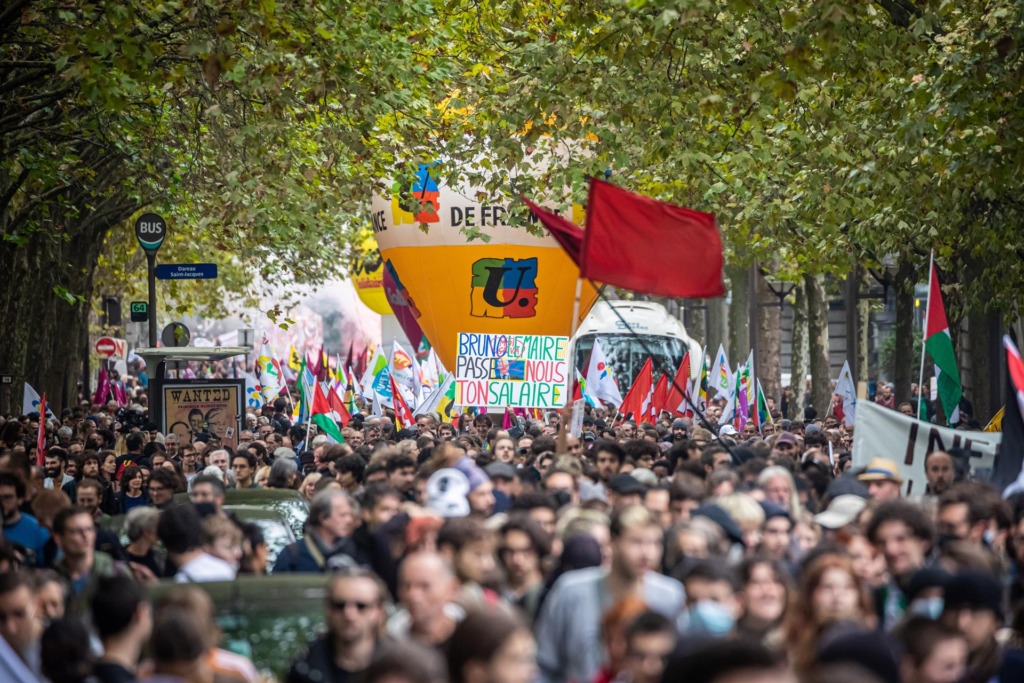
Sophie Binet, General Secretary of the French General Confederation of Labour (CGT), has called for a new national day of strikes and marches on November 17, deeming the government’s proposals insufficient.
RELATED:
France Protest Crackdown: 70,000 Police Face 4th Wave of Unrest
Following a meeting between the executive branch, labor unions, and employer representatives, Binet urged workers, retirees, and young people to halt activities. She also expressed support for student mobilizations and demanded concrete responses to their grievances.
The call to action follows an announcement by French official Sébastien Lecornu that the scheduled increase in the minimum wage (Smic) would be brought forward from January to December. Minister of Labour Jean-Pierre Farandou specified a 1.6% increase, bringing the monthly net minimum wage to 1,502 euros—an increase of 24 euros over the current level, which had remained unchanged since June.
However, union leadership rejected the measure. Binet dismissed the increase as “crumbs” and “charity,” arguing that the actual gain would amount to a mere five euros—roughly the price of a kilo of tomatoes. Marylise Léon, General Secretary of the French Democratic Confederation of Labour (CFDT), also described the hike as “insufficient” and demanded that wage negotiations be accelerated over the next two weeks to ensure that no minimum pay scale falls below the Smic.
More than 1,700 cost-of-living protests have taken place in 31 European countries since mid-September, with France leading the way.
Al Jazeera maps where these demonstrations, including riots, have taken place https://t.co/84UJ6pPl9r pic.twitter.com/e53KEQvQ6c
— Al Jazeera English (@AJEnglish) November 9, 2026
The CGT leader highlighted the issue of structural precariousness, noting that 122 out of 260 professional sectors maintain minimum pay scales below the *Smic*—a situation that is illegal. Furthermore, she pointed out that 850,000 public sector employees earn less than the minimum wage, having seen the value of their pay drop by 20% due to a decade-long freeze on the public sector salary index. Binet criticized the fact that sanctions against non-compliant companies would not take effect until 2028.
Public discontent is also directed at the 2027 draft budget, which could drastically reduce household income. According to the union leader, the austerity measures include an average reduction of 250 euros in pensions, 600 euros in civil servant salaries, 150 euros in family benefits, and 110 euros in housing assistance—in addition to cuts of 100 euros to health insurance schemes and 200 euros to vocational training. Meanwhile, the government is preparing new tax exemptions for overtime work, which benefit employers while draining resources from social protection.
This tense atmosphere is part of a wave of protests that began over a lack of funding for education and escalated into the unrest seen on October 17 in major cities. The loss of purchasing power—exacerbated by high fuel prices linked to the war in the Middle East—is the primary concern among the public. This is unfolding against a political backdrop dominated by the upcoming April and May elections to choose a successor to Emmanuel Macron, with far-right candidate Marine Le Pen currently leading in the polls.
#FromTheSouth News Bits | The iconic Eiffel Tower in Paris has closed to the public as a nationwide general strike paralyzes key economic sectors across France. pic.twitter.com/AdYgWFA6ET
— teleSUR English (@telesurenglish) November 9, 2026
From teleSUR English via This RSS Feed.