

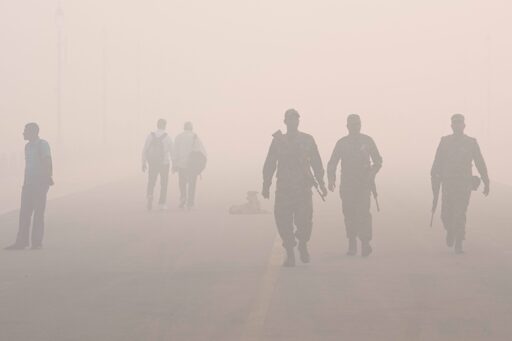
NEW DELHI (AP) — A thick blanket of smog shrouded India’s capital Monday after firecrackers lit up the skies over New Delhi during Diwali celebrations, compounding dangerously high pollution levels and intensifying the seasonal air pollution crisis that grips the city every year. Despite restrictions on fireworks, residents in New Delhi celebrated the Hindu festival of lights with firecrackers on Sunday evening, releasing smoke and fine particulate matter into the atmosphere. The air quality index exceeded 350 in several parts of the capital on Monday morning, reaching the severe category and posing significant health risks. Monitoring stations across the city recorded similarly alarming levels, while visibility deteriorated as a gray haze blanketed streets and high-rise buildings. India’s Supreme Court in October had sought to limit Diwali pollution by restricting conventional firecrackers and allowing only approved “green firecrackers” under specified conditions for three-hour windows on Saturday and Sunday. The crackers produce fewer emissions but are not pollution-free. They still release particulate matter and other pollutants, adding to the city’s already hazardous air. Isyad, a New Delhi resident who uses one name, said the worsening smog was taking a toll on his health. “Because of the pollution there is irritation in the throat and itching in the eyes,” he said. New Delhi and its metropolitan region, home to more than 30 million people, regularly rank among the world’s most polluted areas during winter. Pollution worsens as Diwali fireworks coincide with cooler weather and smoke from crop-residue fires in neighboring states of Punjab…This article was originally published on Mongabay
From Conservation news via This RSS Feed.