

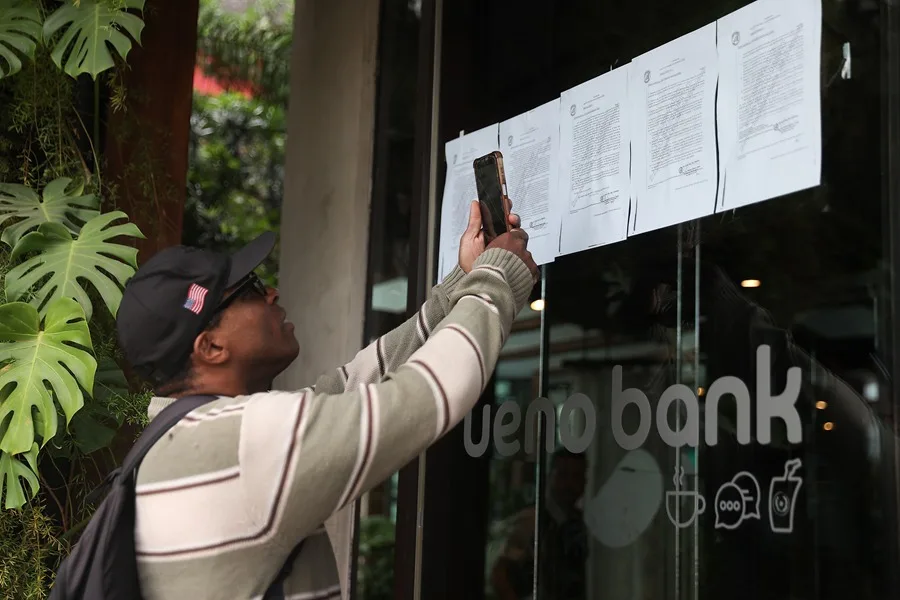
Educators are demanding the recovery of $60 million in public pension funds frozen at Ueno Bank amid a banking crisis that led to President Santiago Peña’s removal.
Paraguayan teachers will stage nationwide protests Monday demanding the recovery of millions of dollars in pension funds frozen at Ueno Bank, whose financial collapse triggered a political crisis that culminated in the removal of President Santiago Peña and the inauguration of Pedro Alliana.
The Federation of Paraguayan Educators (FEP) is demanding the full return of $60 million deposited in the public pension system, known locally as the fiscal pension fund, warning that the money remains frozen at the bank.
The union is also calling for the recovery of approximately $355 million invested by the Social Security Institute (IPS), which manages pensions and health services for most Paraguayan workers, as well as funds held by other pension institutions affected by the bank’s collapse.
The demonstrations will take place in Asunción and major cities across Paraguay’s 17 departments, according to the federation.
Teachers are also demanding an 8% salary increase and greater funding for education in the 2027 budget. In September, Peña’s government reached an agreement with a group of teachers guaranteeing a 5% pay increase, ending a two-day strike organized by four education unions.
Public-sector teachers will protest this Monday to demand the return of millions in pension fund money deposited at Ueno Bank, which was placed under receivership due to a corruption scandal. It will be the first protest faced by President Pedro Alliana, who took office on Friday… pic.twitter.com/gurCTBiNi1
— teleSUR English (@telesurenglish) November 8, 2026
The Monday protests will also be supported by the National Union of Educators, the Education Workers’ Organization and the National Union of School Directors (Sinadi), according to local media.
The banking crisis has become a major political issue. On Tuesday, the Central Bank of Paraguay (BCP) ordered a resolution process for Ueno Bank after finding that its solvency ratio had fallen below half the required minimum.
The bank had approximately 2.94 million customers, while public institutions had deposited substantial sums in the financial entity.
Citizens began organizing vigils on Tuesday, demanding action over the bank’s collapse. The demonstrations continued until Friday, when Peña was removed through an impeachment trial in which he was accused of having ties to Ueno Bank.
Alliana took office on Friday, making Monday’s demonstrations the first major protest to confront his administration.
On Saturday, Alliana met with Health Minister Isaías Fretes and pledged to address the country’s most urgent needs, including medicine shortages in hospitals. The shortages prompted protests by doctors in August and September, adding pressure on the new government as it begins its term amid the banking crisis and demands for the recovery of public pension funds.
From teleSUR English via This RSS Feed.