

The ruling party faces coalition negotiations after losing further ground, as President Cyril Ramaphosa acknowledges public frustration over municipal services, unemployment and living costs.
South Africa’s African National Congress (ANC) won the country’s municipal elections with 30.76% of the vote, its worst result since the end of apartheid, leaving the governing party facing coalition negotiations to secure control of municipalities, including Johannesburg.
RELATED: South Africa Municipal Elections: Polls Close, Vote Counting Begins
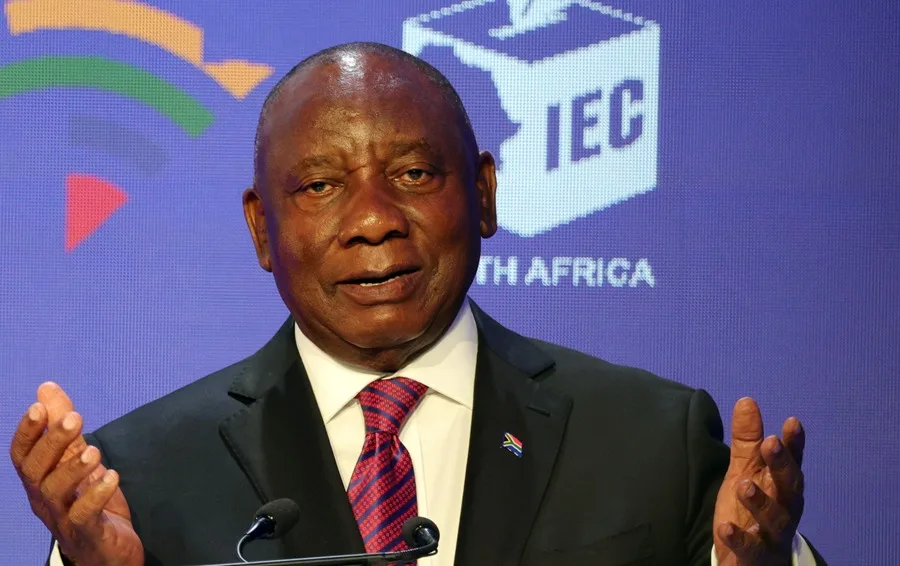
The Independent Electoral Commission (IEC) announced the final results on Sunday in Johannesburg, where President Cyril Ramaphosa acknowledged voters’ demands for better governance and said their verdict must be respected.
The Democratic Alliance (DA), the ANC’s principal coalition partner and longtime opposition party, finished second with 24.64% of the vote and 1,695 seats. The uMkhonto weSizwe (MK) party, led by former President Jacob Zuma, came third with 9.76% and 785 seats.
The Economic Freedom Fighters (EFF) secured 6.22% and 588 seats, while Action SA took fifth place with 5.67% and 313 seats. Hundreds of smaller parties and independent candidates shared the remaining votes.
Turnout reached 52%, up 6.1 percentage points from the 2021 municipal elections.
The ANC acknowledges and accepts the outcome of the 2026 Local Government Elections. We recognise that the electorate has exercised its democratic right to determine the future of local government. The results provide an opportunity for (1) honest reflection (2) renewal (3)… pic.twitter.com/BRiKCe7CNn
— ANC – African National Congress (@MYANC) November 8, 2026
The results leave the ANC and DA facing negotiations with each other or smaller parties to establish majority administrations in municipalities where no party secured more than half the vote. Johannesburg, the country’s commercial hub, is among the cities where coalition-building will be necessary.
More than 29 million people were eligible to vote in Wednesday’s elections, choosing among 136,790 candidates representing 546 political parties and independent lists. They contested seats in eight metropolitan municipalities, 44 district municipalities and 205 local municipalities.
The vote marks another setback for the ANC, which led the struggle against apartheid and has governed South Africa since the country’s first democratic elections in 1994.
The party won 45.59% in the 2021 municipal elections, then its lowest-ever result, before falling to 40.18% in the 2024 general election. That vote ended its parliamentary majority for the first time and led to the formation of a coalition government with the DA and eight smaller parties.
ANC Secretary-General Fikile Mbalula acknowledged the scale of the latest defeat on Saturday, when the count was nearly complete.
“It has been a very catastrophic result for the ANC, despite the fact that we are the largest party,” he said. “We cannot ask people to trust us simply because of our history.”
The party’s declining electoral support has followed years of corruption scandals, economic difficulties, high crime, unemployment and dissatisfaction with municipal administration. Poor delivery of basic services, particularly electricity and water, has been a central source of frustration in communities.
Ramaphosa, who has led the country since 2018, said municipal shortcomings had contributed to declining public confidence in democratic governance. He addressed the results at Sunday’s announcement ceremony, emphasizing that voters’ concerns required an immediate response.
“The people have spoken,” he said. “Their verdict must be respected.”
The president said the elections took place as many households struggled with the high cost of living and young people continued to face unemployment. He also acknowledged that municipal services in many communities fell short of what residents were entitled to expect.
“Too many people, especially young people, remain unemployed. In many communities, the quality of municipal services is far below what our people have the right to expect,” Ramaphosa said.
He said voters wanted safer communities, maintained public infrastructure, opportunities for businesses and a future in which young people could have hope.
“These are not excessive expectations. They are the fundamental requirements for a dignified life,” he said.
The elections also unfolded amid political and xenophobic violence that had intensified in the country in recent months.
The ANC’s latest loss underscores the party’s prolonged electoral decline after three decades in power. Ramaphosa said South Africans had demonstrated that their democracy remained resilient despite pressures in many parts of the world, but the final results leave the governing party facing difficult negotiations and renewed demands to address the failures that have eroded public confidence.
From teleSUR English via This RSS Feed.