

Iran says missile range restrictions are lifted as tensions with the U.S. escalate around the Strait of Hormuz and regional bases.
Related: Iran General Warns U.S. Allies Could Be “Legitimate Targets”
Iran Missile Range Restrictions Lifted: 228 US Sites Targeted
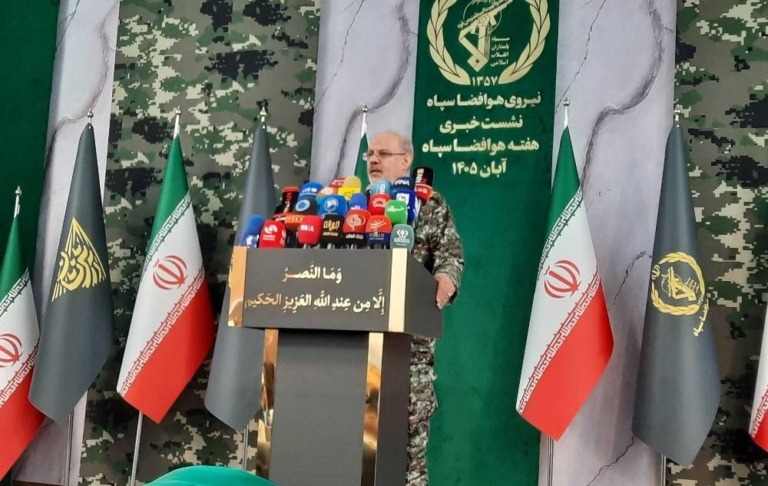
Iran says it has lifted its Iran missile range restrictions, following a directive from Supreme Leader Ayatollah Seyed Mojtaba Hosseini Khamenei that calls for immediate and effective responses to any enemy threat without geographic limits. IRGC spokesperson Brigadier General Hossein Mohebbi made the announcement in Tehran on Saturday.[telesurtv]
“This restriction has been lifted for us, but we must reveal these capabilities in practice,” Mohebbi said. He added that Iran will not announce its new military capabilities in advance but will demonstrate them on the battlefield.[telesurtv]
The statement comes amid escalating tensions between Tehran and Washington, with attacks reported around Qeshm Island and the Strait of Hormuz. Iranian officials say the country will use asymmetric warfare to neutralize adversaries through both material and non-material means.[telesurtv]
Iran’s Asymmetric Warfare Strategy
Mohebbi said Iran has numerous tools to neutralize the enemy through asymmetric warfare, using both material and non-material assets of the adversary. He said Iran will strike “where the enemy does not imagine” and will not give advance notice of its capabilities.[telesurtv]
The IRGC spokesperson also said Iran has built numerous underground missile cities and facilities using domestic expertise and the country’s vast geography. He claimed the IRGC Aerospace Force shot down 260 enemy aircraft during the conflict.[telesurtv]
Iranian officials frame the policy as a deterrent. By removing geographic limits, Tehran is signaling that any future attack could trigger a response beyond the immediate theater of operations.[telesurtv]
Iranian Ministry of Foreign Affairs
Trump Escalates Rhetoric
President Donald Trump confirmed on Friday that U.S. forces carried out new limited attacks against Iran, targeting an air-defense system he said was destroyed within minutes. He did not provide details on the damage caused.[telesurtv]
Iranian state media reported two explosions in the Suza area of Qeshm Island, located in the strategic Strait of Hormuz. The island is a key transit point for global oil shipments and a sensitive military zone.[telesurtv]
Several outlets, including The Wall Street Journal, say the Pentagon has continued small, focused attacks on Iranian defense infrastructure on the island for weeks. The reported objective is to weaken Iran’s ability to control the Strait of Hormuz.[telesurtv]
Trump also claimed that the United States controls the strait and that much of Iran’s military, air force, navy, and missile capability has been decimated. U.S. and European intelligence reports have indicated otherwise.[telesurtv]
Bases Destroyed and Mines in Hormuz
In contrast, reports from U.S. media, based on intelligence assessments and satellite images, have confirmed extensive damage from Iranian missile and drone attacks on about 20 U.S. military bases in West Asia.[telesurtv][telesurtv]
CBS News obtained photographs showing severe damage at Prince Sultan Air Base in Saudi Arabia, including a direct hit on the rear section of a Boeing E-3 Sentry aircraft. The images also documented destroyed trailers and damaged units at Camp Buehring in Kuwait.[telesurtv]
A Pentagon inspector general report sent to Congress estimated $3.7 billion in losses of U.S. military equipment during the conflict, including nearly 60 destroyed aircraft. Assessments from U.S. Central Command confirmed strikes on positions in Kuwait, Bahrain, Qatar, the United Arab Emirates, Saudi Arabia, Iraq, Oman, and Jordan.[telesurtv]
At the same time, explosions continue as ships hit mines in the Strait of Hormuz while traveling outside the safe routes established by Iran.[telesurtv]
International Maritime Organization
Iran Warns Ships and European Allies
After reporting that two oil tankers were burning in Hormuz on Saturday after hitting mines, the IRGC Navy urged ships and shipping companies not to listen to what it called the “fantasies” of U.S. Central Command commander Admiral Brad Cooper.[telesurtv]
The IRGC Navy said Cooper’s forces have not restored security in the strait, despite claims that they destroyed the Iranian Navy and cleared mines from the waterway.[telesurtv]
The IRGC Navy also warned that any vessel cooperating with what it called the “invading and plundering U.S. army” and violating Iranian regulations in the Strait of Hormuz or entering unauthorized zones would inevitably hit mines.[telesurtv]
The warning raises concerns about freedom of navigation and the safety of commercial shipping in one of the world’s most important oil transit routes.[telesurtv]
Iran: ‘Strike the Enemy Where It Does Not Expect’
Mohebbi said Iran has numerous tools to neutralize the enemy through asymmetric warfare, using both material and non-material assets. He said Iran can strike “where the enemy does not imagine” and will not announce its capabilities in advance.[telesurtv]
He recalled that at the start of the conflict, more than eight months ago, Trump and members of his cabinet spoke of ending the Persian nation in just weeks. Mohebbi said that prediction has not materialized.[telesurtv]
Earlier in the week, Iranian lawmaker and former Foreign Minister Manouchehr Mottaki warned Washington’s European allies that if military operations against Iran resume, the war will not be limited to one region. He said the lack of geographic limits means Iranian missiles could reach Europe.[telesurtv]
Iran Will Not Allow Base Reconstruction
In separate remarks, Iranian Army spokesperson Brigadier General Mohamad Akraminia said Tehran will not allow the reconstruction of U.S. military bases in West Asia.[telesurtv]
According to the Fars news agency, Akraminia said more than 228 U.S. installations and positions suffered severe damage or were destroyed during the war that began on February 28. He cited what he described as reliable international sources.[telesurtv]
“We will never allow the enemy’s bases in the region to be rebuilt,” Akraminia said. He claimed that no U.S. base in the region retains the capacity to conduct military operations, forcing Washington to supply fuel and rations to its ships and troops from outside West Asia.[telesurtv]
The claim could not be independently verified, and U.S. officials have not publicly confirmed the full extent of the damage or the claim that all regional bases are non-operational.[telesurtv][telesurtv]
Geopolitical Context
The lifting of Iran’s missile range restrictions marks a significant escalation in the conflict between Tehran and Washington. It signals that Iran is no longer limiting its response to the immediate theater of operations and is prepared to extend its deterrence posture across the region.
The Strait of Hormuz remains the central pressure point. The waterway carries a major share of the world’s oil trade, and any disruption to shipping, insurance, or naval operations can affect global energy prices and supply chains.[telesurtv]
The conflict has already produced extensive damage to U.S. military infrastructure in West Asia. Reports cited by teleSUR indicate losses of more than $3.7 billion in equipment, including nearly 60 aircraft, as well as damage to diplomatic facilities across the region.[telesurtv]
The broader implication is that the conflict is no longer confined to Iran and the United States. It now involves U.S. bases across the Gulf, commercial shipping, European allies, and the security architecture of West Asia.[telesurtv][telesurtv]
What Comes Next
The immediate question is whether the United States will continue its limited strikes on Iranian defense infrastructure or seek a diplomatic off-ramp. Iran’s removal of geographic limits raises the cost of any further escalation.[telesurtv]
For Iran, the strategy is to project deterrence through uncertainty. By refusing to announce its capabilities in advance, Tehran aims to force adversaries to assume that any target could be within reach.[telesurtv]
For the United States, the challenge is to protect its bases, secure shipping lanes, and avoid a wider war. The coming weeks will determine whether the conflict remains contained or expands into a broader regional confrontation.[telesurtv][telesurtv]
From teleSUR English via This RSS Feed.