



What follows is the transcript of a talk I gave a week and a half ago at the University of Mary Washington in Fredericksburg, Virginia. It’s been (lightly) revised for length and clarity.
Thanks for that introduction, and thanks, Shane, for setting this up and dealing with all my scheduling annoyingness, and to YDSA and the Philosophy Department for hosting. The title of this talk comes from a short but delightful book by the late great Marxist analytic philosopher G.A. Cohen. It’s very simple and approachable, and you can read it in an afternoon with time to burn, but there are real depths to the argument.
The first Cohen book I ever read, the one that really made me fall in love with him as a thinker, is Karl Marx’s Theory of History: A Defence. And that book is about exactly what it says on the tin. It’s all about thinking hard about the various kinds of claims about causation, explanation, and so on in classical Marxist historical materialism. A lot of his other books are positioned on the other side of the fact/value gap. They’re about normative political philosophy. Often times, in those books, Cohen is having very complicated arguments with philosophers like Robert Nozick or John Rawls. Why Not Socialism? is also about justice, but as I said, it’s a much more approachable book. It’s not addressed only to people who are interested in analytic philosophy or Marxist theory, never mind just the tiny handful of us in the intersection of that Venn Diagram, but to a general audience. And the question it asks is, on a very basic human level, what’s the appeal of socialism?
One standard way for socialists to answer that question is to focus on the evils of the existing system. That’s a very easy thing to do. We live in a world where workers at Amazon warehouses are subject to nonstop electronic surveillance, tracking not only whether they’re making their minute-by-minute quotas but how many steps they’re taking to the bathroom and how long they spend there. Meanwhile, their boss makes so much money from their labor that he literally owns his own spaceship. That’s a truly obscene level of inequality of both wealth and power. And of course there’s a whole level of society below people with (what many of them would consider to be) good jobs at Amazon. And at the very bottom, you get people sleeping on park benches. Meanwhile, at the top of society, we’re rapidly careening toward a world where the very tippy-top slots are taken not even by billionaires but by trillionaires. And I’m sorry, but that’s not compatible with democracy. The idea that there’s any possible way of arranging society where a regular person and a trillionaire have exactly the same amount of political influence is a very bad joke.
So, one standard way of arguing for socialism is to highlight these realities and cast doubt on how much we can do about them with reformist band-aides. And you can make that argument in at least two ways. One is ideological, the other is strategic. Starting with the in-principle argument, even in the nicest, most social-democratic form of capitalism, even in countries like Sweden and Norway, most people still have no realistic choice but to work for regular private capitalist employers. That means that, at the base of society, how it organizes production, some people get to spend all day giving orders just because they have money and most people have to spend all day taking orders just because they don’t. I think that’s pretty bad!

The room where I was giving the talk—the guy I talked to from YDSA said I would know which room it was in when I got there!
But, if that doesn’t move you, there’s also a pretty straightforward Marxist historical and pragmatic argument, which is that reforms won within capitalism are inherently vulnerable to reversal. As long as the capitalist class retains their accumulated wealth and economic power, their ownership of the means of production, they’ll always find ways to translate that into political influence. And the moment they see an opening to get away with it they’ll use that political influence to try to find ways to roll that boulder back down the hill.
These are the standard arguments against resting content with social democracy instead of pushing for some form of full socialism, and I think they’re good arguments. But Cohen approaches things from a totally different angle in Why Not Socialism?
At the beginning of the book, he asks the reader to think about a group of friends going on a camping trip. He doesn’t describe anything out of the ordinary. The friends find a site and set up a tent. Some of them fish, some of them cook, some of them go on a hike.
What Cohen wants the reader to notice is that the way this trip is organized looks a whole lot like how socialists think society in general should be organized. The fishing poles and soccer balls, for example, are treated as collective property for the duration of the trip — even if they actually belong to individual campers. When the fish are caught and cooked, everyone gets to partake equally of the result of the collective effort, free of charge. Cohen’s hypothetical campers act this way not because of anything especially noble about them, but because this is how any group of friends would act on a camping trip.
To make the point more sharply, he invites us to imagine a far less normal camping trip — one where the campers start asserting capitalist property rights. One of them (Sylvia) discovers an apple tree. When she comes back to tell the others, they’re excited that they’ll all be able to enjoy apple sauces, apple pie, and apple strudel. Certainly they can, Sylvia confirms— “provided, of course . . . that you reduce my labor burden, and/or provide me with more room in the tent, and/or with more bacon at breakfast.”
Another camper (Harry) is very good at fishing, and so in exchange for his services he demands that he be allowed to dine exclusively on perch instead of the mixture of perch and catfish everyone else is eating. Another (Morgan) lays claim to a pond with especially good fish because he claims that his grandfather dug and stocked it with those fish on another camping trip decades ago. No one else is allowed to have those fish.
No normal person, Cohen notes, would tolerate this kind of behavior on a camping trip. In a context like that, at least, they would insist as a matter of course on what Cohen calls a “socialist way of life.” What that does and doesn’t tell you about capitalism and socialism in society as a whole is an interesting question, but I want to put a pin it for a moment while we think about how the ideological opposition has tried to respond.
Why Not Socialism? was published in 2009. It was about to hit the shelves when Cohen died. Five years later, libertarian philosopher Jason Brennan came out with a critique entitled Why Not Capitalism?
In it Brennan argues that instead of looking at the flaws of actually existing socialism and those of actually existing capitalism, Cohen was weighing a socialist ideal against the warts-and-all version of capitalism. Such a lopsided comparison, he thinks, proves nothing.
Brennan illustrates the point by discussing the animated Disney show Mickey Mouse Clubhouse (not to be confused with the older variety show The Mickey Mouse Club). In a parody of Cohen’s camping trip chapter, Brennan starts by describing the show as it actually is. Everyone seems to be friends with everyone else and there doesn’t seem to be any poverty or serious social distress, but it looks like a regular market economy. Minnie Mouse owns a factory and store for hair bows called the Bowtique, Clarabelle Cow is a reasonably successful entrepreneur (she owns both a sundries store called the Moo Mart and a Moo Muffin factory), and Donald Duck and Willie the Giant both own their own farms.
Then, Brennan asks the reader to imagine a hypothetical version of the Mickey Mouse Clubhouse Village where some of the villagers started doing what Stalinist regimes did in the name of socialism. Donald forcibly collectivizes all farmland like Stalin did in 1929, Clarabelle Cow starts a secret police force, and so on. Obviously, that would be horrible!
If you don’t think this hypothetical proves anything about capitalism and socialism, Brennan writes, you shouldn’t think Cohen’s camping trip argument does either. In both cases, the problem is that like isn’t being compared to like.
That’s cute. But there are three great big glaring problems with Brennan’s attempt to satirize and refute Cohen. First, he himself is pretty clearly not comparing like to like in his attempt to replicate the structure of Cohen’s camping trip chapter. To start with the most obvious point, Cohen isn’t describing some idealized fantasy of a camping trip. He’s describing the exact kind of camping trip that untold numbers of people really go on every year. They all work exactly the way Cohen describes! It would be deeply weird for one not to—and that’s exactly the point of Cohen’s example. By contrast, the Mickey Mouse Clubhouse Village is a trippy sci-fi fantasy of talking animals interacting with each other in a half-imagined society, one where it’s unclear, at least from Brennan’s description (I’ll admit to not being a viewer of the show) whether a state exists or what sorts of labor laws or regulations it potentially enforces.
Second, Cohen isn’t contrasting the small-scale implementation of socialist ideals with the worst things that have been done in the name of capitalism. Sylvia’s insistence on her property rights stops the other campers from getting apple strudel. But she isn’t denying any of them life-saving medications because they can’t afford to pay. Morgan doesn’t hire other campers to stack firewood for him and then hire Pinkertons to beat or kill the firewood stackers when they go on strike. Cohen doesn’t try to come up with a camping trip remix of the British East India company or the enclosures that drove peasants off their land and made them desperate enough to take jobs in the early factories William Blake described as “dark Satanic mills.” He’s not even talking about “crony capitalist” corruption!
Instead, all of Cohen’s examples are examples of people asserting exactly the kinds of economic rights that defenders of capitalism are eager to endorse — the kind that everyone would have in Brennan’s own libertarian ideal of capitalism. Morgan’s grandfather passed on his property to his descendants, Sylvia is asserting her property rights in the means of apple strudel production as the Lockean initial discoverer of a piece of unowned property, and Harry is simply trying to bargain for the best deal he can get in a free market.1 In other words, it seems to me that Brennan has misread Cohen’s short and simple book in a remarkably complete way.
Cohen isn’t comparing socialist ideals to capitalist realities. He’s comparing socialist ideals to capitalist ideals. And the very simple and straightforward point of his examples is, hey, isn’t it interesting that in a context like a camping trip where we’re essentially constructing a temporary mini-society, the situation where we have the maximum amount of control we’re ever going to have about what the rules of the society we’re living in are going to be, we all pick socialist rules of communal ownership and egalitarian distribution? Doesn’t that suggest that, on a very basic human level, those are very natural and appealing rules?
Of course, socialist ideals could be natural and appealing, suitable for being implemented in contexts like groups of friends going on camping trips, but also totally impractical for organizing real societies with economies that rely on a vast and complex division of labor. People usually only go on camping trips with people they basically like and get along with. If one of your friends is dating someone you can’t stand, you might make an exception there, but as a general rule, the people you’re sharing this temporary mini-society with are people who you like and get along well with, so all sides can be expected to make reasonable efforts to smooth over potential areas of conflict. By contrast, a country like the United States has hundreds of millions of residents and, at least speaking for myself, I like some of them a whole lot more than others. So, all of this is to say, what works for temporary micro-societies like camping trips might not be practical for ongoing macro-societies.
And this is exactly what Cohen himself cheerfully acknowledges at the end of the very first chapter of the book. He writes:
The circumstances of the camping trip are multiply special: many features distinguish it from the circumstances of life in a modern society. One may therefore not infer, from the fact that camping trips of the sort that I have described are feasible and desirable, that society-wide socialism is equally feasible and desirable. There are too many major differences between the context for that inference to carry any convinction. What we urgently need to know is precisely what are the differences that matter, and how can socialists address them? Because of its contrasts with life in the large, the camping trip model serves well as a reference point for purported demonstrations that socialism across society is not feasible and/or desirable, since it seems eminently feasible and desirable on the trip.
So, if nothing else, we want to sort out two very different questions that are too often carelessly blurred together in critiques of socialism. One is whether it would be desirable to organize a whole economy on camping-trip principles, and the other is whether it’s practical to do so. And Cohen spends most of the book, after that initial chapter about the camping trip, thinking hard about various practicality-based objections.
One of the principles of the (normal, non-capitalist) camping trip is about equality—which operates both at a level of economic power (equality of control over productive resources) and the level of distribution (in other words, what in the context of the ongoing macro-society we call “income inequality”). Everyone has equal access to the fishing poles, and when it comes time to fry up the fish, everyone gets the same. And Cohen spends quite a bit of time, in Why Not Socialism? and elsewhere, worrying about exactly why kind of equality matters. Ultimately, he thinks that what counts is “equality of access to advantage.” That’s a principle that might be clearest when stated negatively—that there ideally should no inequalities of outcome that are outside the control of whoever ends up with the short end of the stick.
But another principle he draws from the camping trip examples is a principle of community. Now, Cohen says a lot less about community than he does about equality, but the idea roughly is that a better society is own where actually act as if we cared about each other. In the society we actually live in, anyone who lives in a major city ends up learning to navigate around people sleeping in the street and begging for money without making eye contact, because that’s one of the fun habits you have to acquire as a well-socialized citizen of a wildly unequal society. I’d like to think that, in a better society, if someone ended up sleeping on the street, you would treat that as a crisis—as if you saw someone having a heart attack in the middle of the street. Like, “oh my God, what happened? What can I do?” And you’d act that way even if they ended up that way as a result of their own foolish decisions, so there was no violation of the principle of equal access to advantage. There’s a limit on how far we’d let someone we actually cared about sink, even if it was their own fault. And you can say, ok, but there are real limits on how much we’re actually each going to care about every single random stranger. That’s fair. But the most defensible core of Cohen’s point on this, to me, is that at least when we build economic and political institutions, we want those institutions to treat everyone as if they were within the sphere of our collective concern.
OK. So, Cohen thinks the kind of society that would best carry out these socialist ideals would be a totally marketless democratically planned economy. But he also recognizes that we don’t necessarily know how to, as he says, “make the wheels turn” in such an economy. Certainly, the Soviet economy was a disaster in all sorts of ways. That model was very good at rapidly industrializing and modernizing peasant societies, but it was very bad at efficiently coordinating production with consumer needs. Even if there’s some rough sense in which everyone’s needs were met, ordinary citizens were immensely frustrated by how often the shelves were empty at the state grocery stores, and by the shoddiness and uniformity of the products that were available. It’s not as if, when a product fell apart two days after you brought it home, you could take your business elsewhere, in an economy with a state monopoly on just about literally everything. And it was also very bad at efficiently allocating capital goods to state enterprises—like, to the point that enterprise managers often ended up often relying on the black market to make up shortfalls in the inputs they needed to get their outputs close enough to their quotas to fudge the numbers.
In the twentieth century, a common position of the anti-Stalinist parts of the radical Left was that whatever dysfunctionality there was in Soviet-style economies ultimately traced back to the lack of democracy. And to be sure, the lack of democracy in these societies—both within the workplace, and within the political sphere—absolutely flew in the face of socialist ideals. But as an explanation of the deep economic dysfunction of these systems, the lack of democracy only explains so much.
To see why, indulge me in a quick thought experiment. Let’s imagine the basic structures of Soviet economic planning and graft on the sort of democratic political institutions found in advanced liberal capitalist societies. There’s a free press. There are competitive elections. Different political parties debate competing visions for the next Five-Year Plan, and whichever one wins a majority in the Supreme Soviet forms a government and appoints the new head of the state planning office Gosplan.
This alternate USSR would be superior to the one that existed in our timeline in any number of ways. Certainly, the 1930s Ukrainian famine wouldn’t have happened if Stalin had been worried about whether peasants would vote to reelect him. But would the day-to-day frustrations of consumers at grocery stores in Moscow and Leningrad in the 1970s really have been much different? I have to say, I have my doubts.
As Cohen recognizes, if we want to think about how to organize a socialist economy where the wheels turned—one, in other words, that’s not plagued by Soviet-style dysfunction—there are basically two distinct issues we need to worry about. One is a technical economic worry. Basically, state planners, whether in an authoritarian one-party state or in a socialist democracy where planners are appointed by elected officials or perhaps even directly elected themselves, don’t have a good way to know how much of which goods to produce, in the absence of the feedback mechanisms you get in market economies where firms see their sales figures declining if they’re producing the wrong things or charging too much, and they have to worry about going out of business if they do a bad job.
I don’t want to exaggerate the point here, because we’ve certainly proven in practice, even in many liberal capitalist mixed-economy welare states, that there are spheres of the economy where marketless state planning works fine. Healthcare and education, for example. But those are, of course, spheres where consumer preference doesn’t play quite the same role. And the track record of trying to do wall-to-wall economic planning is very bad.
The other, related but distinct point, is a psychological worry about incentives. So, in a totally marketless form of socialism that absolutely adheres to camping-trip-style equality, you might not be incentivizing talented people enough to use their talents in ways society needs. Fair enough. But Cohen, I think very fairly, says that these feasibility worries don’t impugn the ideal itself. And he urges in the book that we shouldn’t be too quick to give up on finding ways to implement the ideal. His view is that it’s a kind of moral north star that we should always try to approximate as closely as we possibly figure out how to at any given stage of history.
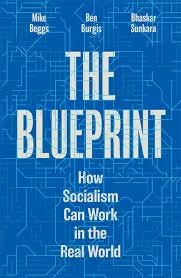
I think that’s exactly right. And that brings us, finally, to the book that I co-wrote with my friends Bhaskar Sunkara and Mike Beggs, which just came out just about a month ago, about what a realistic version of a fully post-capitalist economy where the wheels turn might actually look like. In that book (ahem: The Blueprint: How Socialism Can Work in the Real World), we offer one possible model of a relatively grounded and realistic version of socialism. We start where a maximalist Nordic-style social democracy leaves off, with things like healthcare and education in the public sector and a generous welfare state. We also think that what socialists have traditionally called the “commanding heights” of the economy should be in public hands—think energy, transportation, and, crucially, banking. But we fully acknowledge that, due to the information and incentive problems, there are sectors of the economy where we still need market mechanisms. Fine. But that doesn’t mean we need to have capitalism.
Markets existed in lots of kinds of societies for thousands of years before capitalism. What’s distinctive to capitalism isn’t that people are buying and selling things. It’s that society is divided between a class of capitalists who own the means of production and a class of propertyless wage laborers who have no realistic choice but to sell themselves to those capitalists for half their waking lives. And that would be completely eliminated in this model. In the commodity-producing sector of the economy, firms would be worker-owned and internally democratic.
That doesn’t mean that it would have to be an endless mass meeting to decide every aspect of what happens in the firm. (Those of us who’ve spent many hours of our lives we’ll never get back at faculty meetings know what a nightmare that would be.) But workers would be voting on two things. First, they would vote for the committee that ran the place. In small enough firms like a little worker-owned coffee shop, it might make sense to directly elect managers, but in larger firms where some management roles really do involve specialized technical knowledge, it probably makes more sense to hire people for those roles in a pretty traditional hiring process. But that traditional hiring process can still be conducted by an elected workers’ committee. You’d vote for that. And you’d also vote on an operating agreement that would basically be just like a union contract except that it would be unilateral. There would be no separate boss to negotiate with, because the workers would own the place.
By the way, worker ownership also doesn’t mean every worker owns a share of the firm that they can then sell to someone else. It’s more like calling a park city-owned. As a resident of the city you don’t own a share of the park you can sell to someone else. You also can’t sell your vote in a city council election. You just acquire that vote when you move to the city and lose it again when you move somewhere else. Same with joining and quitting a worker-owned firm. And firm financing would be socialized through nationalized banks. There would be a plurality of public banks, constitutionally autonomous from each other, to allow for second opinions on rejected proposals or for firms to change financial partners, but they would all be public, so you don’t get a concentration of private economic power that could lead to the return of capitalism.
Sometimes defenders of the existing system say, hey, if you care so much about workplace democracy, no one’s stopping you from starting a cooperative. That’s already allowed! But this very badly misses the point, for two reasons. One, of course, much of the working class lives paycheck to paycheck. Those workers aren’t in any position to pool together their resources with their friends to start a small business. But even the better-paid, more comfortable workers who have enough savings that maybe a couple dozen of them could pool together their resources to start a little cooperative coffee shop or something very rarely do.
The reason that’s so rare is that it would be an irrational decision. For most working people without deep assets, putting all your eggs into the basket of an attempt to start a small business against long odds is a huge risk. Just feeding yourself while you wait for the first round of products to sell depletes some of whatever little nest egg you’ve managed to build up, and even after that you’re totally hostage to the ups and downs of those sales without the security of regular biweekly, paychecks, and if it all goes belly up that nest egg has been smashed to smithereens. So, the argument goes, when asset-rich capitalists offer regular stable employment in exchange for assuming risks that they’re in a better position than asset-poor workers to bear, it’s a win-win and no one has grounds to complaint about injustice.
And look. Bhaskar and Mike and I would accept the factual premise of this argument.
We reject the conclusion, though, for two reasons. First, there’s the pesky question of whether that initial distribution of assets is even slightly morally defensible. Second, we don’t think workers should have to choose between economic insecurity and economic oppression. A just society should give people better choices.
Public banks can control enough eggs to distribute them into a huge number of baskets in a way that distributes the assets in a reasonable way. And while under capitalism, there’s no such thing as a minimum wage for business owners, in this model in order to continue to be re-upped by the public banks, firms have to pay their members wages that meet wage benchmarks set by labor boards, inspired by the labor boards they had in post-war Australia and somewhat similar in effect to the way sector-by-sector bargaining works in a lot of Nordic countries—except that, remember, there are no capitalists to bargain with here, because no capitalists would exist in this economy. All firms would be worker-owned or publicly owned. So, you’d get workplace democracy but you’d also get the security of a biweekly paycheck. And if there are profits left over, those aren’t reinvested by the firm itself—remember, investment is socialized in this model, there’s no such thing as private wealth accumulation—but the worker-members are the residual claimants of any profits that are left over after meeting the wage bill and making the payments to the public bank and meeting the rest of the firm’s financial obligations. That bonus can provide an important incentive, even as of course a big piece of it is taxed in order to fund the public banks to provide the eggs to put in all the baskets, that one included, going forward. There are still price signals, and there’s still firm failure. We spend a lot of time in the book worrying about what are called “soft budget constraints,” which were a huge problem not just in the Soviet economy but in countries like Yugoslavia where you had some market reforms but it was still politically impossible to let inefficient firms go under. Bhaskar and Mike and I think you need to make sure that can happen. That’s the price you have to pay to have an efficient economy—to “make the wheels turn.”
I know that was a very quick summary of a complicated economic model, but my co-author Bhaskar put together a wonderful website, blueprintforsocialism.com, where even if you just get a minute later tonight you can navigate around and get a quick sense of how the different pieces of the model fit with each other.
Moving on, though, since we started with the camping trip, let’s score this model for how socialism could work by seeing how well it avoids the features of the bad capitalist version of the camping trip. On the negative side, what Harry did in demanding extra fish because he was so good at fishing would still be present here.
I think that, in a situation where wage scales are set by operating agreements everyone can vote on, there are basically two reasons why some people would end up getting paid more than others. The one that’s not a problem for egalitarianism is that you might have to pay some people more to incentivize them to do particularly dirty and dangerous jobs no one wants to do. Under capitalism, those jobs are often filled through sheer economic desperation by particularly precarious parts of the working class. Under socialism, you might just have to pay them more. That’s fine. Different people are making different choices about the trade-offs between unpleasantness of work tasks and income. There’s no real inegalitarianism there.
On the other end, though, you might have to incentivize some people to develop their talents by paying them more. That’s the Harry-style inequality. And to the extent that this reflects an inequality in genetic starting points, in natural talents, I think Cohen would very reasonably see some degree of injustice here. But the Morgan-style and Sylvia-style inequalities, which involve asserting property rights in the means of production are gone. This is a model where there’s no private ownership of capital, no profits derived from wage labor, and no profit accumulation by private entities. That would make it almost unfathomably more egalitarian than what we have now. When workers can vote on wage scales, you can still have some inequality. But you don’t have some people paid hundreds or thousands of times more than others. That’s an obscenity, and we don’t need it.
One final point about all of this:
The purpose of coming up with this kind of detailed blueprint is not that we necessarily think this exact model is what’s going to happen. If we’re lucky enough to make it all the way to a fully socialist society, I’m under no illusions that the citizens of that society will be consulting a book from 2026 to see what they should do. I’m sure whatever emerged from that messy, contingent historical process would be different in lots of ways from any blueprint drawn up in advance. But the point of drawing up a blueprint anyway is proof of concept. We want to show that there’s some way a non-capitalist economy, one that did even a half-decent job of approximating the camping-trip ideals, could work, where the wheels would turn, because we want to show that the kind brutal inequalities that are built into capitalism aren’t something we have to just live with forever.
A couple of years ago, my friend Steve Paxton, who was a graduate student of Cohen, actually had a tin camping mug hand-made as a gift for me. One side of the mug is just the cover of Why Not Socialism? and other is an absolutely amazing quote from the end of Ch. 1, just before that part that I just quoted.
He writes:
Of course, not everybody likes camping trips. I do not myself enjoy them, because I am not outdoorsy, or at any rate, I’m not outdoorsy overnight-without-a-mattress-wise. There’s a limit to the outdoorsiness to which some academics can be expected to submit.
And then, continuing just past where I guess Steve ran out of room when he was designing the mug, Cohen continues:
I’d rather have my socialism in the warmth of All Souls College than in the wet of the Catskills, and I love modern plumbing.

And hey, that always makes me laugh, but there’s a serious point lurking here. The really existing interconnected world economy is made up of many billions of human beings who are a lot more varied than a few friends who (a) enjoy each other’s company and (b) enjoy the same activity (camping). It includes people who see nothing wrong with Morgan or Sylvia-like behavior and will come as close to that as they can within any given set of institutional rules. It includes egalitarian philosophy professors who hate camping. And it includes a lot of people who are a lot more difficult to manage than that. There are real limits to how much we can reorder the immensely complex way that we economically coordinate between all these billions of people to make the whole thing resemble the easy communal egalitarianism of a camping trip. (This is doubly true if we’re committed to doing it without sacrifices of pluralism or individual choice that would be anathema to democratic socialists.) Where those limits are set is, as Cohen rightly emphasizes, a matter of empirical discovery, and we shouldn’t assume that they’ll always be set in the same place. Everything that’s now in the past was once in the future, and we should never be too quick to think we’ve discovered the outermost limits of human progress.
However that may be, what I am confident about that the socialism envisioned in The Blueprint or something like it is both possible and desirable. Whether or not you think we can one day do even better, achieving that much would be a truly massive step in the right direction. And it’s long since time for humanity to take that step.
Thanks for reading Philosophy for the People w/Ben Burgis! This post is public so feel free to share it.
In this talk I skipped Cohen’s fourth example (Leslie) since as far as I can tell the point is identical to the point about Harry.
From Philosophy for the People w/Ben Burgis via This RSS Feed.