

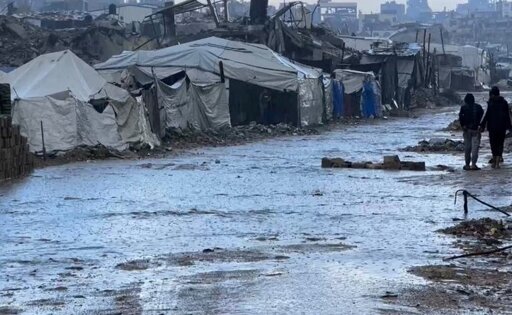
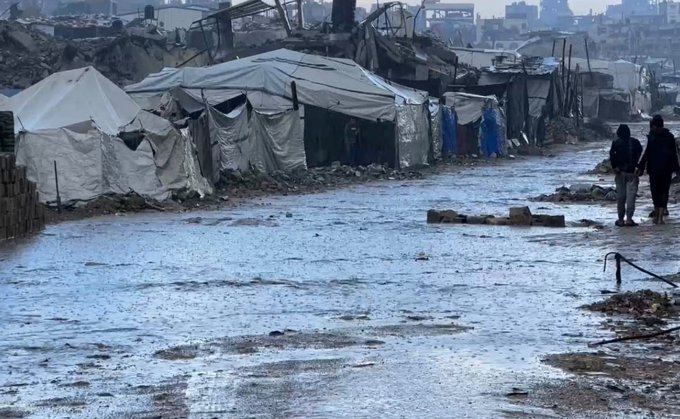
Heavy rain inundates displacement camps as damaged infrastructure, hospital disruptions and shortages leave families exposed to winter conditions.
Heavy rainfall has flooded displacement camps across the Gaza Strip, putting nearly 950,000 displaced Palestinians at moderate to high risk of flooding as winter begins, while damaged infrastructure and shortages of emergency supplies hamper efforts to protect them, according to the United Nations and local authorities.
RELATED: Gaza Evacuations Stall: Over 21,000 Patients Await Urgent Exit
More than 400,000 displaced Palestinians are living in particularly vulnerable conditions, including in deteriorating tents and areas where infrastructure has been severely damaged, the UN Office for the Coordination of Humanitarian Affairs (OCHA) reported. The flooding comes as Gaza enters its fourth winter under Israel’s genocidal assault, after more than three years of systematic destruction.
Gaza’s Civil Defense received approximately 1,500 distress calls within 10 hours of the storm. Water levels rose by between 30 and 40 centimeters in some displacement camps, while the Government Media Office reported that at least 70,000 tents had been flooded in less than 12 hours.
Civil Defense spokesperson Mahmoud Bassal warned that people living in tents faced serious threats to their lives and health, particularly premature infants, older people and those with illnesses.
“Those living in tents are at risk of death and illness at any moment,” Bassal said, urging the international community to provide urgent assistance. He said local emergency services lacked the resources needed to contain the crisis.
Heavy rains flooded displacement camps across Gaza, prompting more than 1,500 distress calls as rescue crews appealed for urgent equipment.
Key Takeaways
Gaza’s Civil Defense received more than 1,500 distress calls after heavy rains flooded entire displacement camps.
Two…
— The Palestine Chronicle (@PalestineChron) November 7, 2026
The flooding has also exposed the extent of damage to Gaza’s drainage infrastructure. Gaza City municipal spokesperson Hosni Muhanna said 15 kilometers of stormwater pipes and 212 kilometers of sewage networks had been damaged. Eight pumping stations and three collection basins were also out of service.
The remaining drainage system can handle no more than 20% of rainfall, even under the best conditions, Muhanna said. More than 25 million tonnes of rubble in Gaza City, combined with fuel shortages, have further hampered municipal workers’ response.
Building collapse risks and health concerns
Flooding has compounded the danger posed by buildings damaged during the bombardment. Approximately 44,000 Palestinians are sheltering in more than 2,300 buildings considered at severe risk of collapse.
Authorities estimate that more than 4,000 structures across Gaza will require partial or complete demolition, including more than 2,000 in Gaza City.
Rescue teams evacuated a building in the Nuseirat refugee camp during the day, while the collapse of a wall in northern Gaza injured two people.
Ver esta publicación en Instagram
Una publicación compartida por Al Jazeera English (@aljazeeraenglish)
The storm has also disrupted medical services. Dr. Mohammed Abu Salmiya, director of Al-Shifa Medical Complex, said the hospital’s emergency department was unable to operate for four hours because of accumulated floodwater.
Speaking to Al Jazeera, Abu Salmiya said displaced families had spent the night on alert as rainwater entered their shelters. “Nobody in these worn-out tents in the Gaza Strip slept — not women, not children, not the elderly. Everyone was on high alert,” he said.
He described the situation as a failure of international and local humanitarian organizations operating in Gaza.
Abu Salmiya also warned that prolonged exposure to damp conditions could lead to an increase in gastroenteritis, skin diseases and serious respiratory illnesses.
The conditions pose particular risks to people with asthma and other respiratory problems, he said, as damp tents offer inadequate protection. These patients could require large amounts of oxygen in hospitals already facing shortages.
“This is only the beginning, perhaps a major warning to the world,” he said.
Shelter shortages and aid restrictions
Approximately 294,250 Palestinian families need immediate shelter assistance as temperatures fall, but supplies currently available on the ground meet only 18% of those needs, according to OCHA.
An Al Jazeera correspondent said displaced families were calling for adequate housing and materials to rebuild their lives rather than temporary repairs to damaged tents.
“Repairing tents is not a lasting solution,” the correspondent said, recounting conversations with families seeking proper shelter and the materials needed to rebuild. “And that means opening the way for these supplies to enter Gaza.”
Olfat Magdoub, a resident of Gaza City, said flooding had already rendered her family’s bed unusable after the first day of rain. “Today is the first day of rain, and of course we are already flooded. What will happen if it rains again tomorrow? This is only the first day, and we are already overwhelmed,” she said.
Maryam Odeh described the difficulties families faced protecting their children from the weather. “We no longer know how to protect our children. My children ask me where we will sleep tonight, and I have no answer.”
OCHA said months of funding shortages and Israeli restrictions on the entry of construction materials, heavy machinery, lubricants, spare parts and winter supplies have contributed to the shelter crisis. These restrictions and shortages have left displaced Palestinians with few options for securing safer accommodation as winter conditions worsen.
From teleSUR English via This RSS Feed.