

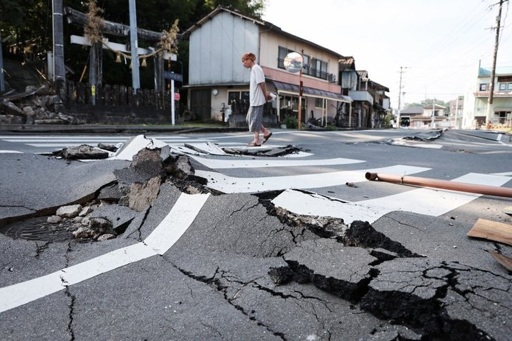
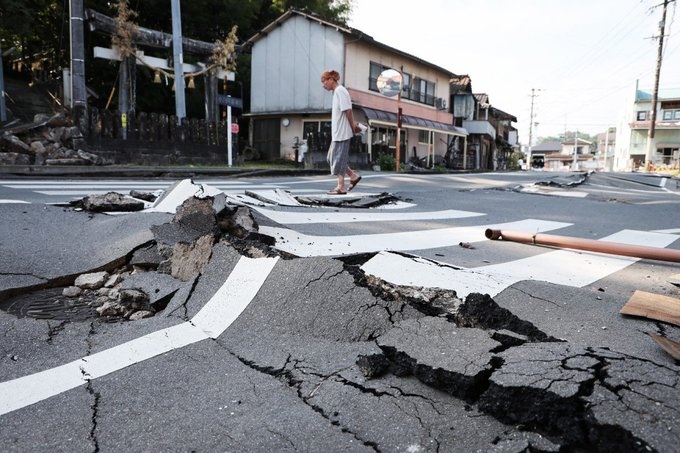
A magnitude 5.7 earthquake struck Shizuoka, prompting railway safety checks and inspections at a nuclear power plant.
A magnitude 5.7 earthquake struck central Japan early Sunday, injuring at least 26 people and disrupting rail services. Authorities reported no serious injuries or major damage and ruled out a tsunami threat.
RELATED: Deep 6.5-Magnitude Earthquake Strikes Off Japan, No Damage Reported
The earthquake struck at 1:04 a.m. local time, with its epicenter in Shizuoka prefecture at a depth of 40 kilometers, according to the Japan Meteorological Agency. The tremor was felt across Shizuoka, Aichi, Nagano and Gifu prefectures, shaking communities in the early hours of the morning.
Authorities in Aichi reported 23 injuries, while Shizuoka prefecture recorded three more, according to Kyodo and an official statement published on the prefecture’s website. The injured in Shizuoka ranged in age from 30 to 90. Most injuries resulted from falls, collisions with objects or distress during the overnight shaking. None was reported to be serious.
More than 20 people have been injured after a strong earthquake shook central Japan, shattering store windows and sending people fleeing buildings, according to local media and authorities.
Read more: https://t.co/qtYLYLHEhp pic.twitter.com/c2DsZnU9tJ
— Al Jazeera English (@AJEnglish) November 8, 2026
The Japan Meteorological Agency did not issue a tsunami warning, easing concerns among coastal communities.
Rail services were temporarily disrupted as operators conducted safety inspections. Shinkansen bullet trains between Shizuoka and Gifu-Hashima stations experienced delays while crews checked tracks, bridges and electrical systems.
Chubu Electric Power said inspections found no abnormalities at the Hamaoka nuclear power plant in Shizuoka, about 200 kilometers southwest of Tokyo.
The plant’s status was among the immediate concerns following the earthquake, given Japan’s experience with the 2011 Fukushima nuclear disaster and the continuing public and political debate over nuclear safety.
Japan lies along the Pacific Ring of Fire, one of the world’s most seismically active regions, and experiences frequent earthquakes. Its preparedness measures include earthquake-resistant infrastructure, regular drills in schools and workplaces, and early-warning systems that distribute alerts through television, radio and mobile phones. Sunday’s earthquake caused injuries and temporary transport disruptions, but authorities reported no fatalities or major damage.
From teleSUR English via This RSS Feed.