

teleSUR urges information sovereignty to close the AI divide between the Global North and South, warning against data extraction and digital dependence.
Related: World Media Summit AI: 500 Delegates Adopt Beijing Consensus
Information Sovereignty: teleSUR Calls for 5 Actions to Close AI Divide
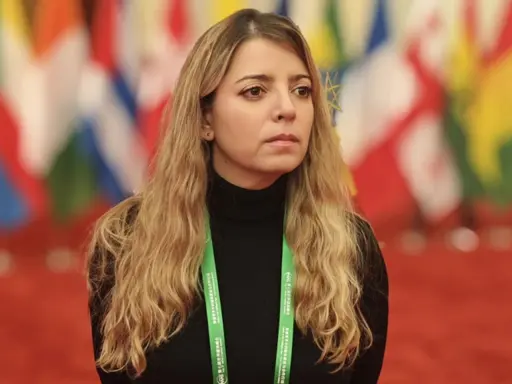
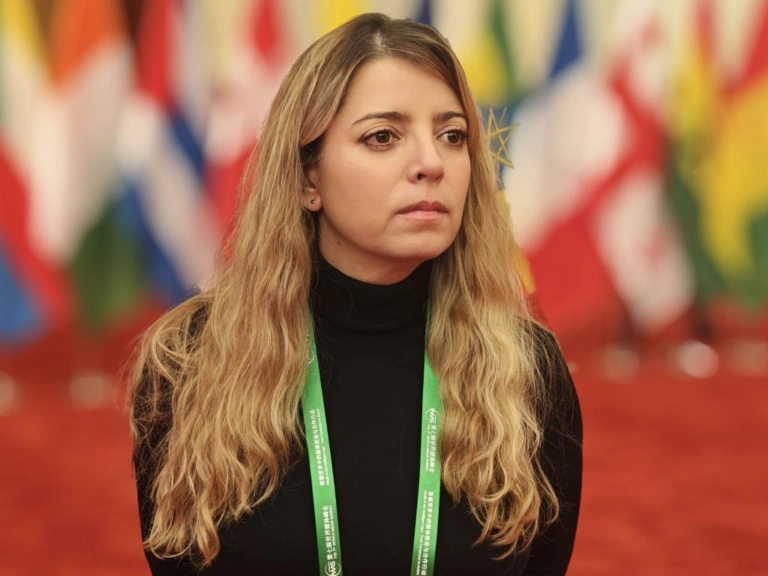
teleSUR President Patricia Villegas Marin told the World Media Summit in Beijing that information sovereignty is indispensable if the world is to close the artificial intelligence gap between the Global North and South. She argued that technological development is not neutral because computing power, data, and technical capacity remain concentrated in a small group of wealthy countries.[telesurtv]
Speaking at the seventh World Media Summit, Villegas said the AI divide cannot be closed without information sovereignty, which she described as practically nonexistent without technological independence. She warned that countries in the Global South supply data and information to train AI models, then must pay to use the resulting tools.[telesurtv]
Her intervention placed the debate on AI within a broader struggle over who controls the infrastructure of global communication: platforms, algorithms, satellites, submarine cables, data centers, and artificial intelligence models.[telesurtv][telesurtv]
The AI Divide Is Not Only Access
Villegas argued that inequality is not limited to access to technology. It also affects the sovereignty of Global South nations, which provide the raw material for AI systems but often lack control over the infrastructure and business models built around them.[telesurtv]
She identified several structural challenges: dependence on foreign infrastructure, extraction of data without compensation, unilateral coercive measures, restrictions on access to technology, and the migration of skilled professionals toward countries with the greatest concentration of capital.[telesurtv]
The teleSUR president said these conditions prevent many countries from developing their own technological capacities. Without local infrastructure, skilled workers, and control over data, governments and media organizations remain dependent on foreign platforms and suppliers.[telesurtv]
United Nations – Digital Cooperation
Information Sovereignty and Media Independence
Villegas said media organizations in the Global South have a responsibility to produce, distribute, and preserve their own content. She warned that otherwise AI systems may reproduce biases and omissions about their societies.[telesurtv]
She called for cooperation among media outlets through alliances to share content, distribution infrastructure, experience, and technological capacity. The goal, she said, is to strengthen exchange networks among Global South countries without relying exclusively on foreign platforms.[telesurtv]
Villegas described the Beijing summit as an opportunity to establish working relationships among media organizations and build practical mechanisms of South-South cooperation. She argued that information sovereignty requires not only national policy but also collective capacity among media institutions.[telesurtv]
AI Misinformation and Political Manipulation
Villegas also warned that AI can be used to generate false content, impersonate identities, and spread fabricated statements or scenes for political, partisan, and electoral purposes. She said these tools can deepen polarization and erode public trust in democratic institutions.[telesurtv]
To confront that threat, she called for tools that help audiences distinguish between real events and manipulated content. She also proposed digital literacy programs to strengthen public resilience against disinformation.[telesurtv]
Villegas highlighted China’s technological capacities as an important contribution to reducing international imbalances. Her remarks align with the summit’s broader focus on AI governance, data security, algorithmic transparency, and content traceability.[telesurtv][telesurtv]
Five Actions for Global South Media
The teleSUR president’s intervention echoed proposals presented by Vietnam News Agency (VNA) Director General Vu Viet Trang, who called for five joint actions to make AI use more responsible in journalism.
The proposed actions are:
- Establish common principles for AI governance in journalism and the media.
- Strengthen digital skills among journalists and media workers.
- Develop cross-border cooperation to verify information and respond to false or misleading content.
- Share solutions that allow media organizations to earn fair and lawful income from copyrighted content.
- Place audiences and the public interest at the center of digital journalism.
These proposals shift the debate from abstract concern about AI to concrete forms of cooperation. They suggest that media organizations in the Global South can pool verification tools, training programs, distribution networks, and technical expertise.
A Summit Shaped by Global South Voices
The seventh World Media Summit brings together about 500 representatives from roughly 330 media organizations, think tanks, and institutions in 112 countries. The event is co-hosted by Xinhua and the Beijing municipal government and coincides with the 95th anniversary of Xinhua’s founding.[telesurtv][telesurtv]
Delegations from Cuba, including Prensa Latina, Juventud Rebelde, and Ideas Multimedios, joined teleSUR from Venezuela. Public and community media representatives from Nicaragua, Chile, Colombia, Argentina, Peru, and Mexico also attended.[telesurtv][telesurtv]
Other participants include Iraq’s Iraqi Media Network, Japanese media, and delegations from Gulf countries. The presence of these organizations gives the summit a broad geographic reach, although the agenda’s emphasis on Global South cooperation reflects its political orientation.[telesurtv][telesurtv]
The 7th World Media Summit held its opening ceremony in Beijing on Saturday under the theme “Media in the Intelligent Age: From Consensus to Action.” https://t.co/HsAOI2Xfj2 pic.twitter.com/8r5jAg32vA
— China Xinhua News (@XHNews) November 7, 2026
What the Summit Is Trying to Build
The summit’s agenda includes AI solutions for the media sector, the exchange of technological resources, and efforts to reduce the digital divide between developed countries and Global South nations.[telesurtv][telesurtv]
Participants are discussing algorithmic transparency, data security, content traceability, and international rules to prevent a small group of technology corporations from deciding what is true or what should be censored.[telesurtv]
The summit is expected to produce a Beijing Consensus, a report on AI and media development, the launch of a humanoid news presenter, and an initiative to develop common AI standards for the media.[telesurtv]
Geopolitical Context
The debate over information sovereignty is part of a wider geopolitical contest over the rules of the digital world. The countries and corporations that control AI models, cloud infrastructure, undersea cables, satellites, and platform algorithms increasingly shape what information reaches global audiences.
For Global South governments, the concern is not only censorship or bias. It is also economic: data generated locally can be used to train commercial AI systems abroad, while local institutions must pay for access to the resulting services. Villegas framed this as a new form of dependency that mirrors older patterns of unequal exchange.[telesurtv]
China’s role as host is politically significant. Beijing presents itself as a partner for countries seeking alternatives to U.S.-dominated technology platforms and as an advocate for a more multipolar information order. The summit’s language on cognitive warfare, false news, and sovereign communication reflects that broader strategic framing.[telesurtv][telesurtv]
The challenge for media organizations is to turn sovereignty from a political slogan into operational capacity. That means investing in local data infrastructure, training journalists, protecting archives, developing verification tools, and building distribution networks that do not depend entirely on foreign platforms.[telesurtv][telesurtv]
What Comes Next
The summit’s outcomes will matter most if they translate into shared tools, training programs, and technical standards that smaller media organizations can actually use. The proposed AI standards initiative could provide a framework for authentication, data protection, and responsible use of generative technologies.[telesurtv][telesurtv]
For teleSUR, the argument is clear: information sovereignty is not isolation. It is the ability of societies to tell their own stories, protect their data, and participate in technological development on fair terms.[telesurtv]
The coming years will determine whether Global South media can move from being subjects of AI systems to active participants in their design, regulation, and governance.[telesurtv][telesurtv]
The 7th World Media Summit held its opening ceremony in Beijing on Saturday under the theme “Media in the Intelligent Age: From Consensus to Action.” https://t.co/HsAOI2Xfj2 pic.twitter.com/8r5jAg32vA
— China Xinhua News (@XHNews) November 7, 2026
From teleSUR English via This RSS Feed.