

Richard Tur UN election by acclamation gives Cuba a seat on the UN budget committee days after Washington expelled the diplomat.
Related: New U.S. Sanctions Target Cuba-Linked Oil Shipping and Tech Firms
Richard Tur UN Election: Expelled Cuban Diplomat Wins Budget Seat
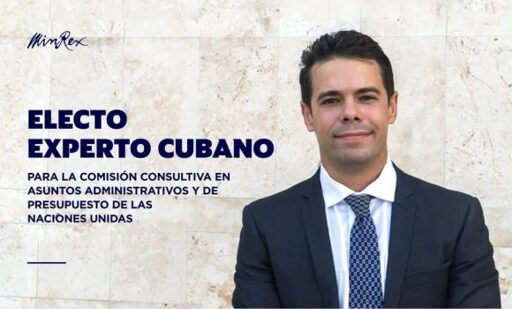
The Richard Tur UN election has turned a diplomatic confrontation between Havana and Washington into an institutional dispute at the United Nations. Cuban diplomat Richard Tur de la Concepción was elected by acclamation to the UN Advisory Committee on Administrative and Budgetary Questions (ACABQ) for the 2027–2029 term, just days after the United States expelled him from the country.[en.cibercuba][clarin]
Tur, Cuba’s first secretary at its Permanent Mission to the UN, will join the 21-member body that advises the General Assembly on the organization’s budget, administration, and finances. His term begins on January 1, 2027, and ends in December 2029.[clarin]
Cuba’s Foreign Minister Bruno Rodríguez Parrilla celebrated the appointment as a “new victory for Cuba” and a recognition of Tur’s work in favor of multilateralism. Washington, however, condemned the election and questioned whether Tur would be allowed to return to the United States to carry out the role in person.[en.cibercuba][clarin]
El candidato cubano Richard Tur resultó electo, por aclamación, como experto del ACABQ de @ONU_es
Esta elección es una victoria de #Cuba 🇨🇺 y un reconocimiento al experto por su destacada trayectoria y meritoria labor en los asuntos administrativos y presupuestarios de la ONU. pic.twitter.com/ReoFD1Lg2x
— Cancillería de Cuba (@CubaMINREX) November 6, 2026
How the UN Election Worked
The election took place by acclamation, a procedure that does not necessarily involve a contested vote. There were 10 candidates for 10 vacancies, meaning Tur faced no opponent for the seat allocated to Cuba’s regional group, and no formal objection forced a ballot.[clarin]
The ACABQ does not decide the UN budget on its own. It reviews the secretary-general’s financial and administrative proposals and issues recommendations to the General Assembly, giving it significant influence over how billions of dollars in UN resources are managed.[en.cibercuba][clarin]
Committee members are elected in their personal capacity rather than as government representatives, although in practice they are commonly nominated by their countries. Tur’s selection therefore places a Cuban diplomat in a position with direct access to the UN’s financial oversight process.[clarin]
United Nations General Assembly
The Incident That Preceded It
The appointment came 10 days after an October 27 incident during a General Assembly session on a resolution calling for an end to the U.S. economic embargo against Cuba. According to the U.S. account, Tur tried to snatch the phone of J.P. Freire, a U.S. mission official who was recording a confrontation between U.S. Ambassador to the UN Mike Waltz and Cuban Foreign Minister Bruno Rodríguez.[en.cibercuba][clarin]
Washington said Tur also swatted at Freire several times during the exchange. The U.S. State Department declared Tur persona non grata, ordered his expulsion, and said he would be sent back to Havana within 24 hours.[en.cibercuba][clarin]
Secretary of State Marco Rubio signed the expulsion order that night. The State Department said Tur left U.S. territory on October 29 and described Cuba’s actions as “intimidation and oppression.”[en.cibercuba]
Cuba and the United States Disagree
Cuba rejected the expulsion and filed a formal protest with the Office of the UN Secretary-General. Havana said the U.S. official had harassed Tur and argued that the expulsion harmed his candidacy for an important UN body.[clarin]
The two governments offered sharply different accounts. The United States accused Tur of pushing and attempting to assault a U.S. official; Cuba said its diplomat had been subjected to intimidation or harassment.[en.cibercuba][clarin]
Tur returned to Havana after the expulsion. Before the vote, Cuba’s Foreign Ministry held a recognition event for him, where Rodríguez described his conduct as “firm and courageous” and called him an example of “Revolutionary Diplomacy.”[en.cibercuba]
Washington Calls the Election a Scandal
U.S. representative for UN Management and Reform Jeff Bartos denounced the election before the General Assembly, calling it a “scandal” for the taxpayers of UN member states. He said the Assembly had rewarded a diplomat expelled after an altercation with a role overseeing billions of dollars in UN spending.[en.cibercuba]
“You chose a thug from the Cuban regime who was expelled to serve on the same commission responsible for overseeing billions of dollars in United Nations expenditures,” Bartos said.[en.cibercuba]
Bartos also noted that the position carries an annual tax-free stipend of about $180,000, which he compared to the annual salary of roughly 1,900 Cuban workers. He questioned whether Tur could perform the role remotely from Havana while receiving funding from member states.[en.cibercuba]
For Washington, the appointment represents a setback for its efforts to promote administrative reform at the UN. The U.S. argues that placing an expelled diplomat on the budget committee undermines accountability and confidence in the organization’s financial oversight.[en.cibercuba]
A Practical Obstacle Remains
Although the General Assembly elected Tur, a major operational question remains: whether Washington will grant him entry authorization to work at UN headquarters in New York. The United States has already declared him persona non grata, and it is unclear whether it will issue the visa or permission needed for him to assume the post in person.[clarin]
The dispute could affect Tur’s ability to attend ACABQ meetings, interact with UN staff, and participate fully in the committee’s work. It also raises broader questions about the balance between a country’s diplomatic privileges at the UN and the host country’s authority to control entry into its territory.[en.cibercuba][clarin]
The ACABQ’s work is largely technical, but its recommendations can shape decisions on peacekeeping budgets, administrative reform, staffing, and the allocation of resources across the UN system.[en.cibercuba][clarin]
Geopolitical Context
The Richard Tur UN election comes during a period of heightened tension between Cuba and the United States. Washington has increased pressure on Havana through sanctions targeting Cuban officials, state enterprises, private-sector actors, and foreign investors, while Cuba has accused the United States of economic coercion and political interference.[clarin]
The episode also unfolded during Cuba’s annual diplomatic campaign against the U.S. embargo. The General Assembly approved the resolution on October 28 with 130 votes in favor, 17 against, and 25 abstentions—a sharp decline from the 187 votes Cuba received two years earlier and its weakest result since 1992.[en.cibercuba]
For Havana, Tur’s election offers a symbolic counterweight to that setback. Cuba presents it as proof that it retains influence within multilateral institutions despite Washington’s pressure and its deteriorating relationship with the Trump administration.[en.cibercuba][clarin]
For the United States, the case tests the limits of its authority as UN host country. Washington can restrict entry to its territory, but it cannot unilaterally reverse a General Assembly election. The result is a standoff that could complicate U.S.-Cuba relations at the UN and set a precedent for how member states handle diplomats involved in disputes with the host government.[en.cibercuba][clarin]
What Comes Next
The immediate issue is whether Tur will be able to travel to New York and take up his seat in January 2027. If the United States denies entry, Cuba may argue that Washington is obstructing the work of a UN body; if it grants entry, it will face criticism for allowing a diplomat it expelled to return in an official capacity.[en.cibercuba][clarin]
The ACABQ’s next budget cycle will give the dispute practical importance. Tur’s presence—or absence—could become a recurring point of friction between Cuba and the United States as the committee reviews UN spending and administrative reforms.[en.cibercuba][clarin]
For now, the election has transformed a bilateral incident into a test of UN governance, host-country authority, and the political limits of multilateral diplomacy.[en.cibercuba][clarin]
From teleSUR English via This RSS Feed.