

France cost of living protests enter their fourth action as 70,000 police deploy nationwide amid rising prices, student unrest, and legal scrutiny.
Related: CFDT Estimates 800,000 Protesters as General Strike Sweeps France
France Cost of Living Protests: 70,000 Police Deployed for 4th Action
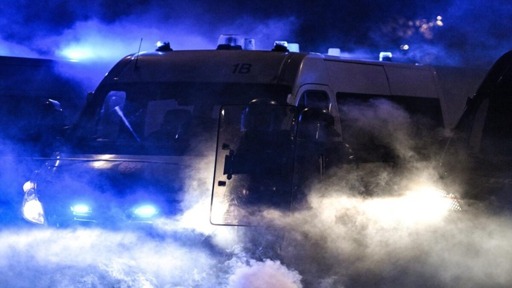
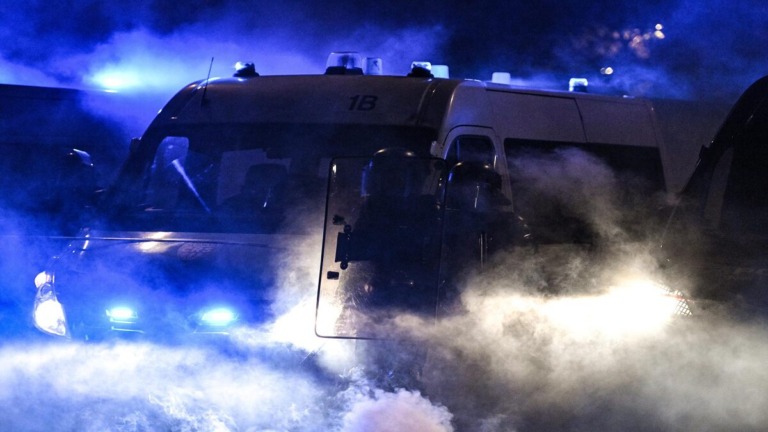
France is deploying 70,000 police officers and gendarmes nationwide on Saturday for the fourth major action in a wave of France cost of living protests. The mobilization has been called by trade unions, student groups, and the Yellow Vests movement, as anger over inflation and social cuts continues to grow.[telesurtv]
Interior Minister Laurent Nuñez confirmed the deployment and said the risk of urban violence remains unchanged from previous weekends. “The risk is exactly the same as on the previous Saturdays,” he told reporters in Paris.[telesurtv]
The operation follows a day of student protests on Friday that ended with 154 arrests nationwide and significant property damage in several cities. Authorities say the security strategy will include intensified preventive checks on roads and railway stations.[telesurtv]
Why France Is Mobilizing Again
The protests began with a major national demonstration on October 17 and have continued in successive waves. Saturday’s action is being described as the “fourth act” in a movement driven by the rising cost of living and opposition to budget cuts.[telesurtv]
The first major mobilization was marked by episodes of looting and urban damage that drew international attention. Since then, unions, students, and Yellow Vests activists have kept pressure on the government through strikes, marches, and street blockades.[telesurtv][telesurtv]
The central demands include measures to halt the erosion of purchasing power, a 10 percent pay increase including the minimum wage, cancellation of the budget-cut package, greater investment in industry, and structural improvements to public education.[telesurtv]
Police Brace for Unpredictable Protests
Nuñez said the government will repeat its previous operational strategy, with preventive controls on roads and train stations. He said the deployment responds to calls circulating on social media from radical groups urging “revolution,” “insurrection,” and the paralysis of infrastructure.[telesurtv]
Although fewer marches are backed by traditional unions this time, the minister warned that spontaneous gatherings without a clear organizational structure increase the unpredictability of the situation.[telesurtv]
The authorities have authorized the official Paris march called by the inter-union coalition. It is scheduled to begin at 2:00 p.m. local time at Place de la République and proceed to Place de la Nation.[telesurtv]
French Ministry of the Interior
Student Protests Turn Violent
Friday’s student protests produced some of the most serious incidents of the week. In Lyon, a fire was set at the entrance of the Édouard-Herriot high school, forcing the emergency evacuation of 1,800 students.[telesurtv]
The Rhône prefecture described the incident as an “unacceptable act.” Authorities also reported major disturbances in Pessac and Saint-Denis.[telesurtv]
The unrest has intensified scrutiny of the government’s policing strategy. A collective of lawyers led by Arié Alimi says it will file a criminal complaint against Interior Minister Laurent Nuñez within three weeks on behalf of at least 18 protesters injured since mid-September.[telesurtv]
The complaint seeks to establish Nuñez’s responsibility for allegedly authorizing the use of anti-riot weapons that plaintiffs describe as potentially mutilating, despite known risks.[telesurtv]
Council of Europe – Human Rights
A Record Wave of Discontent
The latest action follows Thursday’s general strike, which produced the largest single-day mobilization since the protest movement began in September. The Interior Ministry estimated attendance at 575,000 people nationwide, while the General Confederation of Labour (CGT) put participation at 1.6 million across more than 200 events.[telesurtv]
In Paris, the authorized march from Place de la République to Place de la Nation passed largely without major violence or commercial looting. Firefighters extinguished a small fire on the grass at Place de la Nation.[telesurtv]
Elsewhere, however, police used tear gas and water cannons against protesters in Marseille, Toulouse, Lyon, Bordeaux, and Nantes. The contrast between a relatively calm capital march and confrontations in provincial cities has become a recurring feature of the movement.[telesurtv]
Police Accountability Under Pressure
The National Police Inspectorate (IGPN) has opened 105 investigations into the conduct of security forces during the social protests. Of those, 52 concern specifically interventions in student demonstrations.[telesurtv]
The investigations add to mounting political pressure on Nuñez, who is already facing a potential legal action over the use of force against protesters. Human rights groups and lawyers argue that the scale of injuries and arrests requires an independent review of police tactics.[telesurtv]
The government has defended its approach as necessary to protect public order and prevent violence. Critics counter that heavy-handed policing risks deepening resentment among young people, workers, and communities already affected by economic hardship.[telesurtv][telesurtv]
Geopolitical and Economic Context
The France cost of living protests reflect a broader European crisis of affordability. Inflation, energy costs, housing pressure, and public-sector austerity have weakened purchasing power across the continent, creating fertile ground for labor unrest and anti-government mobilization.
France’s movement is particularly significant because it combines established unions, student networks, and the Yellow Vests, a grassroots movement that first emerged in 2018 in opposition to fuel taxes. The convergence of those forces gives the protests both institutional reach and street-level momentum.[telesurtv][telesurtv]
The government’s response will be watched across Europe. If Paris relies primarily on policing rather than negotiated economic relief, it may face prolonged unrest; if it offers concessions, it could set a precedent for other governments facing similar pressure from workers and students.[telesurtv]
The protests also come at a sensitive moment for the European Union, where governments are balancing fiscal discipline with demands for wage increases, public investment, and stronger social protections. France’s ability to manage the crisis without further escalation could influence political debates in neighboring countries.[telesurtv][telesurtv]
What Comes Next
The government has announced an official appearance for Monday to present possible responses to the economic crisis. But unions and student movements say they will maintain pressure in the streets indefinitely until their core demands are addressed.[telesurtv]
Saturday’s mobilization will test whether the government’s security strategy can prevent a repeat of the violence seen earlier in the protest wave. It will also determine whether the movement retains momentum after a week of strikes, arrests, and growing legal scrutiny.[telesurtv][telesurtv]
For now, the central conflict remains unchanged: a government trying to preserve order, and a broad social coalition demanding relief from a cost-of-living crisis it says has become unbearable.[telesurtv][telesurtv]
From teleSUR English via This RSS Feed.