

Nika Bartoo-Smith
Underscore Native News + ICT
Voters across the country weighed in Tuesday on more than 140 statewide ballot measures. Across 17 states, 31 ballot measures were on the docket that had the potential to impact Native people and communities.
Of the 31 ballot measures, 15 passed.
Major themes of the ballot measures spanned across issues including voting rights, 2SLGBTQIA+ rights, abortion access, cannabis regulation, environment and beyond.
A number of laws aimed at limiting trans rights passed throughout the country, relating to students’ access to play sports, bathroom usage and gender-affirming care.
“I think it’s good to point out that many of these propositions did not come from the voters, did not come from the general population. Many of these were proposed by [the] establishment that was there,” said Jaynie Parrish, Navajo Nation, executive director of Arizona Native Vote.
Arizona, Colorado, Nebraska and Washington all passed these anti-trans ballot measures. All states with tribal nations and a high number of Native people.
“We already have some of the highest rates of violence against transgender and Two-Spirit people, and this kind of feeds a bit into that as well as underrepresentation in general for these communities that are under attack,” she said.
Voters in Arizona also voted to pass Proposition 318, a measure that changed private space access and sports eligibility requirements. Parrish said they were hoping it wouldn’t pass.
“But I think a lot of folks just didn’t quite understand what that measure meant, and I think it’s on the cusp of the wave of what we’re seeing across the country, and how there has been rhetoric and actions to really suppress our Two-Spirit, transgender relatives in any capacity,” she said.
Next door in New Mexico, voters passed a ballot measure to pay its state legislators.
“New Mexico was the only state in the country that did not pay its legislators a salary, and this affects who can serve in office, who this actually is accessible to,” said Angel Charley, who is Laguna Pueblo, Zuni Pueblo, and Diné.
Charley, a state senator in New Mexico, was one of four women of color who introduced Constitutional Amendment 4.
“When you think about who can actually serve their communities and serve them well, we need to pay our legislators to be able to do that,” she said. “It also opens up the possibility of running for office for someone who might not have thought about it before, so I’m thinking about young people, students, people right now who are working two or three jobs to make ends meet. Those are the kind of lived experiences that we need in government to change the system so it works for working people.”
It was a toss up between states with voter ID requirements on the ballots: Nevada and North Carolina both voted in favor of ballots requiring photo identification to vote. Arizona, California and Colorado voters voted against such measures, while Massachusetts will move forward with same-day voter registration.
Voters in Arizona voted against Proposition 144 that would require a government-issued ID to vote and that only U.S. citizens can vote in the state.
“With [Proposition] 144, we already know that Arizona already has some of the most restricted laws already when it comes to voter ID,” Parrish said. “So, for us that have been in this work, as organizers and as part of our team, we’re well versed to see what voter suppression looks like in many of these legislative pieces, and so for us, that’s what it amounted to was another measure to try to make it harder for our people to vote.”
This is a developing story and will be updated as ballots are counted.
Below are the results and updates for the 31 ballot measures in 17 states.
Cannabis
Idaho
Both states with measures on the ballot that would have restricted the authority to legalize and grow marijuana voted against those measures.
- FAILED: HJR 4, seeking to grant the state legislature exclusive authority to legalize marijuana, narcotics and other psychoactive substances.
Massachusetts
- FAILED: Question 8, seeking to eliminate recreational marijuana sales and growing cannabis by an individual in their home. For those over 21, it would allow the possession of up to one ounce of marijuana without penalties. For those under 21, it would make possession of up to two ounces of marijuana a civil offense.
Abortion
While a measure seeking reproductive freedom in Idaho failed, Nevada and Virginia voters voted in favor of reproductive freedom.
Idaho
- FAILED: Proposition 1, seeking to create a statute saying that people have the right to reproductive freedom and privacy declaring that the state can regulate abortion only after the “point of fetal viability.”
Nevada
- PASSED: Question 6, seeking to establish a right to abortion in the state constitution allowed until “fetal viability.”
Virginia
- PASSED: Question 1, seeking to create a state constitutional right to reproductive freedom.
Education
New Mexico and North Dakota both had educated related measures on the ballot. In New Mexico, voters voted to approve $230 million for school improvements while North Dakota voters voted against a measure to provide free breakfast and lunch to all students.
New Mexico
- PASSED: Bond Question 3, seeking to permit up to $230 million in bonds for improvements at higher education institutions, special schools and tribal schools, that would be funded by a statewide property tax.
North Dakota
- FAILED: Constitutional Measure 2, seeking to require all public schools to provide a free breakfast and a free lunch to all students.
Election system
In Alaska, a measure that would have repealed the rank choice voting method failed.
Alaska
- 73 percent of votes are in and it’s leaning no: Ballot Measure 2, seeking to repeal the Top-Four rank choice voting method that was adopted in 2020.
Environment
In California, a measure that would have changed the California Environmental Quality Act failed.
California
- 65 percent of the votes are in and it’s leaning no: Proposition 45, seeking to make changes to the California Environmental Quality Act, including establishing deadlines for public agencies to complete environmental review and limiting their existing requirement to consider project alternatives that would reduce environmental impact. The proposition does include a tribal consultation component, requiring applicants to consult with federally recognized tribes.
Health
In South Dakota, an amendment related to Medicaid expansion, and a contingency on federal dollars, failed.
South Dakota
- FAILED: Constitutional Amendment 1, seeking to make it so Medicaid expansion was dependent on the federal government covering at least 90% of the program’s cost.
Hunting and fishing
In Colorado, voters voted against an amendment that would have established a right to hunt and fish through “traditional methods.”
Colorado
- FAILED: Amendment 83, seeking to establish a right to hunt, fish and take fish and wildlife through “traditional methods,” allowing the state legislature and executive agencies to regulate it.
Judicial
In Montana, a measure requiring all judicial elections to remain nonpartisan passed.
Montana
- PASSED: Constitutional Initiave 132, seeking to add a section to the state constitution requiring that all judicial elections remain nonpartisan.
Race and ethnicity
Both Arizona and Wisconsin had measures on the ballot seeking to prohibit discrimination or preferential treatment based on race or ethnicity. In Arizona, the measure did not pass. In Wisconsin, the measure did pass.
Arizona
- FAILED: Proposition 142, seeking to prohibit the state from “race or ethnicity based preferential treatment” of applicants, students or employees. It would also prohibit state funds from going toward training or offices that promote “preferential treatment toward or discrimination against an individual or group due to their race or ethnicity.”
Wisconsin
- PASSED: Question 3, seeking to prohibit the government from granting preferential treatment or discrimination based on race, sex, color, ethnicity or national origin.
Religion
A measure in Wisconsin, which would prohibit the forced closure of public places of worship in times of emergency, failed.
Wisconsin
- FAILED: Question 2, seeking to prohibit the state from closing or forbidding gatherings in public places of worship during declared emergencies, including public health emergencies.
Sex, gender and 2SLGBTQIA+ issues
Three states passed anti-trans legislation, Arizona, Colorado and Washington. On the other hand, Missouri voters voted against a measure that would have repealed the right to reproductive freedom and prohibited gender-affirming care for minors.
Virginia voters voted to remove a ban on same-sex marriage.
Arizona
- PASSED: Proposition 318 a measure seeking to prohibit schools and athletic associations from allowing students, athletes, employees, or other individuals from using a restroom, locker room or other private space that are not designated for their sex, which they define as being that which is marked on a person’s birth certificate.
Colorado
- PASSED: Proposition 134, seeking to require school sports teams, from kindergarten through college level, to be separated based on sex, defined as “biological reproductive systems.”
- PASSED: Proposition 135, seeking to prohibit healthcare professionals from providing gender-affirming care surgeries for those under 18.
Missouri
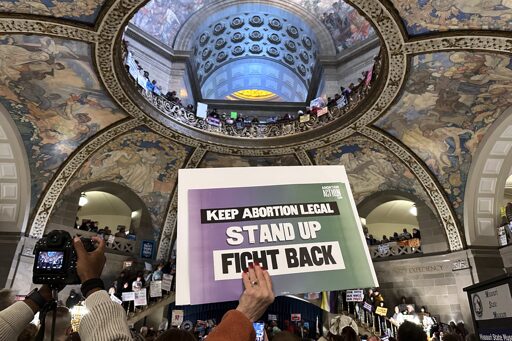
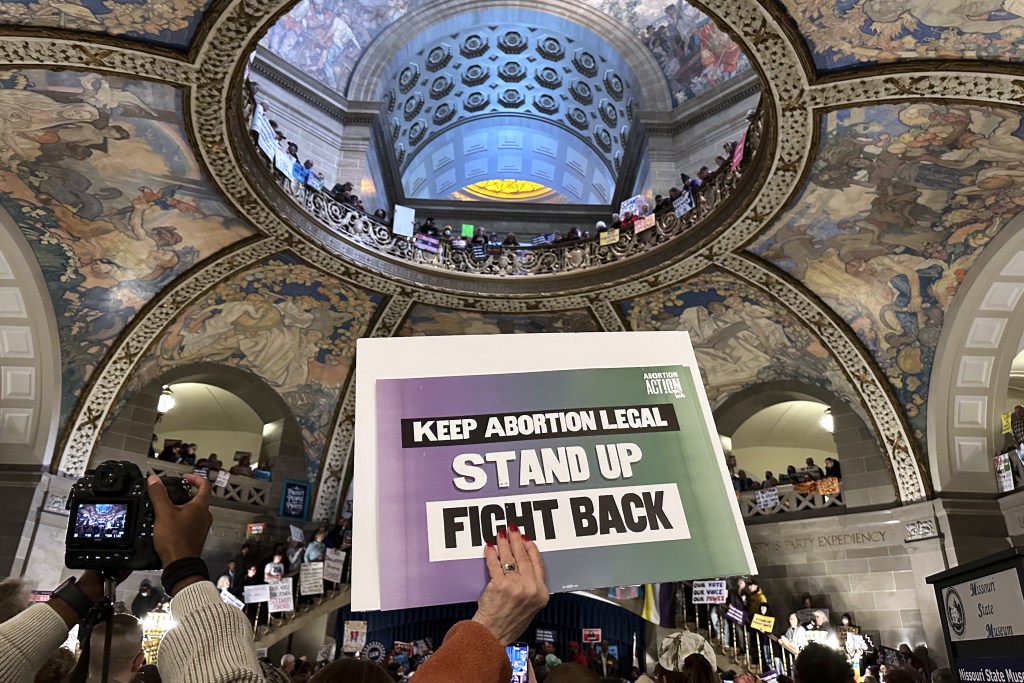
- FAILED: Amendment 3, seeking to repeal the constitutional right to reproductive freedom except in cases of “medical emergency, fetal anomaly, rape, or incest.” It would also prohibit gender transition surgeries for individuals under 18, including prescribing or administering hormones of puberty-blocking medication.
Nebraska
- PASSED: Measure 442, seeking to require schools to designate sports teams as male, female or co-ed and attempt to ban transgender girls from girls’ sports.
Virginia
- PASSED: Question 2, seeking to remove a provision banning same-sex marriage and stating that marriage is between one man and one woman. It would prohibit the state from denying a marriage license based on sex, gender or race.
Washington
- PASSED, AP declared: Initiative 638, aiming to ban transgender girls from participating in girls’ sports by requiring students obtain a statement from a healthcare professional that “verifies the student’s biological sex, relying on one of more of the following: the students’ reproductive anatomy, genetic makeup, or normal endogenously produced testosterone levels.
- 78 percent of the votes are in and it’s leaning no: Initiative 001, a measure to open access to all of a students’ school records — including medical and mental health records — to parents of legal guardians, potentially increasing students safety risks, especially for 2SLGBTQIA+ students without accepting homes.
State government
Two state government constitutional amendments passed in New Mexico.
New Mexico
- PASSED: Constitutional Amendment 1, seeking to require bills to become law if the governor does not sign or veto them within a required timeframe. This would eliminate the governor’s pocket veto.
- PASSED: Constitutional Amendment 4, seeking to establish a salary for state legislators that is equal to the statewide annual median household income.
Voter IDs
It was a toss up between states with voter ID requirements on the ballots: Nevada and North Carolina both voted in favor of ballots requiring photo identification to vote. Arizona, California and Colorado voters voted against such measures, while Massachusetts will move forward with same-day voter registration.
Arizona
- FAILED: Proposition 144, seeking to change the state’s election laws, including specifying that only U.S. citizens may vote in any Arizona elections. It would also require voters to show a government-issued ID to cast a ballot.
California
- FAILED, AP declared: Proposition 39, seeking to require voters to show a government-issued ID when casting a ballot and would also require election officials to use government data to confirm voter citizenship and report each year the percentage of each county’s voters that have been citizenship-verified.
Colorado
- FAILED: Amendment 84, seeking to require voters that are sending their ballots by mail to provide both a signature and an identification number which could include the last four of their Social Security number or a REAL ID number.
Massachusetts
- PASSED: Question 4, seeking to allow for same-day voter registration.
Nevada
- PASSED: Question 7, seeking to amend the constitution to require voters to present photo identification when voting in person or to provide the last four digits of their driver’s license or Social Security number if voting by mail.
North Carolina
- PASSED: The Require Voter Identification Amendment, seeking to require photo identification for all voters, not just those voting in person.
This story is co-published by Underscore Native News and ICT, a news partnership that covers Indigenous communities in the Pacific Northwest.
The post Nearly half of the ballot measures that could affect Indian Country passed appeared first on ICT.
From ICT via This RSS Feed.