

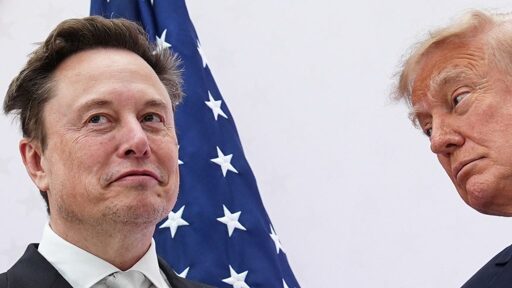

OpenSecrets published its list of top donors to outside groups this election cycle, and the top ten is a “who’s who” of billionaires: Elon Musk, casino magnate Miriam Adelson, former New York City mayor Michael Bloomberg, and tech oligarchs Benjamin Horowitz, Marc Andreessen, and Paul Singer all made the list.

And although Republicans outraised and outspent Democrats across the board, the real story isn’t the party split. It’s who is writing the checks, and what they’re buying.
In particular, three special interest groups spent historic amounts to capture Congress: AIPAC, Big Tech, and crypto. Below are some of the most egregious examples, but this is far from an exhaustive list.
AIPAC
AIPAC contributed nearly $25 million to federal candidates and political committees this election cycle, through September 30.
What happened after September 30? Here’s where it gets interesting. Since the genocide in Gaza began three years ago, more and more candidates are getting heat for taking AIPAC money, and support for Israel has become a massive political liability
So in October, AIPAC publicly announced it would no longer be issuing endorsements or making direct contributions to candidates and PACs. But don’t be fooled: AIPAC isn’t stopping its spending, it’s only changing the way it spends.
Instead of directly funding pro-Israel candidates themselves, the organization will now encourage individual donors to contribute to candidates and continue channeling funds through its affiliated super PAC, the United Democracy Project (UDP).
In 2024, the UDP, functionally a cover for AIPAC money, spent over $9.8 million to unseat progressives New York representative Jamaal Bowman and another $5.2 million against Missouri representative Cori Bush. Both lost their races. In 2026, Bush ran and lost again after the UDP injected another $2 million into the race in favor of her opponent Wesley Bell.
But AIPAC is now so toxic that its biggest investment in the primaries, the Michigan Democratic race between Haley Stevens and Abdul El-Sayed, turned out to be a complete failure. AIPAC and its affiliated groups dumped $30 million into the race, trying to ensure staunch Israel supporter Haley Stevens would win the primary – but this made her a regular target of attack by her opponent Abdul El-Sayed. Stevens lost.
After Stevens’s defeat, the UDP desperately poured $9 million into supporting El-Sayed’s Republican opponent Mike Rogers in the general election as a last-minute hail mary. They again failed.
Another important race that AIPAC was betting on in the midterms was the one between progressive Democrat Aisha Wahab and her more moderate, police-union backed challenger Melissa Hernandez, also a Democrat, in California’s 14th Congressional District. Wahab ran on a platform of affordable housing and healthcare, worker protections, public education, and expanded access to food assistance. She has also explicitly called what’s going on in Gaza as a “genocide,” something that Hernandez declined to do.
Wahab won the special election in August to finish Eric Swalwell’s term after he resigned over sexual assault allegations. She then faced Hernandez again in November’s election.
UDP spent $1.2 million to block Wahab, including $800,000 on attack ads alone.
Because they knew they could not attack Wahab over lack of support for Israel, they went after her public safety voting record. And that goes to show what a massive liability support for Israel has become.
And let’s not forget the individual billionaire donors and how they shape Israeli policy. Just to name a few: Robert Kraft, the sports mogul billionaire who kicked Macklemore off of Ed Sheeran’s tour a couple of months ago, unsurprisingly is a major donor to the United Democracy Project and AIPAC, having donated several million dollars to both in the last decade.
Miriam Adelson – Las Vegas casino magnate, pro-Israel megadonor – dropped over $66 million this cycle toward Republican groups and PACs, making her of the top individual donors of the entire midterm.
And then there’s Hedge fund billionaire Paul Singer**.** This midterm cycle, he gave $49 million to Republican-aligned PACs and $2.6 million to the UDP.
BIG TECH
Big Tech billionaires showed up in a big way this year.
Elon Musk took the number one spot for highest donor: $446 million to Republican candidates and PACs. Over $200 million of that went toward Texas Attorney General Ken Paxton’s Senate campaign. But it’s not just Paxton. Musk also donated $5 million to Texas Governor Greg Abbott’s bid for reelection, making him his single largest donor. Texas is one state where Elon was massively invested since he moved both Tesla’s and Space X’s corporate headquarters there from California. And in those years he’s cozied up to Texas state leaders to benefit from lucrative state contacts and tax breaks, so the millions of dollars he’s dropping in these midterms is just a small drop in the bucket for him to make sure that continues. Paxton and Abbott both lost their races.
But Musk was far from the only tech oligarch invested in these midterms.
Benjamin Horowitz, half of the VC firm Andreessen Horowitz, spent over $55 million. His firm partner Marc Andreessen gave over $43 million. OpenAI co-founder Greg Brockman and his wife Anna Brockman contributed $50 million.
These four are particularly significant because they launched Leading the Future, a PAC whose mission includes funding candidates committed to blocking AI regulation and cutting China out of the AI race. In fact, the Brockmans’ $50 million was evenly split between Leading the Future and MAGA, Inc., a pro-Trump super PAC.
CRYPTO
And finally, crypto.
Cameron and Tyler Winklevoss, co-founders of Gemini crypto exchange, contributed nearly a combined $24 million this cycle. Most of their individual donations also went to MAGA Inc. to support Trump.
Ripple Labs Chris Larsen gave at least $22.5 million of his own money to candidates and super PACs for the midterm elections. At least $12 million of that went toward opposing California’s proposed 5% billionaire wealth tax.
Larsen also donated millions to the Invest in Tomorrow Coalition PAC, which is spending millions to unseat incumbent Republicans who voted to end renewable energy incentives under Biden.
However, Larsen has also said Invest in Tomorrow is getting ready to go after DSA soon. In an interview with Bloomberg, he warned: “We’re going to take out some of these DSA people that are standing in the way. There’s no time to waste.”
Fairshake, crypto’s own political action committee, and its affiliated PACs dropped $95 million in this cycle.

Fairshake backed 33 House incumbents this midterms, publicly disclosing at least $1 million in donations into the campaigns of candidates. Some of them hold key House committee positions which could shape future legislation on crypto: Republicans Bryan Steil of Wisconsin, who chairs a digital assets subcommittee and French Hill of Arkansas and Bill Huizenga of Michigan, the chair and vice chair of the House Financial Services Committee, respectively.
Fairshake also contributed $1 million to Democrats Janelle Bynum of Oregon, Derek Tran of California, and Steven Horsford of Nevada.
House Ways and Means Committee chair Jason Smith, who has spent the last year trying to subpoena us at BT over our funding, is also backed by Fairshake, but they haven’t publicly disclosed how much they’ve contributed to his campaign. Smith, as chair, has introduced crypto legislation and tax reforms to, in his own words, “ensure the United States is the crypto capital of the world.”
Whether it’s foreign policy, AI deregulation, or crypto protectionism, $12 billion bought a whole lot of access this election. What better encapsulates the rule of billionaires in the US better than this midterm cycle, where your choices to vote were for AIPAC, Big Tech, or crypto.
From BT News via This RSS Feed.