

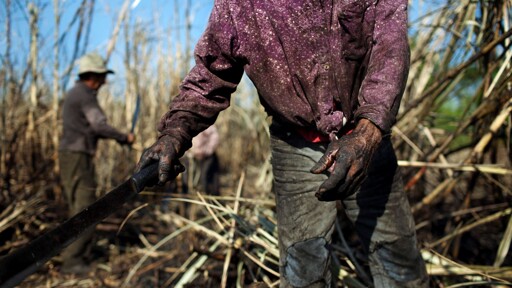
Years after Indigenous communities in Guatemala were forcibly evicted from their ancestral land, the Inter-American Commission on Human Rights (IACHR) is asking a court to hold the government responsible and provide reparations. On Oct. 28, the IACHR announced it had referred a case to the Inter-American Court of Human Rights, which rules on human rights violations in the Americas. The case involves 14 Maya Q’eqchi’ communities in Alta Verapaz that were removed from their land to make way for sugarcane plantations. “Sugarcane cultivation caused displacement and the loss of rice, maize and bean crops that supported the health and food security of the Indigenous Maya Q’eqchi’ population, and substantially affected the environment,” the IACHR said in its referral, submitted to the court Sept. 17. Disputes in the territory date back to at least 2005, when private companies started buying Indigenous land that the Maya Q’eqchi’ had occupied for centuries, according to the IACHR referral. The government hadn’t granted the communities proper land titles, creating confusion about who could occupy the area. In 2011, following years of protests, a court authorized the eviction of the 14 Indigenous communities, whose residents had refused to leave the land. “The government of the republic has a legal and moral obligation to stop the growing number of illegal actions that pose a serious risk to the country’s governability,” the government said in a statement at the time. The evictions were carried out “violently and with a disproportionate use of force,” the IACHR’s referral said. The Commission…This article was originally published on Mongabay
From Conservation news via This RSS Feed.