

Mapchart
Erin In The Morning is a reader-supported publication. To receive new posts and support my work, consider becoming a subscriber.
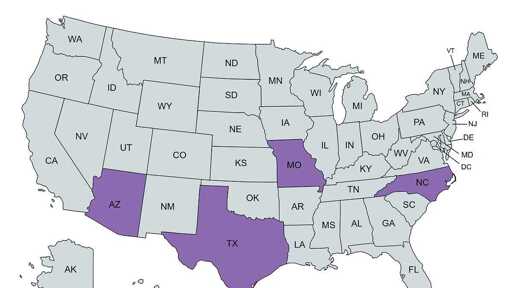
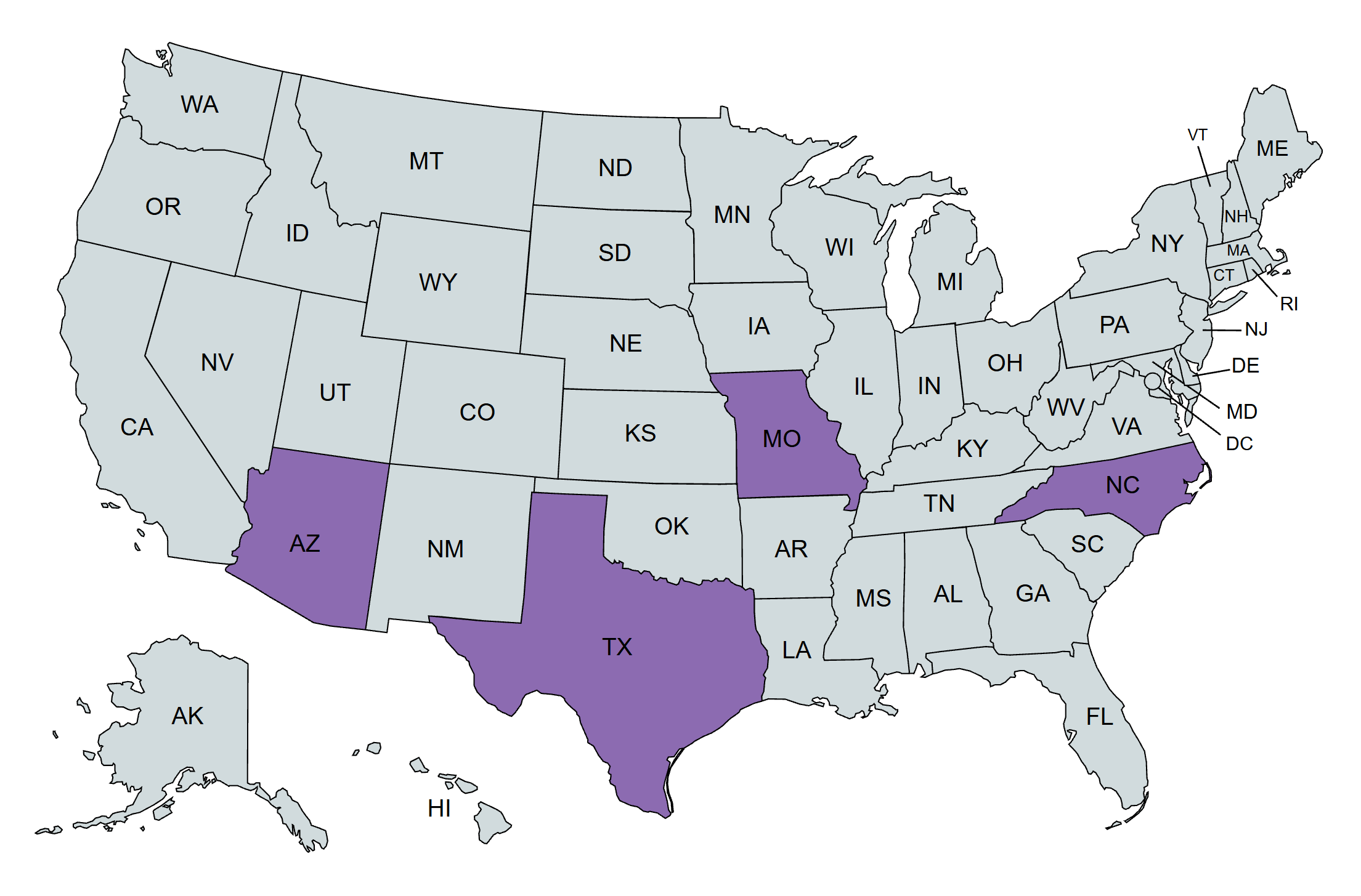
In the aftermath of Tuesday’s wave election for Democrats, it became clear that the anti-transgender panic may have ceased to produce results for the Republican Party. Meanwhile, many Democrats were elected after explicitly supporting transgender people, especially their access to medical care. As a result, Democrats now hold significant power in states once under the control of the Republican Party, a party that used its power to target transgender people anywhere it had the legislative votes and executive power to do so. Now, it appears that the balance of power has shifted enough in four states to give Democrats a chance to end some of the worst anti-transgender laws, though it remains to be seen whether they will.
Those four states are Arizona, which has a gender-affirming surgical care ban for trans youth on the books and restrictions on Medicaid coverage, as well as a newly passed sports and locker room ban, though that one will not be removable by lawmakers; Missouri, which has its own ban on gender-affirming care for trans youth that sunsets in August of next year, meaning it will no longer be in effect unless Republicans renew it; North Carolina, which has a gender-affirming care ban and a “Don’t Say Gay or Trans” law on the books; and Texas, which has passed some of the most severe anti-transgender legislation anywhere in the United States. All of these states, because of changes in the composition of government, could see some of those policies end for transgender people as Democrats gain power.
The clearest path runs through Arizona, where Democrats are set to take control of both chambers of the Legislature for the first time in decades. Their majorities will be substantial, with margins of 14 seats in the House and 10 in the Senate as of the latest count. Meanwhile, Arizona Gov. Katie Hobbs, who won reelection Tuesday, has vetoed several anti-transgender bills. Arizona also has one of the oldest gender-affirming care bans on the books, a ban on surgery for transgender youth, which covers top surgery, sometimes sought by older trans teens. A simple majority can easily repeal this surgery ban, meaning Arizona may be the first state to legislatively remove a gender-affirming care ban. Unfortunately for trans people in Arizona, the legislature will not be able to overturn the bathroom ban, which will require either a court fight or a future referendum.
In Missouri, Democrats might not need to do anything at all for the gender-affirming care ban there to fall. When Republicans passed the ban in 2023, Democrats managed to get a sunset clause inserted into it, meaning the law’s ban on puberty blockers and hormones naturally expires in August 2027. Republicans have failed to remove that sunset clause on multiple occasions. Now, Democrats have broken the GOP supermajorities in the state Legislature, meaning the party has more leverage over what can pass and is better positioned to filibuster and broadly disrupt attempts to remove the clause. With enough maneuvering, Democrats could potentially ensure that gender-affirming medication for trans youth becomes legal in the state again.
We could also, depending on what happens in the coming weeks, see several anti-transgender laws fall in North Carolina. That is because North Carolina Democrats are currently one Senate seat short of a trifecta, and the remaining seat is likely to go to a recount. Should Democrats capture that seat, they could remove the ban on gender-affirming care for transgender youth as well as the “Don’t Say Gay or Trans” law and sports ban in the state. Because Democrats have the governorship, they would not need supermajorities to pass bills removing the bans if they capture the trifecta.
And then there is Texas, a special case. In 2024, the entirely Republican Texas Supreme Court upheld the state’s gender-affirming care ban. However, that decision was not 9-0; it was 8-1, with a lone dissenter: Justice Debra Lehrmann, who called the ban “cruel” and unconstitutional. Lehrmann will continue to serve on the Texas Supreme Court. Meanwhile, four Democrats were just elected, making a 5-4 majority possible with Lehrmann. This means that several cases could soon begin making their way up through the state courts, and as a result, we could see everything from the bathroom ban to the gender-affirming care ban, the book ban and more in the state go away, along with many other laws unrelated to transgender people in a state that has passed some of the most extreme right-leaning legislation in the country while Republicans had control.
None of this is a given. Republicans can still force a vote in Missouri, and wher that happens depends on the political capital either party is willing to expend. North Carolina’s repeal can only happen if the recount goes Democrat’s way. Arizona will test whether Democrats are willing to repeal a surgery ban when they have the votes to do it. And Texas’ path runs through the courts, which can move very slowly. But after Tuesday, for the first time, transgender people in these states have a hope that didn’t exist a week ago.
Erin In The Morning is a reader-supported publication. To receive new posts and support my work, consider becoming a subscriber.
From Erin In The Morning via This RSS Feed.