

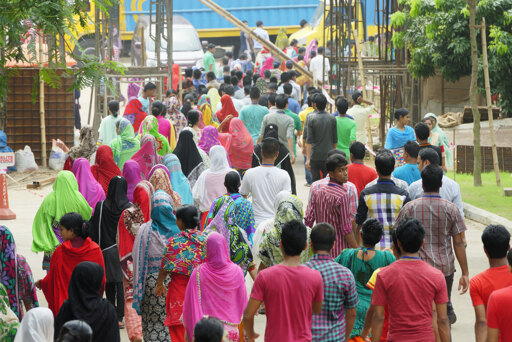
Rising temperatures in Bangladesh are creating an occupational health crisis for the 4.2 million workers in the country’s garment industry, reports Mongabay contributor Usraat Fahmidah. A World Bank report shows that maximum temperatures across the country have climbed by about 1.1° Celsius (2° Fahrenheit) since 1980. The country’s capital, Dhaka, hit a record 40.6°C (105°F) in April 2023 and endured a 30-day heat wave in 2024. A 2025 study found that peak indoor temperatures at garment factories exceed 35°C (95°F) on 37% of monitored days, occasionally surpassing 40°C (104°F) during peak summer months. That heat is taking a physical toll on factory workers. Mridula, a 20-year-old sewing operator in Dhaka, collapsed on the job after she became dizzy amid extreme heat. She was later diagnosed with jaundice, a condition exacerbated by dehydration and physical exertion. Medical staff at Dhaka garment facilities report rising numbers of dehydrated workers suffering from low blood pressure, alongside a marked increase in needle injuries from sewing machines and falls during hotter months. Systemic data on indoor heat-related illness remain scarce. Aaron Bach from Griffith University in Australia, who co-authored a 2025 study on heat impacts in Bangladeshi garment factories, said factory clinics are set up for acute emergencies and lack facilities to screen for chronic conditions. “If we’re not recording health effects now, we’ll have no way of knowing how much harm is building up as conditions get hotter,” Bach told Mongabay. Moreover, Bangladesh’s 2024 National Guideline on Heat-Related Illness focuses on outdoor labor and…This article was originally published on Mongabay
From Conservation news via This RSS Feed.