

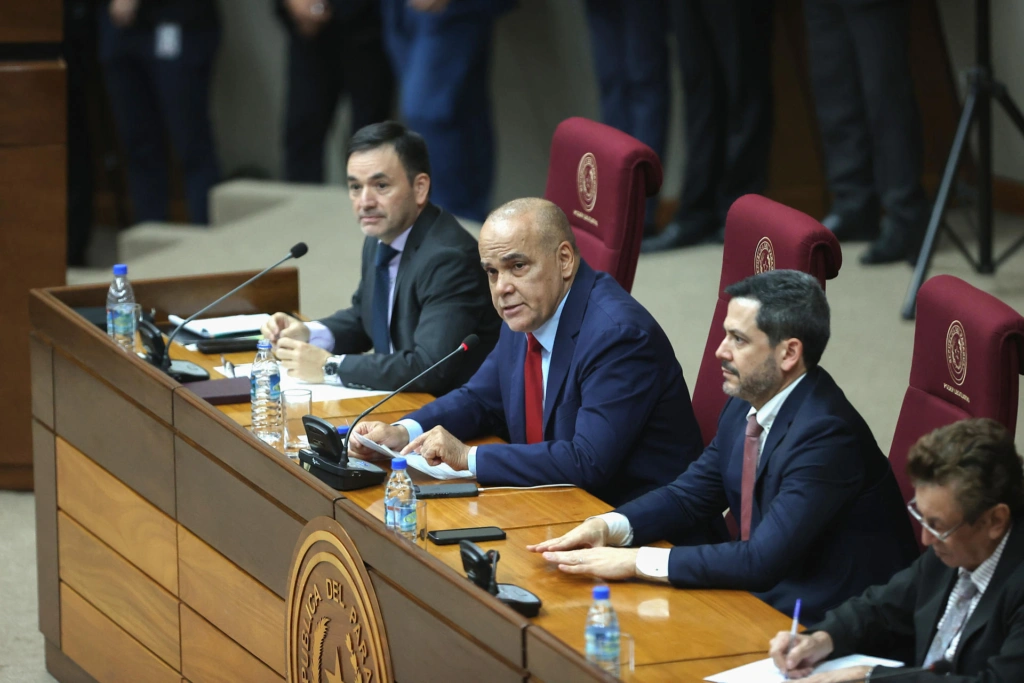
Pro-government lawmakers walked out of Paraguay’s Congress on Thursday, breaking quorum and preventing a vote on whether to accept President Santiago Peña’s resignation or press ahead with his impeachment over the Ueno Bank scandal.
The extraordinary bicameral session was meant to decide whether Congress would accept the resignation or reject it and allow the impeachment process to continue.
The presiding officer declared a lack of quorum after the roll-call vote had already gathered dozens of votes. Peña’s political future was left hanging. Ruling-party legislators left after realizing they lacked the votes to accept the resignation and install Vice-president Pedro Alliana as head of the Executive.
RELATED: Paraguayan President Santiago Peña Resigns Amid Ueno Bank Crisis
The Paraguayan President Santiago Peña is entangled in the Ueno Bank scandal, a private lender to which he was linked, which collapse has affected some three million Paraguayans. Congress was set to decide whether to accept his resignation or reject it and continue the impeachment process.
Government-aligned legislators triggered the collapse of the session by leaving the chamber. Several lawmakers detected the maneuver and denounced it in the room as soon as the counting began. The vote was interrupted, and the session was adjourned with the resignation unresolved.
Before the walkout, the debate had turned sharply against impunity. Several members of Congress rejected the resignation and demanded a full impeachment trial with all guarantees, one that would place the president before the justice system as an ordinary citizen.
📍CONGRESO DE LA NACIÓN
Se levantó la sesión bicameral que trataba la renuncia del presidente Santiago Peña por falta de quórum pic.twitter.com/DaVtyx4fFf
— Paraguay TV (@ParaguayTVHD) November 5, 2026
Text reads: “The bicameral session dealing with the resignation of President Santiago Peña was adjourned due to lack of quorum.”
Impeachment or Immunity
Legislators argued that the impeachment had already begun and that the “accused” was using his resignation as a “ruse” to “cut short the impeachment.” The maneuver would allow the President to claim the honorary post of senator for life, reserved for those who leave office with honorability, and which grants immunity from prosecution.
Senator Yolanda Paredes called the removal process in the Chamber of Deputies a “show” staged and prolonged deliberately to give Peña time to submit his resignation. Accepting it, she said, amounts to “high treason.” She warned that accepting the resignation would erase the people’s memory or dry the tears of nearly three million defrauded citizens. The senator recalled that the Senate had promoted and approved a bill forcing the Central Bank of Paraguay to begin returning money to savers and depositors.
Outside Congress, demonstrators demanded that lawmakers complete the impeachment so Peña loses his parliamentary privileges and answers to the courts for the failure of Ueno Bank, the private lender he was linked to. If he is removed through impeachment, he would not gain lifetime senator status or its privileges. If the Senate accepts his resignation and does not continue the impeachment, he would take that seat and its immunity.
The suspended decision carries direct consequences for the President’s political and legal standing. If removed through impeachment, he would not receive the status of senator for life nor the immunity that comes with it, and he would face the claims of the savers affected by the bank’s collapse.
On Thursday, Paraguay’s Public Prosecutor’s Office announced it will include Peña, who submitted his resignation, in three open criminal investigations related to the intervened Ueno Bank, which also involve other former officials of his administration. In a statement, prosecutors said a group of lawmakers expanded a complaint filed in October 2025 against Peña to add facts related to the oversight and resolution of Ueno Bank scandal and the placement of large sums of public funds in the bank under his government.
The collapse and the resulting crisis have affected about 60% of Paraguay’s adult population. Ueno Bank had about three million customers in a country of fewer than seven million people.
From teleSUR English via This RSS Feed.