

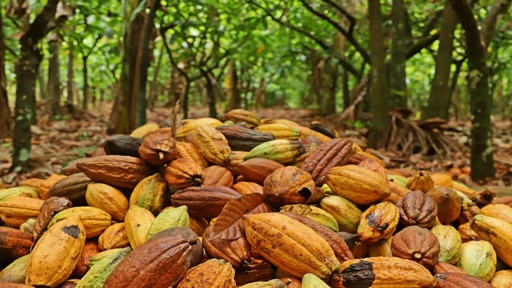
As record cocoa prices drive farmers in West Africa to clear native forest, a new study suggests the crop is following a different path in the Brazilian Amazon: It’s spreading onto land that was cleared long ago. Mapping by Embrapa, Brazil’s state-run agricultural research agency, found that the area on which cacao was growing in Pará, the country’s top-producing state, grew by a third between 2022 and 2024 to 116,436 hectares (287,700 acres). Nearly all of the cacao was found on old pastures and other previously cleared land, with 96% of the cacao that was mapped in Pará and 98% of it in Rondônia state located in areas deforested before 2020. This is fully compliant with the European Union’s sustainability regulations, strengthening Brazil’s position as a potential cocoa exporter. The study also found a new pattern in how the crop is grown. Until Embrapa’s 2022 mapping, all the cacao it had identified in Pará grew in agroforestry systems. Now almost two-thirds of new plantings are full-sun monocultures, where a single crop is grown in a large area without shade. This type of monoculture yields more beans per tree but is more vulnerable to pests and disease and leaves farmers dependent on a single crop. Cacao mapping in the Amazon traces back to TerraClass, a program run with Brazil’s space agency, INPE, that maps how deforested land in the Brazilian Amazon is used. Adriano Venturieri, a remote sensing specialist at Embrapa Amazônia Oriental in the city of Belém in Pará, led…This article was originally published on Mongabay
From Conservation news via This RSS Feed.