


When Trump was elected both in 2016 and 2024, promising to make the federal government hostile to climate action, many climate advocates insisted that state and local governments would take up the mantle of pushing for clean energy. That’s the thesis of the “America Is All In” coalition, which brings together cities and states that have vowed to uphold America’s “climate commitments … [i]n the absence of federal leadership.” The unspoken caveat in these claims is that the states leading the way on climate policy are concentrated in a few liberal parts of the country, like New England and the West Coast.
The Democratic Party’s historic victory in this week’s midterm elections could change that. Democrats have secured control of both state legislative chambers and the governor’s mansion — also known as a “trifecta” — in Arizona, Pennsylvania, and Wisconsin, three states that have spent years or decades under Republican or divided control. The three states have also lagged on support for clean energy. Democrats also restored trifectas in Minnesota, Michigan, and Nevada this week, but those are states where they last had unified control earlier this decade.
“It is impossible to overstate how monumental these results are,” said David Weiskopf, the senior policy director at Climate Cabinet, a nonprofit that works to elect climate-focused candidates and pass state climate policy. He said that the six states where Democrats have secured trifectas would be one of the world’s largest emitters if they made up their own country, rivaling Canada and Saudi Arabia. “This is just a massive opportunity to make progress.”
Here’s how the election could open up the floodgates for new climate policy in Wisconsin, Pennsylvania, and Arizona.
Wisconsin
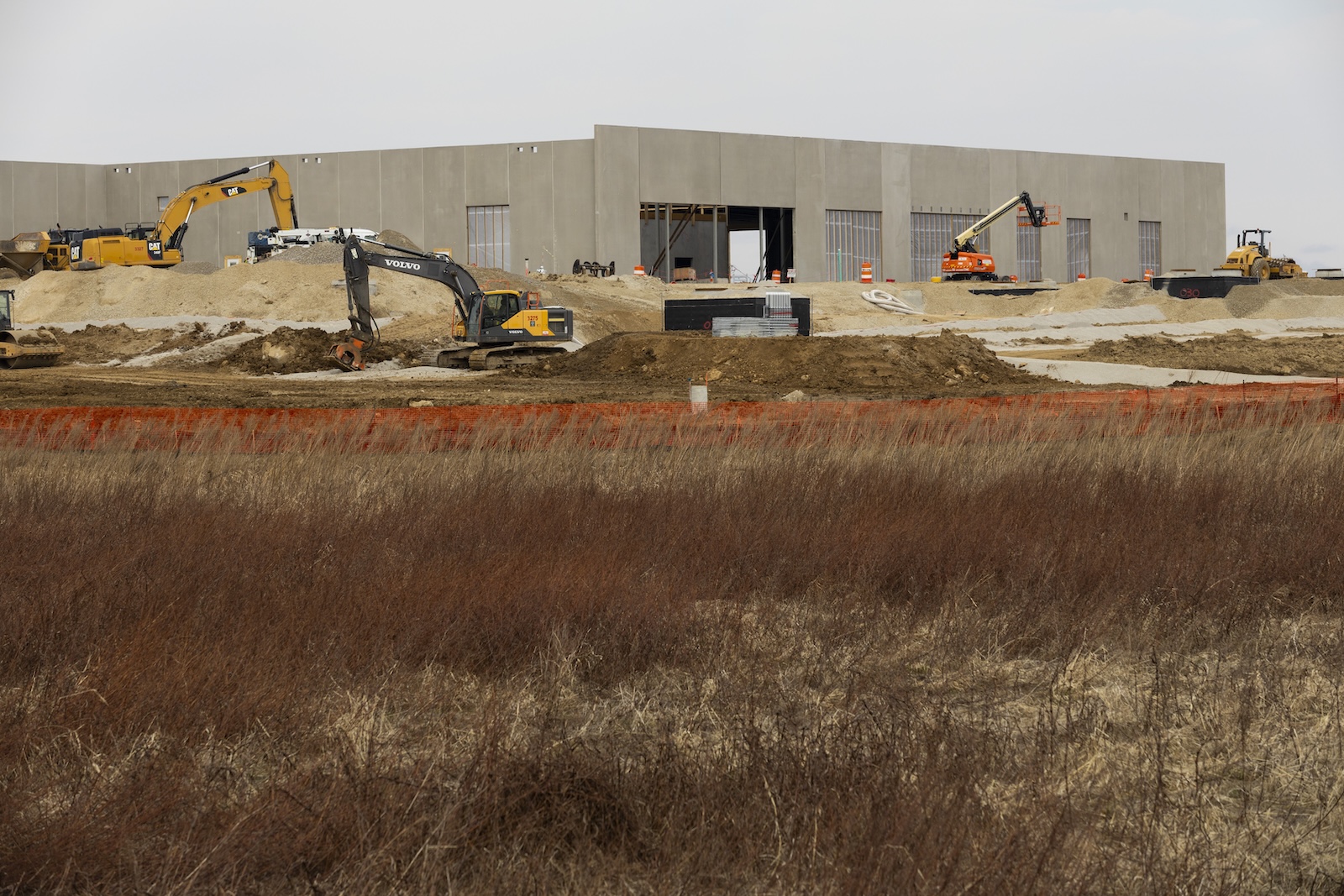
Construction on a Meta data center in March in Beaver Dam, Wisconsin. The state’s legislature failed this year to pass a law that would require data centers to source their power from clean sources.
Joe Timmerman/Wisconsin Watch via Getty Images
Compared to its neighbors in the Upper Midwest, Wisconsin has been far less ambitious when it comes to ditching fossil fuels in its power sector. While Michigan and Minnesota have both passed laws that mandate that the states get all their power from clean sources by 2040, Wisconsin set a measly 10 percent renewable electricity standard more than two decades ago. It blew past that goal but never set a new target. Unlike most other states, it doesn’t even require utilities to plan for what kinds of power plants they want to build. The state gets a larger share of its electricity from coal than its immediate neighbors.
Renewable energy advocates in the Badger State believe they can make some short-term gains with Democrats’ first trifecta since 2010. Erik Kanter, the policy director for the nonprofit Clean Wisconsin, said he believes that the new legislature can agree on the “low-hanging fruit” of making utilities plan for the future, which he said will nudge more of them to build renewables rather than extending the lifespans of gas and coal plants. The Wisconsin legislature failed this year to pass a law that would require data centers to source their power from clean sources, and Kanter expects such a measure to pass once Democrats take control. The legislature will also likely renew programs like Knowles-Nelson, a longstanding fund for parks and ecosystem preservation, which once enjoyed bipartisan approval but has lost support from Republicans in recent years.
Weiskopf, of Climate Cabinet, believes that even more ambitious moves are in the offing. He expects Wisconsin’s new class of legislators to pursue a 100 percent clean electricity standard, filling what he calls a “Wisconsin-sized hole” in the Upper Midwest. Not only would that help to phase out coal in the state, it would also make it easier for neighboring states to meet their climate goals, since the whole region shares the same interconnected power grid.
Pennsylvania

The NRG Station of SEPTA’s Broad Street Line in Philadelphia. Democrats in the Pennsylvania legislature intend to pass a rescue package for the state’s public transit systems. Emilee Chinn / Getty Images
The Pennsylvania Senate has long been known to Democrats as the place where climate policy goes to die. Even though the party managed to flip the lower house of the legislature a few years ago, Republican leaders in the upper chamber often refused to bring climate bills to a vote. The Keystone State’s status as a large producer of both natural gas and coal also made it difficult to secure agreements within the Democratic Party on clean energy proposals.
“You don’t want to let yourself fully imagine what it can be, because you’ve been let down in the past,” said Lindsey Williams, a state senator who represents a swath of the Pittsburgh metro area. “Now we’re in that moment of, wow, there’s so many things that we can accomplish.”
Every year since 2019, Williams has introduced a bill that would establish mandatory energy and water efficiency standards for appliances like ovens and showerheads, a measure she said could save consumers millions of dollars a year. The legislation has never moved forward — but she thinks it will in next year’s session.
She hopes Democrats will use their first trifecta since 1993 to advance a full-scope climate agenda. In addition to passing laws that would allow community solar and warehouse rooftop solar, Democratic lawmakers also want to pass a funding package for struggling mass transit systems like Philadelphia’s. The $1.5 billion infusion would help prevent the transit “death spiral” for those systems and would reduce reliance on gasoline-powered cars.
The state’s reelected centrist governor, Josh Shapiro, appears to be on board with at least some of these proposals. Although he withdrew the state from the Regional Greenhouse Gas Initiative, a Northeast-wide carbon pricing system, he has promised to create a similar cap-and-trade system for Pennsylvania itself if he can get legislative support. He has also named funding for mass transit as a leading item on his agenda for the new legislative session next year. But Democrats will have to be careful: While they will now control both chambers, they’ll have slim majorities in each, and may have just a narrow two-year window to pass climate policy before one flips back.
“We need to be brave and lead,” said Williams. “Yes, what are the low-hanging fruits, but what are the big ambitious things that we can get done this session?”
Arizona
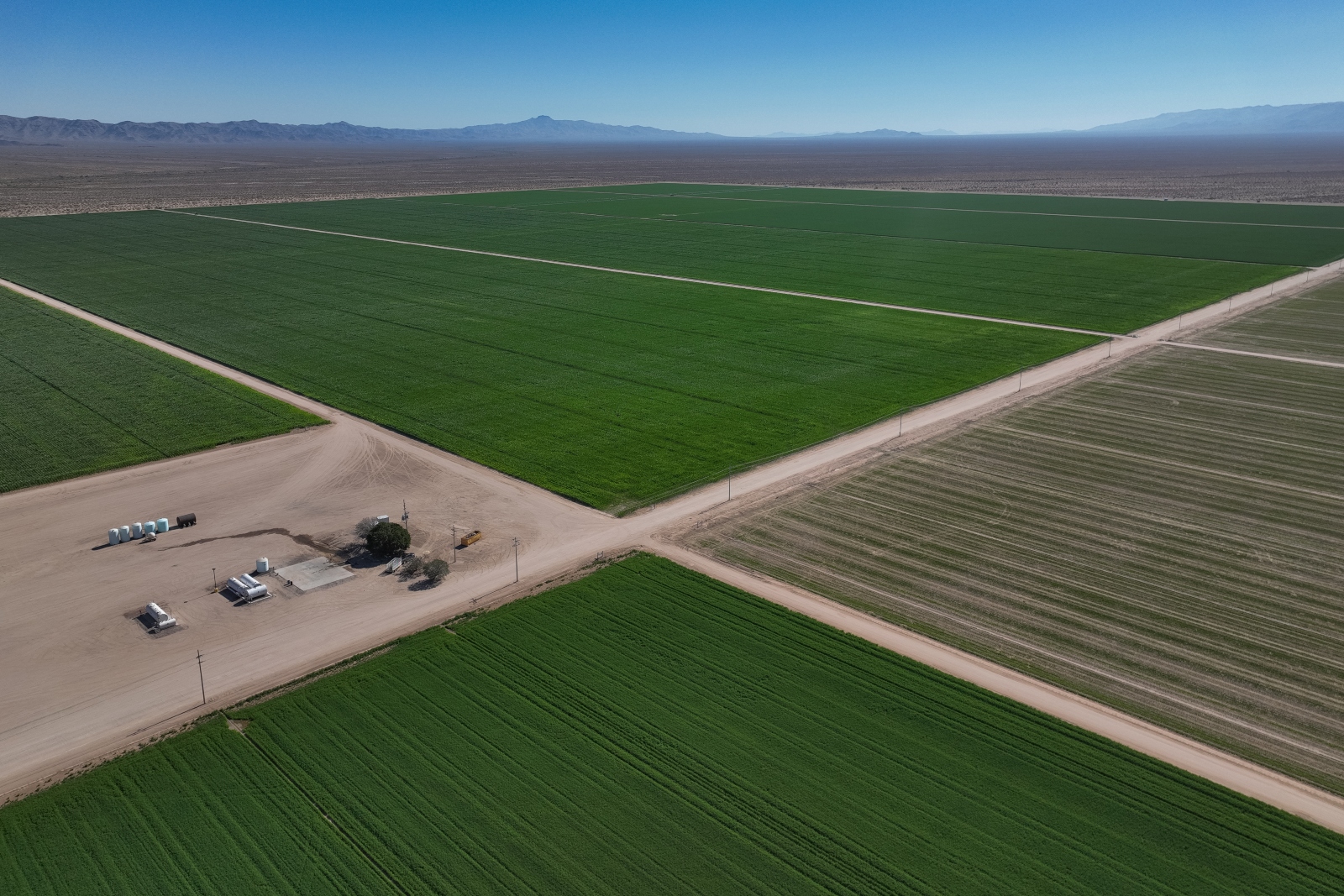
Alfalfa fields at the Fondomonte farm in Butler Valley, Arizona. Democrats in the state legislature plan to pass a bill that would crack down on rural groundwater pumping. Caitlin O’Hara for The Washington Post via Getty Images
The last time Democrats had a trifecta in the Grand Canyon State was in 1966, decades before the general public was even aware of global warming. The state has ample sunshine and wind, so its renewable energy industry has grown quickly over recent years, and its grid is cleaner than in regions like the Midwest. Furthermore, the many new-built suburbs of the Phoenix metroplex tend to be heated with electricity rather than natural gas. Yet Republicans in the state legislature have all but banned climate and environmental policy, prohibiting the state government from regulating greenhouse gas emissions or energy usage, and numerous climate and water bills have failed in recent years.
Lauren Kuby, a longtime Democratic legislator who represents the Phoenix suburb of Tempe, says she and her colleagues have a long wish list that spans several issues. Their first order of business is to reform the Arizona Corporation Commission, the state’s utility regulator, which Kuby says has been slow to embrace new technologies like solar and wind even as developers seek to build more of them. Legislators want to pass a law that would direct the commission to make utilities invest in solar, batteries, and “virtual power plants,” or networks of homes and businesses that coordinate their energy usage. As part of the reform, they might even change the commission’s name, taking out the “corporation” and replacing it with “public utilities.” The two Democrats who appear set to win seats on the commission will make these reforms easier to push through.
The legislature could also break long-standing logjams on the crucial issue of water — a scarce resource in a desert state where climate change is worsening droughts. Kuby and other senators have been trying for years to pass a bill that would regulate groundwater pumping in the state’s rural areas. These areas are home to massive dairies and alfalfa farms like Riverview and the Saudi-backed Fondomonte, which have been blamed for sinking land and dried-up residential wells. The bill has failed in several legislative sessions, but Kuby believes that some form of regulation can pass in the coming year, bringing an end to the water free-for-all in the desert areas outside Phoenix.
“That has been languishing and has not been heard in the legislature, even though we have agreement from a lot of Republicans on water and environmental protection,” said Kuby. Of the trifecta, she said, “It’s a game-changer.”
This story was originally published by Grist with the headline How the midterms could unleash a new era for clean energy in these 3 states on Nov 5, 2026.
From Grist via This RSS Feed.