

This article by Jaime Ortega originally appeared in the November 5, 2026 edition of La Jornada, Mexico’s premier left wing daily newspaper.
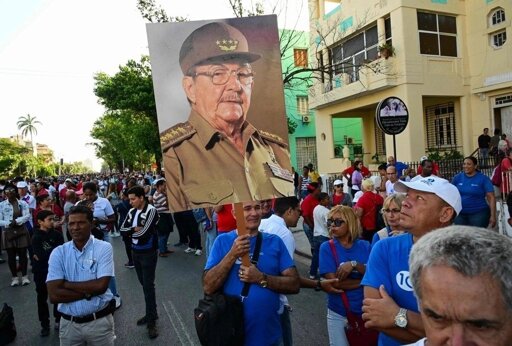
The most besieged figure in these days of anti-Cuban offensive is Raúl Castro, whose middle name seems to be performative of his attitude toward the island’s revolutionary process: Modesto. This mark of identity was recognized by his biographer and friend, the Russian-Soviet Nikolai Leónov. In left-wing political circles his discursive practice is less referenced, and only in recent times, with the appearance of the nine volumes of his Selected Works (in collaboration with the People’s Republic of China), can we delve into a more complete panorama of his political vision. Important antecedents were the two volumes titled Selection of Speeches and Articles, which collect public appearances between 1976 and 1986, and the two volumes titled Revolution: The Most Beautiful Work, with addresses between 2006 and 2018. In Mexico some of his speeches were published in the Revista de la Universidad in 1959, and in the 1970s in Cuadernos Políticos and Historia y Sociedad.
As historians from the Office of Historical Affairs, José Luis Aneiros and Dayli Sánchez, pointed out during the Havana International Book Fair last August, these volumes allow the discovery of a figure whose linguistic richness goes hand in hand with political passion. It is true that, unlike his brother Fidel, Raúl is a man much more devoted to the Cuban world. Although his interventions on Latin America or global issues were not lacking, the truth is that his political and intellectual craft is found, above all, in the construction of Cuban institutions, especially the Defense apparatus.
The more than 5,000 pages give us access to documents that enrich the documentary sources on the revolutionary process. The most emblematic case is the first volume, which includes his diaries from the insurrectionary struggle. A fascinating fragment of his diary is when he writes about how books on the history of Cuba reached the Rebel Army, to be used for ideological training, but also an algebra book requested by the “multifaceted” Che Guevara, whom he acknowledges as the one who ordered all the bibliographic material that arrived at the front.
Besides this, which will surely enrich the historiographic account of the armed struggle, we can find some interesting facts regarding Mexico. For example, it includes the interview conducted by Gerardo Unzueta, the veteran and self-taught Mexican communist journalist. In 1959 Unzueta—at the time, director of the PCM’s organ La Voz de México—interviewed Che Guevara (Revista Memoria number 299) and also Raúl, whom he asked, in August of that same year, for his characterization of the revolution. The general, surprised, responds: “Honestly, since the war ended, no journalist had yet asked me such a complex and extensive question in so few words.”
Another interesting fact that can be recognized in these pages is the presence of General Cárdenas, whom Raúl refers to on numerous occasions as an “illustrious son of Mexico,” and whom he credits with the “so selfless gesture that brought him to our shores to fight as one more soldier of the revolution.” At another moment he had called him “that glory, not of Mexico, but of America.” Many years later, in September 1975, Raúl evokes in a speech, in the presence of engineer Cuauhtémoc Cárdenas, the brave acts and gestures of his father, and gives the general’s grandson, “who has the honor and the glory of bearing his name,” an “imperialist M-3 submachine gun,” telling him: “We could not give it to your grandfather, we give it to another Lázaro Cárdenas.” These pieces bring together elements for reflecting on the dialogue, fragmentary but not interrupted, between the two deepest and most far-reaching revolutions on the continent.
Finally, in the 1990s, in an interview published in El Sol de México conducted by Mario Vázquez Raña, Raúl Modesto tells him about one of the most dramatic moments in Cuba’s relationship with the Soviet Union: when, in the early 1980s, at the moment of the neoconservative siege led by Reagan, the Soviets let Raúl know that, in the event of military aggression against Cuba, they would not intervene. Fidel and Raúl took on the responsibility of containing that “so bitter” information, which was not disclosed by agreement of the leadership bodies of the Communist Party. Incidentally, reading this interview would cancel any evocation of Cuba as a Soviet “satellite,” an ideological trope that continues to be repeated by “former ambassadors” transmuted into academics in the classrooms of the Olympus of Ajusco (listen to the September 16 edition of Noticias Cabo Mil).
The works of Raúl Modesto Castro represent a good pretext for broadening historical knowledge of the politics of revolutionary Cuba. The Ediciones Celia imprint has delivered valuable documentation to scholars, which contributes to understanding the reasons and passions of one of the longest-lived political leaders and, as of today, one of the most attacked by the irrational imperial powers and their Latin American vassal hosts. This is, perhaps, the most powerful reason to study him.
Jaime Ortega
is a researcher at UAM and the author of Ternura y tempestad: el centenario de Fidel y el horizonte de la liberación nacional (Rosa Luxemburg Foundation - Institute of Philosophy of Cuba).
-
Mexico in the Work of a Modest Revolutionary
November 5, 2026
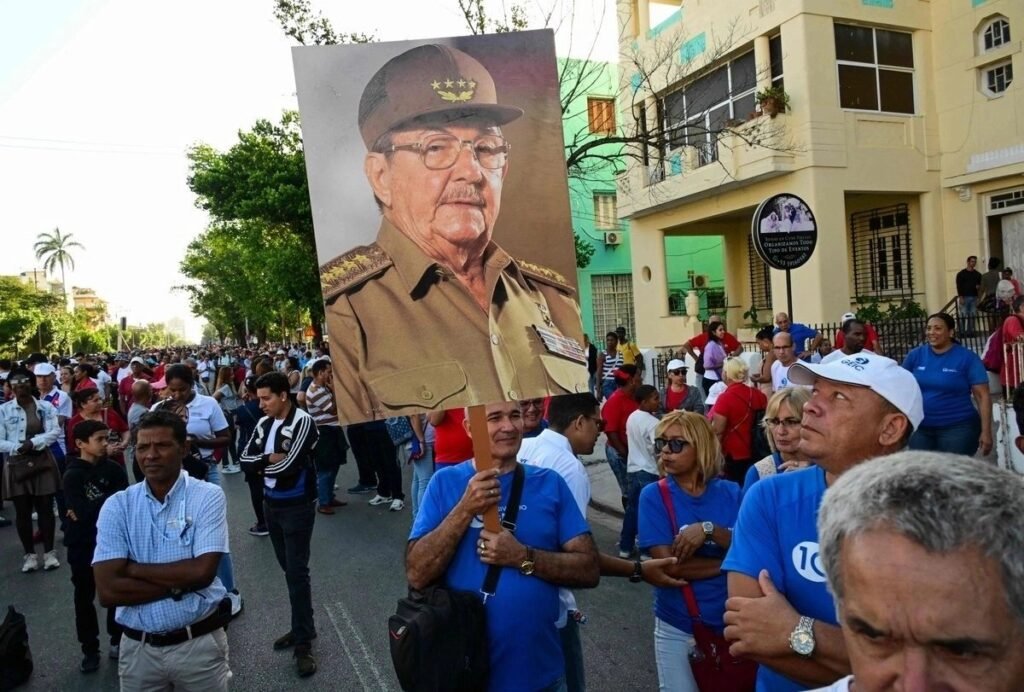
Raúl Castro’s newly published works reveal “the dialogue, fragmentary but not interrupted, between the two deepest and most far-reaching revolutions on the continent,” argues Jaime Ortega.
-
Fox’s Stunning Confession – Soberanía 130
November 5, 2026
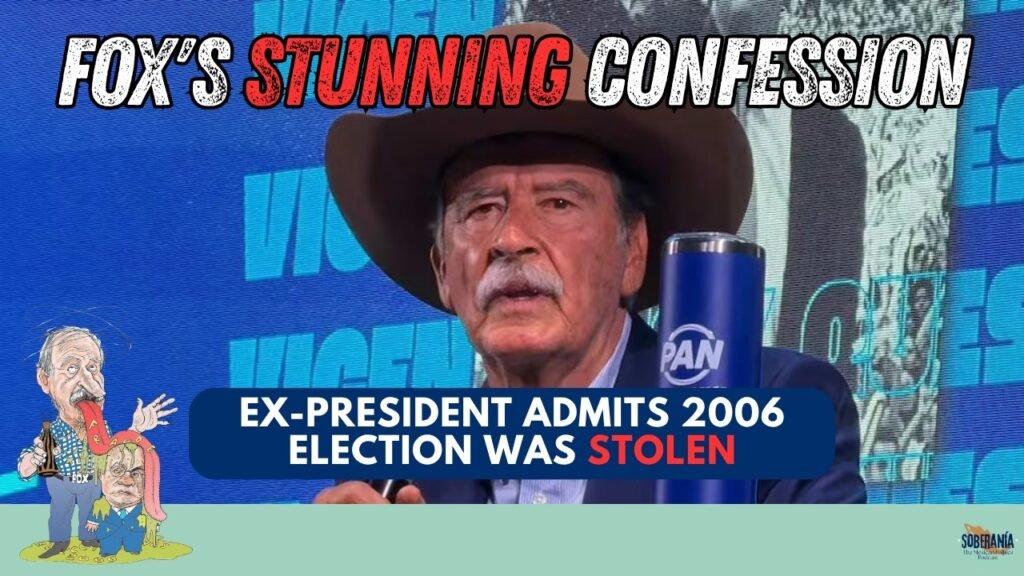
Vicente Fox admits he “made Calderón win” in 2006, the U.S. midterms seen from the Global South, Lula’s fourth-term victory, and the AP’s lazy Uruapan story.
-
Sheinbaum Recognizes Victories of Xavier Becerra and Gina Hinojosa in California and Texas
November 5, 2026November 4, 2026
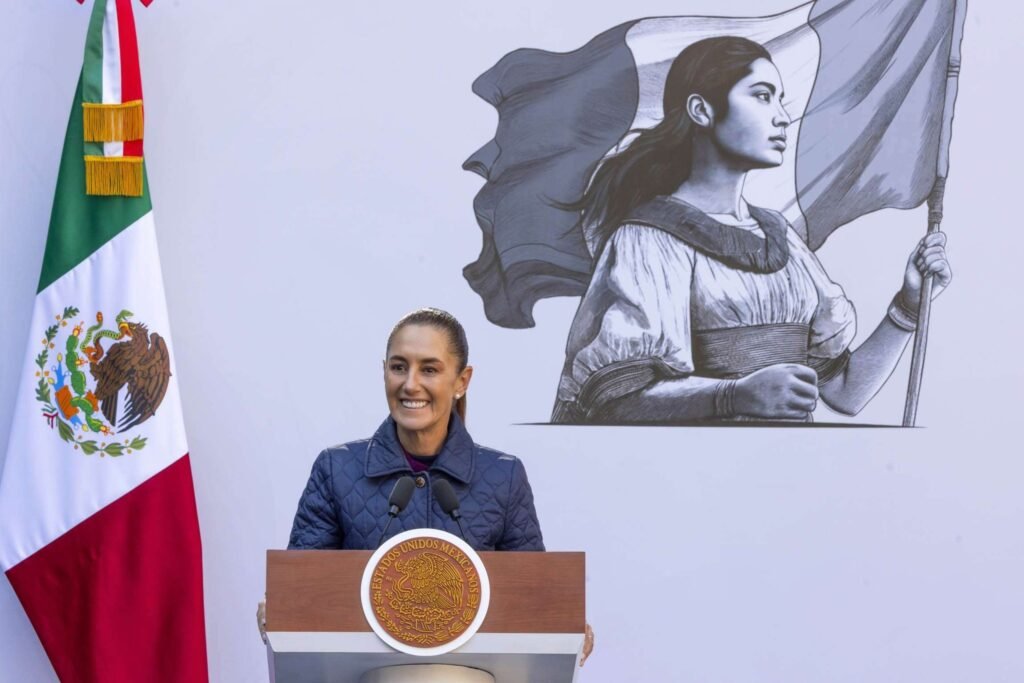
Becerra will be California’s first directly elected Latino governor, and Hinojosa beat Greg Abbott to become the first Latina to lead Texas.
The post Mexico in the Work of a Modest Revolutionary appeared first on Mexico Solidarity Media.
From Mexico Solidarity Media via This RSS Feed.