

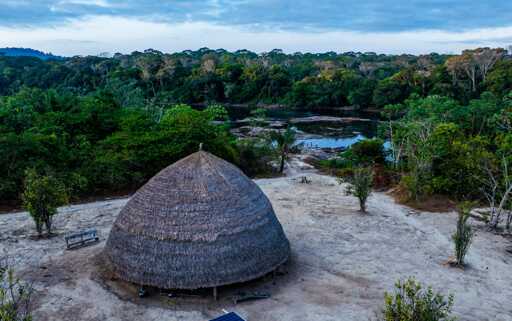
With no local polling station or means of getting to one from their remote community, residents of the Tumucumaque Indigenous Park in northern Brazil weren’t able to vote in October’s general elections. That’s according to Mitore Tiriyo Kaxuyana, a leader of the Tiriyó and Kaxuyana Indigenous peoples who spoke to Mongabay. On Oct. 22, just three days before the presidential runoff vote, a federal court ruled that Indigenous voters nationwide must be provided with transportation and language interpreters to facilitate their right to vote. Elections officials in Amapá state, where the park is located, told Kaxuyana in a meeting on Oct. 19 that they weren’t even aware of the existence of the Tumucumaque Indigenous Park. “I felt a bit sad. I told them we have difficulty voting in our territory,” Kaxuyana, the coordinator of the Articulation of Indigenous Women of the Tiriyó, Kaxuyana and Txikiyana Peoples (AMITIKATXI), told Mongabay by phone. “They were unaware of the existence of the Tiriyó and Kaxuyana people here in Amapá. We said that we existed.” Mongabay reached out to the Amapá electoral court, the state judicial body that administers elections, for comment, but didn’t receive a response. Without polling stations in the territory, Tumucumaque Indigenous Park residents must travel by plane to vote in Macapá, the state capital. “The majority of people who live in the villages normally don’t vote,” Kaxuyana said. There are 74 villages within the 3-million-hectare (7.6-million-acre) territory, home to roughly 2,800 Brazilian citizens. The territory straddles five municipalities across two…This article was originally published on Mongabay
From Conservation news via This RSS Feed.