

This article by Víctor Iván Gutiérrez originally appeared in the November 4, 2026 edition of La Jornada, Mexico’s premier left wing daily newspaper.
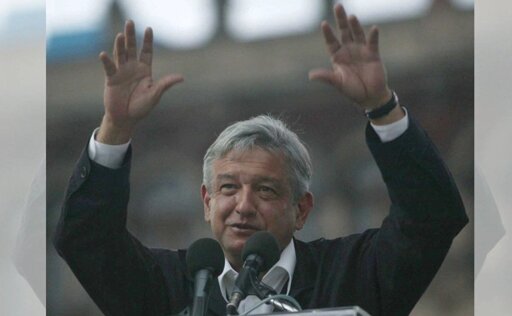
On the warm night of July 2, 2006, Luis Carlos Ugalde, chairman of the Federal Electoral Institute (IFE), declared that given the narrow gap between the front-runners, Andrés Manuel López Obrador (AMLO) and Felipe Calderón Hinojosa, it was impossible to present a winning trend that night. However, the 0.56 percent margin later announced in Calderón’s favor was enough for the media to proclaim him the winner.
Amid this climate of uncertainty, AMLO listed various irregularities that occurred before, during and after election day. In principle, the district count on Wednesday, July 5, would produce a scenario that would allow for a more conclusive result. The problem was that, during that count, López Obrador held a considerable lead that was reversed by an atypical surge for Calderón in the early morning hours, which fueled suspicions.
To fully understand this election, it is worth remembering that, at the beginning of 2006, many sectors of the public were deeply disappointed with the government of Vicente Fox (2000-2006). On top of the alleged cases of corruption and constant displays of frivolity, there was a widespread perception that Fox had squandered the famous democratic bonus. In the face of this disenchantment, the figure of the then former head of government of the Federal District (DF), Andrés Manuel López Obrador, emerged as a competitive alternative thanks to his social agenda.
AMLO began his 2006 campaign with the optimism not only of having survived the desafuero process, but of having come out of it strengthened as the front-runner in the presidential polls. But contrary to what was expected, the electoral process was not easy. Fox stepped up his interference in favor of Calderón, while some business organizations, together with the National Action Party (PAN), unleashed a media war against AMLO, labeling him with adjectives that are still used today, such as “populist,” “messianic” and “communist.” The strategy worked and narrowed the gap in the final stretch.
But let us return to that traumatic election day. After the trends were announced, López Obrador called for a rally on July 8 in the capital’s Zócalo. There he listed a greater number of irregularities that occurred in the electoral process, and at that event the famous slogan “vote by vote, polling station by polling station” was born. This rally was followed by an escalation of mobilizations. For example, on July 16, some representatives of the worlds of entertainment, the arts and culture joined this movement. One example was Carlos Monsiváis, who read on stage a text by Sergio Pitol (winner of the 2005 Cervantes Prize for literature) in support of a recount of the vote.
The July 30 march, which advanced from the Fuente de los Petróleos to the Historic Center, became the largest gathering recorded up to that point, with nearly one million people in attendance. Under a relentless sun, AMLO consulted his supporters about setting up a permanent encampment along the Reforma-Zócalo corridor to pressure the electoral authorities to carry out a recount. They accepted unanimously.
This sit-in, which lasted from July 30 to September 15, was the target of constant attacks by the political class. But for the supporters of this movement it also meant a space for political and artistic coexistence that gave the movement a popular identity that went beyond the purely electoral.
The first half of September was critical. Amid this climate of tension, President Fox decided to give the Cry of Independence in Dolores Hidalgo, Guanajuato, while in the capital the ceremony was led by the head of government of the DF, Alejandro Encinas. Without incident, the sit-in was lifted after the September 16 parade, and the assembly of the National Democratic Convention (CND) was held in the Zócalo, where many delegates voted to organize the resistance around the Alternative Nation Project.
But the resistance was not forged only in the streets, but also in Congress. Starting in September, the so-called Broad Progressive Front (FAP) was consolidated, made up of the parties of the For the Good of All alliance (PRD, PT and Convergencia), with the aim of stopping the approval of more neoliberal reforms, mainly in the oil sector, and promoting laws focused on the popular economy and the defense of national sovereignty.
On November 20, in a packed Zócalo, López Obrador was sworn in as “legitimate president” and announced his cabinet, made up of prominent figures such as the current president of Mexico, Claudia Sheinbaum, as Secretary of National Patrimony. Regardless of the media criticism, this figure articulated one of several oppositions to the Calderón government and laid the organizational foundations for the formation of the National Regeneration Movement as a civil association in 2011.
This year marks two decades since the 2006 electoral process. As the facts show, today’s circumstances are different. The political force that germinated in that resistance reached the presidency in 2018 and renewed its mandate in 2024. Two decades later, Mexico and the world are different.
Víctor Iván Gutiérrez
holds a PhD in historiography.
Follow him @vivangm
-
Auto Industry in Mexico Reaches Record Vehicle Sales in January-October 2026
November 4, 2026
Traditional brands are competing harder against fast-growing Chinese automakers, and October was the best for sales since 2016.
-
Mexico’s Exports to the US Soared 40 Percent in September
November 4, 2026November 4, 2026
Shipments hit a record US$62.2 billion, with 83% entering tariff-free under the USMCA, keeping Mexico ahead of Canada, China and Vietnam as top supplier.
-
2006: The Story of an Interrupted Victory
November 4, 2026
“The political force that germinated in that resistance reached the presidency in 2018 and renewed its mandate in 2024,” recalls historian Víctor Iván Gutiérrez.
The post 2006: The Story of an Interrupted Victory appeared first on Mexico Solidarity Media.
From Mexico Solidarity Media via This RSS Feed.