

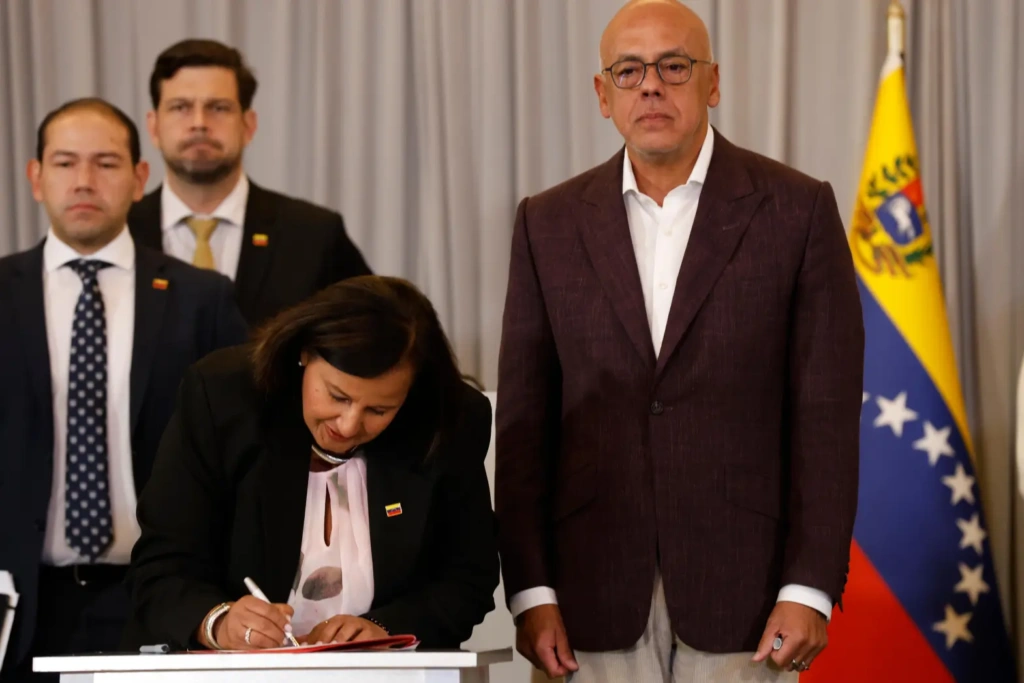
Venezuela installed a technical council Tuesday to verify the credentials of candidates seeking seats on the Supreme Court, the General Inspectorate of Courts and the National School of Magistracy.
Seven jurists with extensive professional records now form the council, which must confirm that each candidate complies strictly with the formal requirements set out in the Constitution, the Organic Law of the Supreme Court and the evaluation scale used for judicial selection.
The council’s mandate is narrow and technical, its functions as an advisory body, not as the final decision-maker. Its work runs parallel to the Judicial Nominations Committee already elected by the National Assembly under constitutional procedures.
RELATED: Venezuela Opens Process to Choose New Supreme Court Judges
The council emerged from the Dialogue Table between the Venezuelan government and representatives of the 2015 National Assembly and its creation was agreed during the second cycle of those conversations.
The formal dialogue between the government and opposition sectors began on August 12. That first meeting produced a working methodology and installed technical tables on three issues, assistance for earthquake victims, democratic strengthening and reforms to the judicial system.
The council now operating represents one concrete result of that agenda, focusing on credentials signals an effort to make the selection of high court judges more transparent.
Atención: pic.twitter.com/CJMBU3Del3
— Jorge Rodríguez (@jorgerpsuv) November 4, 2026
Building Judicial Plurality
The Judicial Nominations Committee was installed on Friday, October 23 at the Federal Legislative Palace, after being sworn in during a legislative session. The committee president, Giuseppe Alessandrello, framed the mechanism as an opening for broader participation.
“The law incorporated the citizens of society into this work of evaluating and selecting the directives, in this case of the Supreme Court, to seek plurality,” Alessandrello said at the time.
The credential council adds a second layer of scrutiny. While the committee evaluates candidates and their records, the seven jurists will verify that formal requirements are met before any name advances. That division of labor places technical compliance ahead of political consideration, at least on paper.
The institutions under review hold significant power. The Supreme Court rules on constitutional questions and electoral disputes. The General Inspectorate of Courts oversees judicial conduct, while the National School of Magistracy trains the judges who will staff the system for decades.
The installation of the council moves the dialogue process from broad principle to operational detail. Previous rounds produced agreements on methodology. This one produced a working body with a specific task and a defined membership.
What comes next is the review itself. The seven jurists must now examine the documentation of every candidate and issue findings. Those findings will feed the committee already at work, and the two bodies together will shape the next generation of Venezuela’s judiciary.
From teleSUR English via This RSS Feed.