

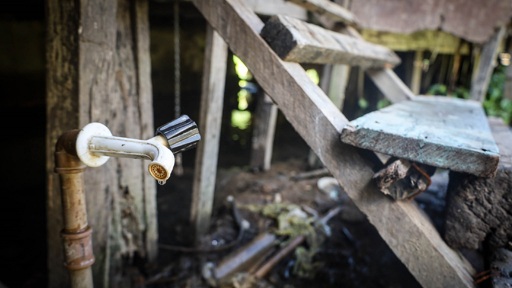
RECIFE, Brazil — In Ibura de Baixo, a neighborhood tucked into the South Zone region of Recife, Northeast Brazil, 27-year-old Jeyne Araújo’s day begins well before dawn. At 4 a.m., while the Pernambuco state capital sleeps, she scrapes buckets and drums across the floor outside her home. The sound marks the start of a daily scramble against scarcity: With running water flowing for only six hours a day, she must stockpile every drop before the taps run dry. The water Araújo manages to collect is far from the clean supply one would expect from a public utility. It smells strongly of chemicals and is too unpleasant to drink or cook with immediately. It froths into a thick, soapy white foam as it splashes into the bucket. “It arrives so full of chlorine that you can’t do anything with it,” she tells Mongabay. The poor quality of the tap water has taken a serious toll on her family’s health, says Araújo. For six months, her 9-year-old son, Wesley, suffered constant bouts of vomiting and stomach pain. Doctors at Recife’s Areias Hospital traced the intestinal infection back to porridge prepared with tap water. To keep her son safe, Araújo now uses part of her monthly Bolsa Família, a government social welfare program benefit of 950 reais (around $180), to buy jugs of bottled water at 6 reais ($1.12) each — an expense that further strains her already meager budget. Inside the house, stacks of dirty dishes fill the sink, a visible measure…This article was originally published on Mongabay
From Conservation news via This RSS Feed.