


Photo: Christopher Katsarov Luna / The Narwhal
On its first day back after a 21-week break, the government under Premier Doug Ford introduced a sweeping bill that could change how Ontarians learn about provincial decisions affecting the environment — and what residents can do if they disagree.
By day two, Bill 140, the Building Ontario Faster Act, 2026, reached second reading. But it didn’t sit well with the opposition.
“The government does not want people to tell them what they think. I very much would like the public to have a chance to participate in their democracy,” Oshawa MPP Jennifer K. French said during debate at Queen’s Park on Oct. 28.
For more than three decades, the Environmental Bill of Rights has given Ontarians a formal role in government decisions that could affect their air, water, land and communities.
“It gives the public a wide range of tools that they can use to protect themselves and protect the environment,” Richard Lindgren, a lawyer with the Canadian Environmental Law Association said. “But if Bill 140 is passed, those rights will disappear.”
Tabled by the minister of red tape reduction, Bill 140 would eliminate legal tools that allow residents to challenge certain environmental approvals, request reviews of existing environmental laws and ask the province to investigate suspected violations. It would also change how the public is notified about proposed environmental laws and policies.
For someone living near a proposed landfill, concerned about industrial pollution or worried about an approval affecting local drinking water, the changes could mean fewer opportunities to question government decisions or seek an independent review.
Environmental lawyers and former provincial watchdogs warn the proposed legislation could significantly weaken public participation and government accountability, leaving communities with fewer ways to challenge decisions that could harm the environment.
But Ontario’s Minister of the Environment, Conservation and Parks Todd McCarthy defended the proposed changes, saying the legislation would eliminate duplication while maintaining environmental protections. He said the changes would maintain opportunities to comment on environmental proposals while eliminating processes he describes as seldom used and resource-intensive.
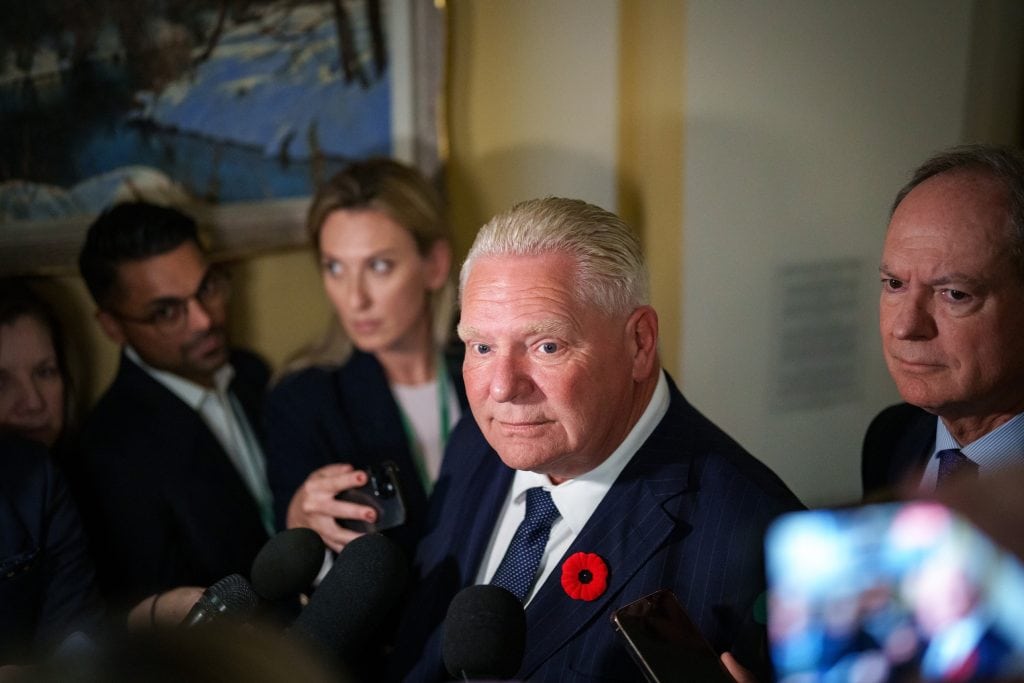
Ontario Premier Doug Ford speaks to reporters during a scrum at the Ontario legislature in Toronto on Tuesday, Oct. 27, 2026. Photo: Arlyn McAdorey / The Canadian Press
“Not only will public accountability not be diminished, it will be enhanced. It will be improved. It’ll be modernized for a modern world,” McCarthy told The Narwhal, standing outside Ford’s office at Queen’s Park.
The legislation has passed second reading and is now being reviewed by a smaller group of MPPs. The government posted the proposed amendments on the Environmental Registry of Ontario in late October, with a 30-day comment period scheduled to close Nov. 26.
Ontario’s Bill 140 and the Environmental Bill of Rights
The Building Ontario Faster Act is an omnibus bill that proposes changes to a wide range of provincial laws to accelerate infrastructure projects, reduce Ontario’s reliance on the United States for landfill capacity and make it easier for workers to move to Ontario from other provinces and territories.
The government says the legislation will make Ontario more competitive by reducing regulatory requirements, speeding up approvals and making it easier for businesses to invest and create jobs. It follows several bills the Ford government has introduced with similar intentions, like Bill 5, the Protect Ontario By Unleashing Our Economy Act, passed in 2025 and Bill 227, the Building Ontario, Cutting Red Tape Act, in 2024.
According to the province’s announcement, Bill 140 would eliminate nearly 220,000 days’ worth of permit processing time. “We’re giving businesses the confidence and predictability they need to invest and create jobs here in Ontario, so we can stand up to tariffs, protect our workers and build the most competitive economy in the G7,” Andrea Khanjin, Ontario’s minister of red tape reduction, said in the government’s announcement.
But among the legislation’s many provisions, Schedule 8 has drawn particular concern as it affects long-standing environmental legislation; Ontario’s Environmental Bill of Rights came into effect in early 1994, following years of public concern about pollution, environmental degradation and the government’s ability to protect natural resources.
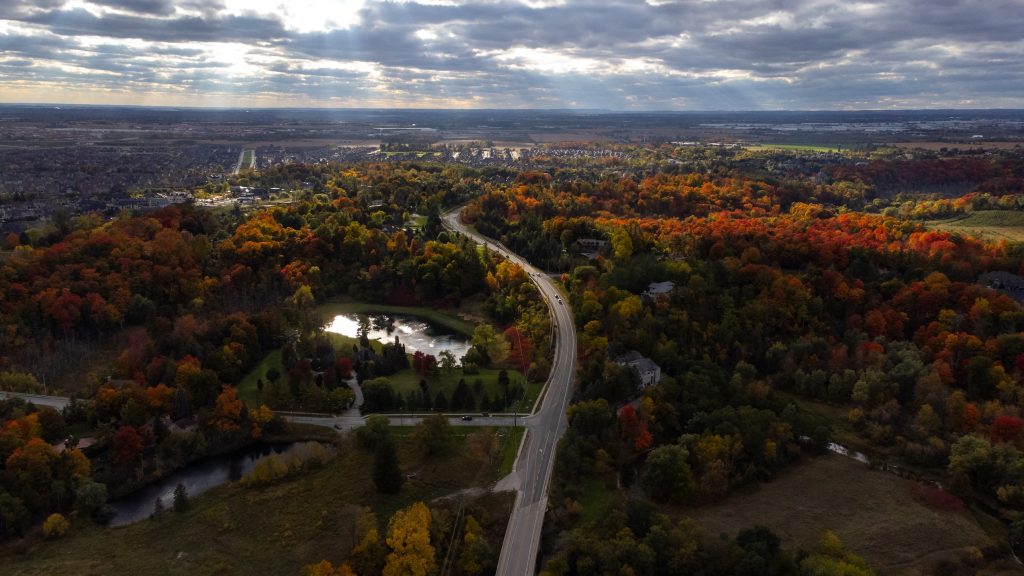
The province’s auditor general has raised concerns about how the Environmental Bill of Rights has been implemented. Its 2025 performance audit found the province had exempted permits and approvals for Highway 413 and the Ontario Place redevelopment from certain consultation requirements. Photo: Katherine KY Cheng / The Narwhal
Before the legislation, environmental decisions were largely made between government ministries and private companies, with little opportunity for residents to provide input. That meant a ministry could approve a facility discharging contaminants into a creek without first notifying the people living nearby or giving them an opportunity to comment.
The public push for change eventually led to a task force created under Ontario’s NDP government in 1990, bringing together representatives from environmental organizations, industry and government. After 55 meetings and months of negotiations, the group reached a consensus on legislation intended to give the public tools to protect the environment and their communities.
Bill 140 further exempts postings on Ontario’s environmental registry
Among the tools introduced by the bill of rights is the Environmental Registry of Ontario, a public website where provincial ministries post notices about certain environmentally significant proposals and decisions, and residents can submit comments. The Ford government has already removed that requirement for some projects, like Ontario Place, and on some types of actions, like those relating to at-risk species.
Under Bill 140, the province would eliminate the requirement for posting notices on the Environmental Registry of Ontario when they are also posted on the Ontario Regulatory Registry, a separate website where ministries post proposed and completed policy changes. Reshaping municipal bike lane policies, for example, would no longer need to be posted to the environmental registry.
Not all environmental notices would move. Proposals for prescribed environmental permits, licences and other approvals would continue to be posted on the Environmental Registry of Ontario. But Philip Pothen, in-house counsel and Ontario environment program manager for advocacy organization Environmental Defence, said the two registries serve different purposes.
He argued the environmental registry provides mandatory advance notice of environmentally significant decisions, while postings on the regulatory registry are not backed by the same legal requirements. Ministries can seek exemptions from posting on the regulatory registry before policy amendments are made, unlike the environmental registry where advance notice of certain environmentally significant proposals are required by law.
“These are totally different things. They are not duplicates,” Pothen said. “If there was some duplication to be eliminated, it should eliminate the regulatory registry posting because that’s the one that’s voluntary.”
He said advance notice is essential because it gives the public time to understand proposed changes and raise concerns before decisions are finalized. “Our system only works when we actually know before laws are brought into force, before they’re introduced to parliament and certainly before regulations or policies become implemented.”
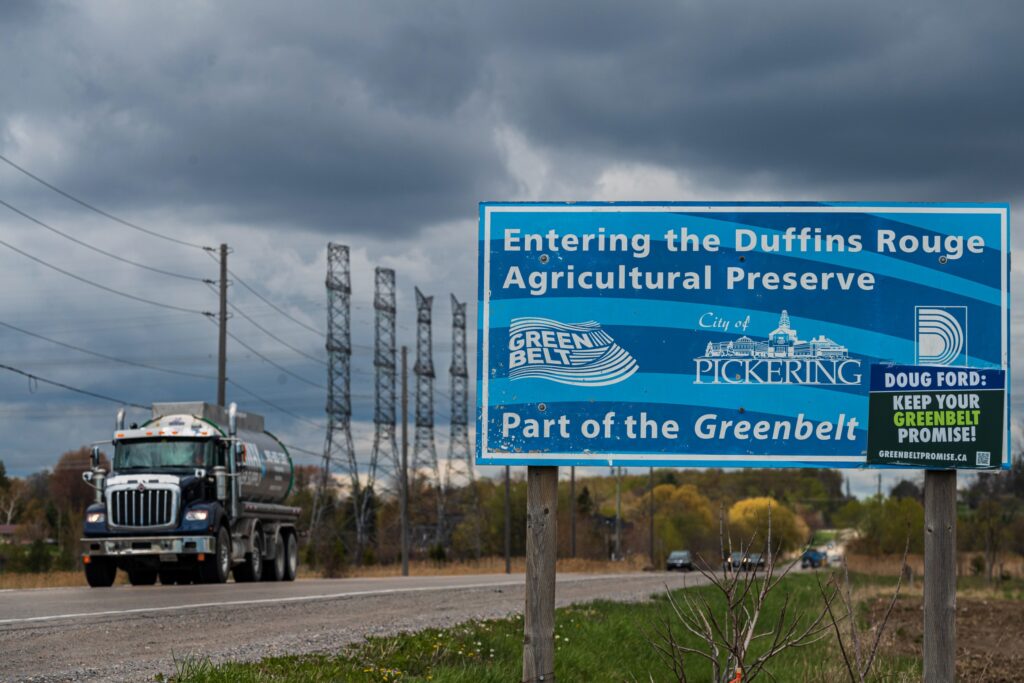
The Duffins Rouge Agricultural Preserve, a section of prime farmland, was removed from the Greenbelt in December 2022 — and reinstated a year later. Photo: Christopher Katsarov Luna / The Narwhal
The environmental registry has brought controversial government decisions to public attention in the past. In 2022, the Ford government’s proposal to remove 7,400 acres from Ontario’s protected Greenbelt was posted on the environmental registry. About 29,200 submissions were received in response to the proposed Greenbelt changes. The government initially made no changes to the proposal in response to those comments, but later reversed its decision amid widespread public and media scrutiny.
Pothen fears weakening advance-notice requirements could allow environmentally significant decisions to proceed before the public has time to scrutinize them.
“They’re not cutting red tape,” Pothen said. “They’re tearing down the guardrails between us and corruption. They’re tearing down the guardrails between us and very serious environmental risks.”
Rights to review and investigate projects with environmental impacts weakened under Bill 140
One of those guardrails is what’s known as Section 61 of the Environmental Bill of Rights, which enables Ontarians to formally ask the government to examine whether an existing rule or approval is outdated or failing to protect the environment.
Lindgren, who was among those who helped draft Ontario’s Environmental Bill of Rights in the ’90s, said his organization has used the process, known as an application for review, on behalf of clients to push for stronger environmental protections. He recalled a case in which the Canadian Environmental Law Association requested a review of an approval allowing a company to release lead into the surrounding air. The approval was subsequently revoked.
The bill would also eliminate the formal application process for requesting investigations into suspected environmental violations. Currently, two residents can apply to the Ministry of Environment for an investigation into violations of environmental laws or conditions of approvals. The ministry must follow prescribed procedures and timelines when responding, including reporting on its findings.
If Bill 140 passes, those formal application rights would disappear. The government said residents would still be able to report suspected environmental violations directly to the Environment Ministry, but the formal process for addressing it and communicating with applicants wouldn’t apply.
Another proposed change would remove the right under the Environmental Bill of Rights for third parties to appeal certain environmental approvals to the independent Ontario Land Tribunal. Lindgren said that mechanism has allowed community groups to challenge approvals for landfills, water-taking and industrial emissions. In some cases, he said, appeals have resulted in permits being revoked or revised to include stronger environmental safeguards.
For residents concerned about a potentially harmful project in their neighbourhood, losing that avenue could mean fewer opportunities to have an independent tribunal examine the government’s decision.
Bill 140 would also repeal provisions allowing certain legal actions for harm to public resources, such as air, land and water, and remove a procedural protection for people bringing public nuisance lawsuits, which include things like pollution. The government said people would still be able to bring public nuisance actions through the courts.
Lindgren warned that affected communities may increasingly turn to civil litigation or judicial review to challenge potentially harmful projects. That could ultimately create the very delays the government said it wants to eliminate.
He said the formal rights to request environmental reviews, investigations and appeals are distinct legal mechanisms and cannot simply be replaced by other government consultation processes. “There are no other alternatives out there,” he said. “There are no other laws that allow people to do what they’re allowed to do, and are entitled to do, under the Environmental Bill of Rights.”
If the legislation passes as written, several of these changes, including those relating to appeals, reviews and investigations, would be retroactive to Oct. 27.
‘The Environmental Bill of Rights is basically gone’: former environment commissioner
The Environmental Bill of Rights also requires designated ministries to develop statements of environmental values explaining how they would consider environmental principles when making decisions. They are held accountable to those statements by another central feature of the bill: an independent environmental commissioner.
But those and other protections have gradually weakened. In 2018, the Ford government passed legislation eliminating the independent environmental commissioner’s office and its responsibilities were subsequently transferred to the auditor general and the Environment Ministry.
Dianne Saxe was Ontario’s final environmental commissioner. “It was my office that was one of the major protections and tools to make the Environmental Bill of Rights count,” she told The Narwhal.
Saxe said successive legislative changes under the Ford government have weakened the province’s environmental protections built over decades. “It’s a death of 1,000 cuts,” she said. “The things that are being eliminated now are actual rights.”
She said the latest proposal eliminates many of the remaining safeguards of the bill.
“The Environmental Bill of Rights is basically gone,” Saxe said. “We have a minor right of notice and comment, knowing that this government ignores most comments that are trying to protect a livable future.”
In a March 2024 report, the Law Commission of Ontario documented several cases in which residents had successfully used their rights to improve environmental protections. These included the revocation of landfill approvals, stopping a cement plant from burning tires, plastic and other waste and an end to snapping turtle hunting. But the commission concluded that the legislation had fallen short of its objectives, citing government non-compliance, weakened public participation rights and reduced independent oversight. The commission recommended broad reforms to strengthen environmental accountability.
The province’s auditor general has also repeatedly raised concerns about how the Environmental Bill of Rights has been implemented. In a 2025 report, the auditor general listed numerous concerns, including the Ford government’s passing of Bill 17, which targeted municipal green building standards, before completing required environmental consultations and considering all public comments. It also found the province had exempted permits and approvals for Highway 413 and the Ontario Place redevelopment from certain consultation requirements.
Still, the auditor general concluded that the law continued to provide meaningful opportunities for public participation. During that reporting period, Ontarians submitted thousands of comments on environmental proposals, requested six reviews and investigations and challenged four ministry decisions involving environmentally significant permits and approvals.
In some cases, public comments resulted in changes to government decisions, such as improvements to how waste is diverted in Far North communities.
For Gord Miller, who for 15 years was Ontario’s environmental commissioner and is now chair of Earthroots, a registered environmental charity, one of the most consequential changes is the proposed elimination of statements of environmental values by ministries.
“Doesn’t the public have a right to know what exactly the environmental values of a ministry are, and what are they making their decisions based upon?”
Dianne Saxe, Ontario’s final environmental commissioner, said successive legislative changes under the Ford government have weakened the province’s environmental protections built over decades. “It’s a death of 1,000 cuts.” Photo: Christopher Katsarov Luna / The Narwhal
He said the former environmental commissioner’s office could ask ministries to explain how they had considered those commitments when making major decisions. Removing the requirement, he argued, takes away another way to hold government decision-makers accountable.
Miller fears the changes could bring Ontario back to the situation that led governments to create environmental protections decades ago.
“I know exactly what will happen because it already did back in the late 1960s and into the early ’70s,” he said. And that, he said, is how Ontario ended up with an Environmental Bill of Rights in the first place.
The Narwhal’s reporters are telling environment stories you won’t read about anywhere else. Stay in the loop by signing up for our free weekly dose of independent journalism.
From The Narwhal | News on Climate Change, Environmental Issues in Canada via This RSS Feed.