

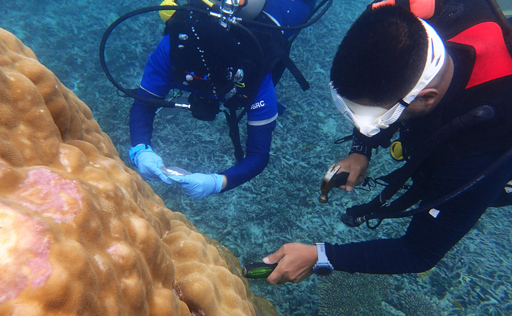
KUALA LUMPUR — Microplastics, tiny plastic particles about 5 millimeters (0.2 inches) or smaller, have settled into the skeletons of corals in a marine protected area in Malaysia, according to a recent study. The study, published in the journal Regional Studies in Marine Science, focused on Pulau Redang Marine Park, in the southern South China Sea. Known for its turquoise blue waters and rich coral reefs, Pulau Redang has been designated as a marine protected area since 1985. Researchers from Universiti Malaysia Terengganu (UMT) collected 200 coral fragments from five reef sites around the marine park, off the eastern coast of Peninsular Malaysia, and found that 64% of the fragments contained microplastics. Microplastics come from intentionally manufactured particles like industrial pellets and microbeads in personal care products, as well as the breakdown of larger plastic items such as plastic bottles and fishing gear. These tiny particles can be found everywhere, from mountaintops to seabeds. Once they enter the ocean, they can travel far and wide. “I was a bit surprised that I could find microplastics in the corals so easily,” lead author Ong Chai Kee told Mongabay in a video call. “The ocean is so big, and I was thinking, ‘What are the chances that these little plastics could enter so many corals?’” Malaysian marine biologist Ong Chai Kee wraps the sample containers in foil to prevent airborne contamination and prepare them for analysis. Image courtesy of Ong Chai Kee. The team sampled from two dominant hard corals: the branching…This article was originally published on Mongabay
From Conservation news via This RSS Feed.