

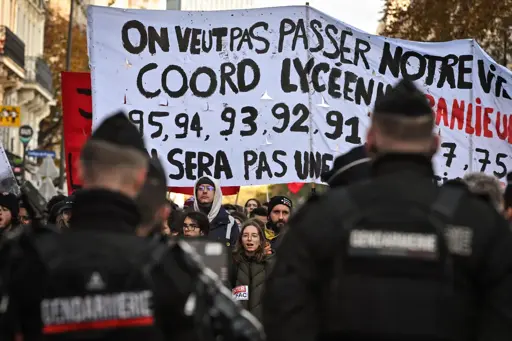
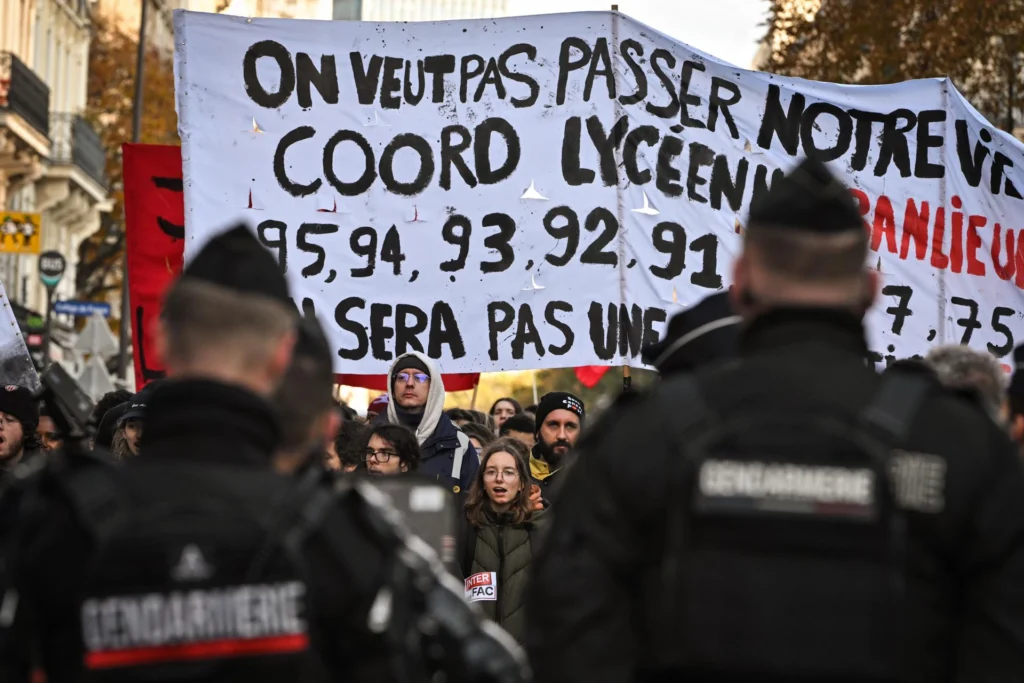
France’s police have arrested 4,914 people during three consecutive Saturdays of nationwide protests against the rising cost of living, the Justice Ministry reported Tuesday.
French Justice Minister Gérald Darmanin said 70 percent of those detained are adults, and 329 already face legal proceedings carrying prison sentences.
“The figure shows that this is a movement of adolescent people, and not precisely a continuity of the protest of high school students,” Darmanin stated.
RELATED: Police Violence Escalates During Mass Protests in France
The protests trace back to mid-September, when pupils in the Parisian district of Saint Denis began blocking high schools. The tactic quickly spread across much of the country’s 3,000 secondary institutions.
The students’ demands drew support from public sector and teacher unions. Together they call for better conditions in schools, an end to overcrowded classrooms and changes to a university selection system that critics describe as discriminatory.
#France 🇫🇷
According to #French media reports, security forces have arrested more than 500 protesters.#EU pic.twitter.com/PUGVhDNSEO— Southern Africa Eye (@eye_southern) November 1, 2026
Union leaders and student organizations met with the interior, national education and higher education ministers in a series of negotiations. The proposals presented by the government were ultimately judged insufficient.
By Monday, France woke to 41 secondary schools still blocked by pupils demanding structural solutions to the country’s educational and economic crisis. The action directly challenged President Emmanuel Macron’s call for a return to normal classes after the autumn break.
Students took to the streets again on Tuesday and the protests now extend beyond campuses. What began as a dispute over classrooms has merged with broader anger over purchasing power, a shift that has widened the movement’s base and hardened its demands.
Ver esta publicación en Instagram
Una publicación compartida de teleSUR English (@telesurenglish)
General Strike Looms
The next major test comes Thursday, when students plan to join a general strike called by the General Confederation of Labor (CGT). The union seeks wage increases and measures to curb the rising cost of living.
Fishing cooperatives and farmers could also join the mobilizations, despite a government plan to lower fuel costs by releasing two million barrels from the national fuel reserve.
The wave of arrests signals a hardening response from authorities. Nearly 5,000 detentions over three weekends marks one of the most intense periods of social unrest France has seen in recent years.
Darmanin’s framing of the movement as adolescent-driven carries political weight. The characterization allows the government to present the unrest as less a broad social revolt than a surge of youth discontent, a distinction that shapes how the executive negotiates and how it deploys police.
For the protesters, however, the arithmetic tells a different story. The Ministry’s own figures show a majority of those arrested are adults, a detail that undercuts the narrative of a purely student-driven movement and points to wider public frustration.
The coming general strike will test whether that frustration can be channeled into a sustained national movement. It will also measure the government’s ability to contain protests without escalating a confrontation that has already produced thousands of arrests in a matter of weeks.
From teleSUR English via This RSS Feed.