

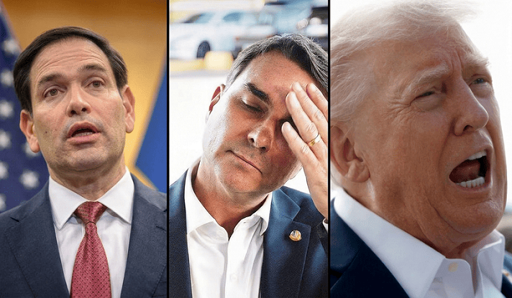
It has become clear that the Brazilian presidential election gained a resonance far beyond a strictly national vote. In the first place, this is because Lula’s re-election represented a geopolitical setback to Donald Trump’s project for a South American “orange wave,” as Trump was convinced he could count on a White House proxy in Brasília — a scenario he deemed preferable even despite his “good chemistry” with Lula.
“This is an indisputable blow to Trump’s regional strategy,” said Benjamin Gedan, director of the Latin America program at the Stimson Center, regarding Bolsonaro’s defeat. Trump, Gedan said,
was perceived as someone who was steamrolling over South America, having invaded Venezuela and watched close allies win elections in Argentina and Chile, Bolivia, and Colombia. This momentum had given the impression that he could determine political outcomes across Latin America — and he clearly liked that.
Trump labeled the result a “shame and a disaster” but tacitly recognized that he could take no concrete action to assist his Bolsonarista subordinates. His political muscle is depleted today by a series of major defeats, such as the general strike in Minneapolis that forced him to partially back down on his anti-immigration campaign, and especially the military defeat in the war against Iran.
To no lesser extent, Marco Rubio, Trump’s secretary of state, comes out personally defeated. Rubio was tasked with reclaiming the “Western Hemisphere” for the U.S. sphere of influence as a dike to contain Chinese influence. He prepared the ground for this moment with a tour through Colombia, Ecuador, and Peru, aligning the right-wing governments of northern South America with a security, militarist, and border-control project, into which he wished to incorporate the Brazilian Amazon. Rubio, who commanded the U.S. invasion of Venezuela and its transformation into a neocolonial protectorate, as well as the campaign to strangle the Cuban economy, was behind the imposition of tariffs against Brazil and sent his underling, the petit Javier Milei, to boost Flávio’s campaign on Brazilian territory. Rubio’s failure, reduced as he was to acting as Flávio’s travel agent to Miami, will nevertheless be read as a warning sign for the acceleration of the United States’ “anti-narcoterrorist” agenda through the Shield of the Americas — a Pentagon architecture designed to increase imperialist footprints in the Southern Cone.
Moreover, the operation for Flávio’s escape, organized and orchestrated among Washington, Buenos Aires, and Quito, is part of the Shield of the Americas. Thus, the persecutor of immigrant workers in the U.S. harbors his criminal allies, militia members, and narcotraffickers so that they can live comfortably in Florida.
Trump still counts on several subservient heads of state in Latin America. Milei, denounced by socialist deputy Myriam Bregman as a second-rate operator in the Bolsonarista escape, is the most prominent, accompanied by Abelardo de la Espriella in Colombia, Nayib Bukele in El Salvador, José Antônio Kast in Chile, Keiko Fujimori in Peru, Rodrigo Paz in Bolivia, and Daniel Noboa in Ecuador (another accomplice in Flávio’s flight). All of them represent, with varying shades, the court of obedience to Washington’s agenda.
Nevertheless, having an extreme-right ruler in South America’s largest economy was considered an essential trophy for Trump, one that would cushion the impact of his probable defeat in the U.S. midterms (where projections treat Trump’s loss of the House of Representatives as practically certain). Furthermore, it was not to Trump’s liking that several of his allies, such as Espriella, Kast, and Fujimori, quickly recognized Lula’s victory.
The Democrats, for their part, welcomed Lula’s victory with satisfaction, using it to spur their own campaign against Trump. Alexandria Ocasio-Cortez, Zohran Mamdani, and Bernie Sanders congratulated Lula, as did figures from the Democratic establishment, such as Gregory Meeks (D-NY), the party’s ranking member on the House Foreign Affairs Committee, and former presidential candidate and current Minnesota governor Tim Walz, who described Lula’s re-election as “a global victory.” This wing of U.S. imperialism, responsible for orchestrating the institutional coup in 2016, has its own interests and seeks in Lula an ally to weaken Trumpist footprints in the region after the November elections.
Meanwhile, Trump’s setback in Brazil was celebrated by China, whose rapidly growing influence in Latin America Trump had been trying to combat through his so-called Donroe Doctrine of regional domination. Xi Jinping congratulated Lula with a long message:
In recent years, President Lula and I have maintained close communication through various means, jointly leading the construction of a China-Brazil community with a shared future for a more just world and a more sustainable planet, moving toward new progress. The global, strategic, and long-term nature of our bilateral relationship has become more prominent, serving as a model of unity and cooperation among Global South nations.
Hu Xijin, a prominent Beijing propagandist, added that Lula “effectively thwarted Trump’s strategy for the region. … Trump failed to bring Brazil, South America’s largest nation, under his control.”
In Europe, imperialist heads of state took advantage of the moment of friction with the U.S. over the war in Ukraine to counter Trump. European Commission president Ursula von der Leyen, along with Pedro Sánchez, Emmanuel Macron, and Friedrich Merz, congratulated Lula. The German government reacted to Flávio’s flight by praising the “Brazilian rule of law.” The governments of Spain and France used the results much as the U.S. Democrats did, bolstering their own campaigns against the Far Right that they themselves strengthened — in France we see a massive national rebellion of high school youth against Macron and Marine Le Pen’s Rassemblement National, targeting the precariousness of education and labor, while in Spanish lands Sánchez faces large-scale protests against the housing crisis and the rising cost of living.
It is more than clear that the struggle against foreign U.S. interference entails combating both wings of American imperialism, Republicans and Democrats alike. China, for its part, represents no progressive alternative to U.S. impositions: Beijing has its own interests in the extraction of raw materials, strategic minerals, and rare earths, as well as in expanding energy control in the region and broadening markets for its products.
International press echoed some key aspects of the situation. “Brazilian politicians across the political spectrum rejected Flávio Bolsonaro’s attempts to undermine the country’s recent presidential election, which the right-wing politician lost before fleeing to the U.S., where he has presented himself as a leader in exile,” wrote the Financial Times. The Guardian reported that “despite Trump’s decision to offer shelter to Bolsonaro — who faces several criminal investigations in Brazil — many observers suspect it is unlikely that the U.S. president will pick a major fight with Lula over the plight of his right-wing ally.” The New York Times foresees that “White House assistance to Bolsonaro could escalate tensions between the Trump administration and Lula, who accused Trump of interfering in Brazil’s internal affairs.” All note the relative weakening of Trumpist policy in the region owing to the momentum it could give to opponents: something the New Yorker calls an “anti-right-wing counteroffensive”: a situation that revives anti-imperialisms on an increasingly international scale. It is no coincidence that Vietnam resurfaces in the popular imaginary with the recent defeat in the Middle East, echoing that era’s political developments.
All this must be put into perspective to avoid disproportion. Lula’s reelection in Brazil, as we have already explained, in no way signifies the disappearance of Bolsonarism, much less of the imperialist offensive against the country and all of Latin America. Having suffered humiliating defeats in the Middle East, U.S. imperialism will desperately seek “easy” victories in its alleged “immediate sphere of influence” to neutralize its internal crisis and consolidate this part of the hemisphere. Cuba, Venezuela, and other Latin American countries appear on the radar. The containment of China is nonnegotiable for the U.S. bipartisan establishment, which extends beyond Trump. Growing threats against Cuba could imply unexpected offensives attempting to alter the balance of forces.
The reality is that the prolonged global economic slowdown, the worsening of geopolitical disputes, the rising militarization of interstate conflicts, and the deterioration of living conditions for millions of workers configure a scenario marked by deep instability, with propensities toward regional wars and an increasingly pronounced trend toward authoritarian forms of government, the strengthening of repressive apparatuses, and the growing militarization of state policy.
It is in this context that Latin America has once again acquired strategic importance for U.S. imperialism to reaffirm its political and military authority. The so-called Greater North America strategy synthesizes this orientation. Behind this concept lies the attempt to reorganize the continent as an economic, political, and military zone subordinated to Washington’s strategic interests. This situation will only accelerate tendencies toward the crisis of political regimes and enhance the unleashing of class struggle processes, accelerating the rise of the mass movement.
Although he positions himself against Trump and occasionally speaks of national sovereignty, Lula has made broad conciliatory gestures to Trump since 2024, extolling the “chemistry and petrochemistry” with the Republican. He even claimed to have had a case of “love at first sight” with Trump after the 2025 UN General Assembly in New York. Lula, furthermore, offered no serious opposition to the political and military intervention in Venezuela, and along with Claudia Sheinbaum continues to deny oil shipments to Cuba in accordance with the U.S. embargo.
This conciliatory moderation acts as an invitation for imperialist boldness. It is not only the fate of Brazil that is at stake, nor can the country defend itself alone against U.S. interference. The social forces that defeated the 6×1 workweek shift, that took into their own hands the decision to take to the streets across the country against the Far Right (often against the guidance of the Workers Party), are precisely those that can set the ground ablaze against Trump.
As long as the energies of the masses remain subordinated to variants of so-called progressivism and popular-frontism — whose project is the administration of capitalism with homeopathically dosed concessions — crises will continue to reproduce and aggravate. Confronting the Far Right without confronting capitalist economic power and imperialism is to prepare the resurrection of the masses’ worst enemies. It is necessary to put an end to this ceaseless cycle of recycling new right-wing forces by the Workers Party’s class-collaboration program. The Lula-Alckmin government, “succumbing to dominant thinking, to austerity, and managing neoliberalism,” as Lula said at the Progressive Conference, paves the way for new Bolsonaros. More than ever, an anti-imperialist, class-independent program is needed to prepare the left-wing overcoming of the Workers Party and open the path toward building an internationalist revolutionary party in Brazil.
As I previously wrote regarding the youth confronting the contemporary era, the massive manifestations of class struggle in France, as well as in the Spanish State, Serbia, Albania, and Italy, show the path for our struggle in Brazil. Today, the French youth anticipate a disruptive path of international proportions. Nothing is more inspiring than knowing that this generation, determined to end capitalist contemporaneity, raises its fist, and, with banners hung on their school walls, threatens the ruling class: “If you betray us, we will unleash a new May ’68 upon you.”
This article was first published in Portuguese at Esquerda Diario on October 29, 2026.
The post The Global Political Landscape Following Brazil’s Elections appeared first on Left Voice.
From Left Voice via This RSS Feed.