

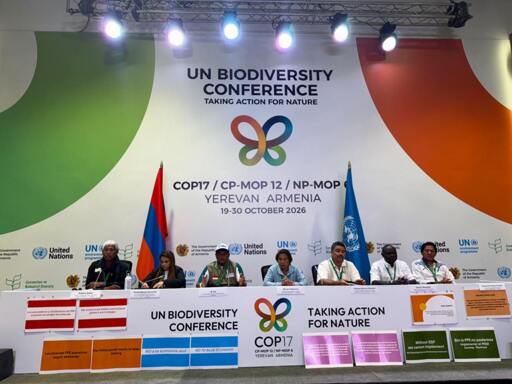
A new report finds that countries around the world have committed to supporting sustainable fishing as a way to counter marine biodiversity loss, but urges them to strengthen accountability measures and do more to support small-scale fishers. The report, jointly published by the U.K.-based nonprofit the Marine Stewardship Council and the U.S.-based global research organization World Resources Institute (WRI), was released at the U.N. Convention on Biological Diversity summit (COP 17) held Oct. 19-30 in Yerevan, Armenia, and analyzes government pledges made under the Kunming-Montreal Global Biodiversity Framework (GBF). Launched at COP 15 in 2022, the GBF was heralded as a major breakthrough, establishing 23 targets aimed at reversing biodiversity loss by 2030. Now, at the framework’s halfway point, the new report takes stock of progress toward meeting those targets in relation to ocean biodiversity. It analyzed 812 fisheries-related commitments across the 74 National Biodiversity Strategies and Action Plans (NBSAPs) from coastal and island state countries and the European Union that had met the deadline to submit their plans. NBSAPs are pathways countries are developing in pursuit of the GBF targets. The most cited commitments focused on fisheries management, stronger governance, and science and data collection. The analysis found that while all national plans included at least one fisheries-related pledge, and 60% contained a measurable metric or deadline, just 27% directly referenced an existing policy, and only 13% included both. So, while fisheries and aquaculture are broadly recognized across NBSAPs, the report says, most biodiversity pledges are only “weakly anchored”…This article was originally published on Mongabay
From Conservation news via This RSS Feed.