

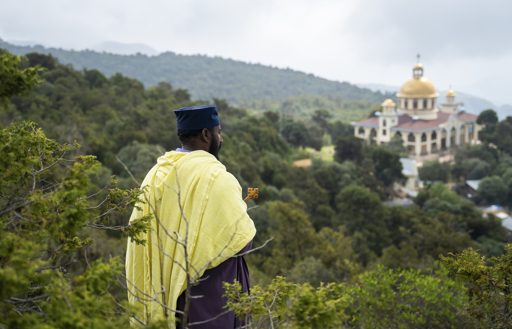
On Oct. 29, 2026, the United Nations Environment Programme (UNEP) recognized the Desa’a project, an initiative to restore Ethiopia’s forests in the Great Rift Valley, as a World Restoration Flagship during the U.N. Biodiversity Conference (CBD COP17) in Yerevan, Armenia. “It is to inspire others to take action and revive nature,” Doreen Lynn Robinson, deputy director of the Ecosystems Division at UNEP, told Mongabay by phone. “Restoration, when it’s done well, brings stakeholders together because they’re working together to find solutions to common problems. We believe that by giving recognition to our flagships, they also receive some support. They’ll get technical support, monitoring support, and communication and advocacy support,” she continued. The initiative, officially called the “Restoring Desa’a landscape: Bringing the Great Rift Valley Back to Life,” is based in the Tigray region of northeastern Ethiopia, in what is known as the Afromontane forests. The Afromontane ecosystem extends across Africa, from the Arabian Peninsula south along the Rift Valley to the Drakensberg Mountains in the east, and consists of dryland forests located at elevations above 1,500 meters (4,900 feet). It is home to the endangered Ethiopian wolf (canis simensis), gelada monkey (theropithecus gelada) and giant lobelia (lobelia rhynchopetalum). This forest is also important for carbon storage, but it is on the verge of disappearing. At the beginning of the project in 2016, an estimated 74% of Ethiopia’s Desa’a Forest had “already disappeared.” Today, an estimated 70% of the remaining forest is considered degraded. Forest cover degradation can affect cloud formation…This article was originally published on Mongabay
From Conservation news via This RSS Feed.