

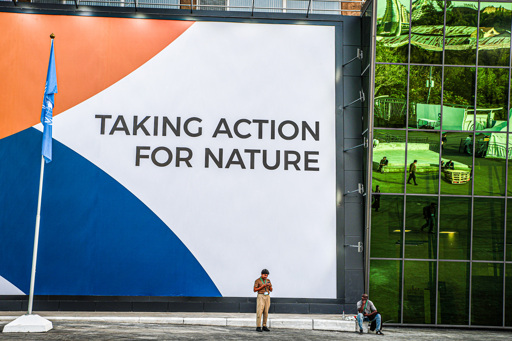
African countries left the United Nations biodiversity conference in Yerevan, Armenia, with an unresolved funding gap for conservation. International funding for protected and conserved areas in Africa fell significantly even as countries are working toward a global agreement to protect 30% of the world’s land and oceans by 2030, known as the 30×30 goal. During the Oct. 19-30 summit, roughly $1.8 billion in new funds for global biodiversity conservation was announced. Negotiators agreed to expand the pool of countries that contribute to international biodiversity finance, inviting developing countries like China and Persian Gulf states to contribute. “The first element remains the lack of funding,” Nadège Nzoyem, WWF’s regional director for the Congo Basin, had told Mongabay’s David Akana in response to a question about the biggest challenges in the run-up to the conference. “To improve wildlife monitoring, you need funds. To ensure that the forest is conserved, you also need funds.” With just over four years to go before the 2030 conservation deadline, African nations are closer to reaching the 30×30 goal than the global average, but still off track. On average, African nations protect 19.9% of their land and 17.2% of their seas, compared with the global average of 18.7% of land and 10% of marine landscapes protected. That’s according to a tracker run by SkyTruth, a U.S.-based environmental watchdog. At the Yerevan summit, the African Group, representing 54 nations, had pushed for more financial support to meet global biodiversity targets. A report released during the summit found that…This article was originally published on Mongabay
From Conservation news via This RSS Feed.