

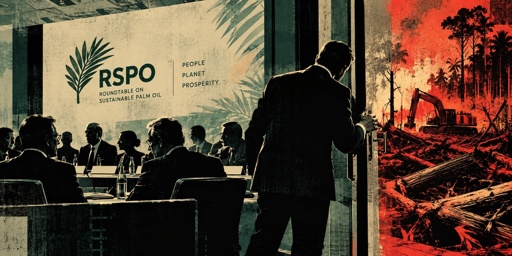
The Roundtable on Sustainable Palm Oil (RSPO) — as the name suggests — sets itself up as the arbiter of what is sustainable in the palm oil industry. For that to work, it has to do two things. First, it has to make sensible rules about what is and isn’t sustainable. Second, it has to enforce those rules, to ensure that companies whose actions fall outside them do not get to market their products as sustainable. If it does not police the rules, the rules don’t really mean all that much. Evidence from a new investigation — and newly unearthed court records — shows that it has failed on that second task. In December 2025, the RSPO Complaints Panel issued its final ruling on a case that had dragged on for more than four years. In a succession of NGO reports dating back to 2017, allegations had piled up connecting Singapore-listed, Indonesian-owned First Resources, an RSPO member and major palm oil producer, to a string of other groups that were still clearing rainforests. First Resources had first committed to “zero deforestation” in 2015 and was able to access markets closed to unsustainable palm oil through its RSPO membership. But through its apparent control of so-called “shadow companies,” the theory went, the Fangiono family that owned First Resources was simultaneously able to keep expanding into rainforests. A complaint alleging that the Fangionos controlled two other groups — Ciliandry Angki Abadi and FAP Agri — was first taken up by the RSPO…This article was originally published on Mongabay
From Conservation news via This RSS Feed.