

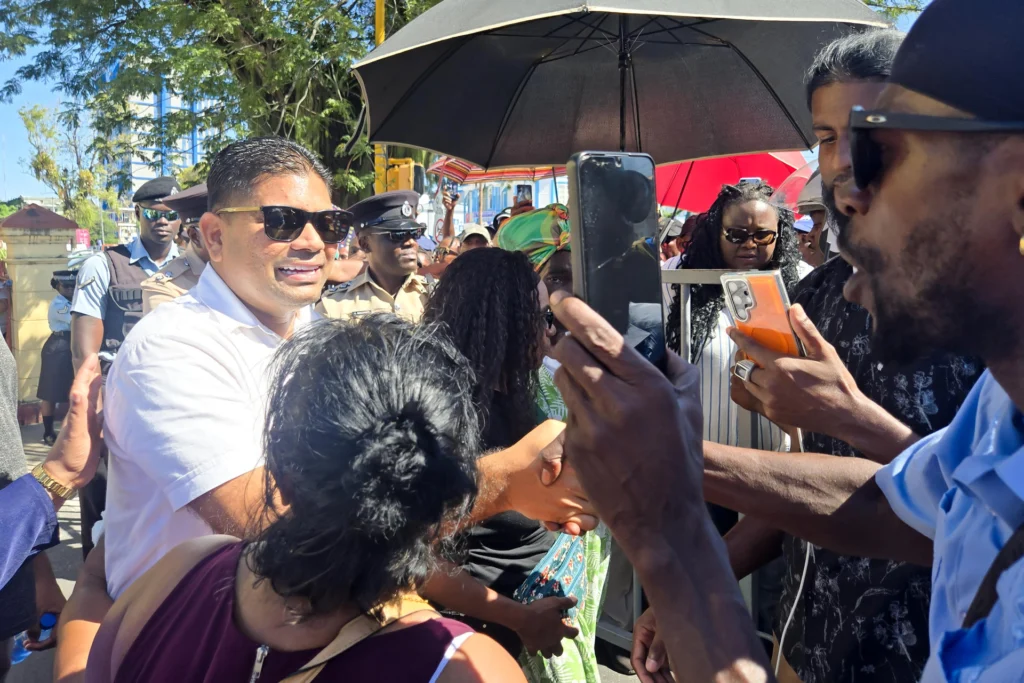
The Caribbean Movement for Peace and Integration has condemned the Guyana’s Police Force and the government for a brutal repression on the opposition leader and peaceful demonstrators, and has demanded urgent intervention by CARICOM.
The regional organization issued an urgent statement on November 2 accusing the police in Guyana of turning “against the people” and using live force against unarmed citizens who were protesting peacefully.
“What we are witnessing in Guyana is shocking and unacceptable,” the statement said. “They are shooting innocent people who are peacefully protesting without any form of arms or ammunition,” it denounced.
RELATED: [One Police Officer Killed, Six Wounded in an Explosive Attack in Southwest Colombia](https://telesurenglish.net/one-police-officer-killed-six-wounded-in-an-explosive-attack-in-southwest-colombia/)
The group characterized the reported use of force as a gross violation of human rights, of democratic rights and of the constitutional right of the Guyanese people to peaceful assembly and freedom of expression. It argued that such conduct “cannot be tolerated in CARICOM” and “cannot be tolerated in the Caribbean.”
The statement alleged that police have targeted Azruddin Mohamed, the Leader of the Opposition, following an election defeat.
Calls for CARICOM Action
The organization directed its first appeal to all Caribbean governments, demanding that they speak out immediately about the events in Guyana. “Silence is complicity,” the statement warned, adding that governments cannot remain silent while innocent Guyanese citizens are being shot for peaceful protest.
The movement also urged CARICOM’s leadership to act without delay. The statement argued that the regional body was built on democracy, human rights and respect for the people, and that failure to act in Guyana would cost it its “moral authority.”
The organization demanded an immediate end to police brutality and the shooting of peaceful protesters, full respect for the democratic rights of the opposition leader, and an urgent CARICOM mission to Guyana to investigate and ensure the protection of the people.
A Regional Warning
The movement warned that the situation in Guyana carried implications far beyond that country’s borders. “Today it is Guyana, tomorrow it can be any other country in the Caribbean,” the statement said.
It also reported that the persecution of an opposition leader who lost an election set a “dangerous precedent” for the entire region. He suggested that similar scenarios could unfold in Barbados, Trinidad and Tobago, Jamaica or any Caribbean nation where one leader loses and another turns the state machinery and the police force against political rivals. “We must stop it now,” the statement insisted.
Guyana’s opposition leader Azruddin Mohamed was arrested again Wednesday less than two weeks after being released on bail in connection with an October 12 shooting incident. Attorney General Anil Nandlall said the opposition leader could face new criminal charges for alleged bribery, obstruction of justice and tampering with evidence.
At a news conference Monday, Mohamed presented more than 20 minutes of CCTV footage that reportedly came from the state command center. The video shows a vehicle, said to be carrying Mohamed, passing Narine’s home and heading toward a roadway. It also captures shots fired at the vehicle and Mohamed’s arrest. The opposition leader maintains that Narine tried to end his life.
Mohamed assumed the opposition leadership after the 2025 elections. The political pressure around Mohamed has been building for months. Supporters of the opposition leader have framed the arrests as retaliation for releasing the footage, while the government insists the evidence was fabricated.
The Caribbean Movement for Peace and Integration declared its “full solidarity” with the opposition leader and with the people of Guyana who are standing up for justice and democracy. “The eyes of the Caribbean are watching Guyana. The world is watching,” the organization concluded.
From teleSUR English via This RSS Feed.