


This article by Sugeyry Romina Gándara originally appeared in the November 2, 2026 edition of SinEmbargo, an independent Mexican digital news outlet.
Mexico City, November 2 (SinEmbargo).— Donald Trump won over in 2024 a portion of the Latino vote with promises of economic prosperity, but two years later his government has turned those expectations into disenchantment. The offensive against migrants, the raids, the deportations and the failure to deliver on his economic offers have hit a community that helped return him to the White House. The Republican, who in the 2024 presidential elections won unprecedented Latino support for his party, now arrives at the November 3 midterm elections at risk of losing those who trusted him. The vote that helped bring him to power could become a punishment vote.
Thus, this November 3, when all 435 seats in the House of Representatives, approximately one-third of the Senate and 39 governorships will be up for election, one of the main questions of the day will be how much Latino support the Republican has lost among those voters who today feel let down by his government.
“A lot of the Latino vote is going to be in dispute now in the midterm elections. And many people who may have voted for Trump may, if there is an alternative in their locality, decide to vote for the Democrats,” Ximena Bustamante, founder of the Fund for Undocumented Women and an activist based in the United States, highlighted in an interview.
The expectation that the Latino vote will shift compared to 2024 is gaining more and more strength. The erosion caused by Trump’s policies is fueling forecasts of greater support for the Democratic Party. The Latino vote, which has historically leaned more toward the Democrats, is expected to increase its support for that party, even among those voters who voted for the Republican in 2024.
Marco Castillo, codirector of the organization Global Exchange, in New York, explained that in 2024 Donald Trump reached a popularity of up to 48 percent among the Latino community because he promised generations of Mexican Americans, settled for decades in the United States, to give them back the possibility of regaining control over their incomes, their lands and their family values. However, once in power, he showed a different reality.
“Since Donald Trump won, he began to lose the Latino vote. Latinos began to withdraw their support, losing, starting from 20 to 24 percent, up to 38 percent of the Latino vote. And even more now that the elections are approaching, practically what we have seen is a Latin American voting community that has gone from believing in this promise to give them back their rights to realizing that this is an agenda of corporate oligarchies that never recovered control of the state for social rights, for the majorities; that never recovered the economy for the majorities; that did not manage to change the realities of the Latino community. And, on the contrary, they increased the attacks disproportionately and without any precedent against the Latino community, persecuted by ICE, among other agencies,” he detailed.
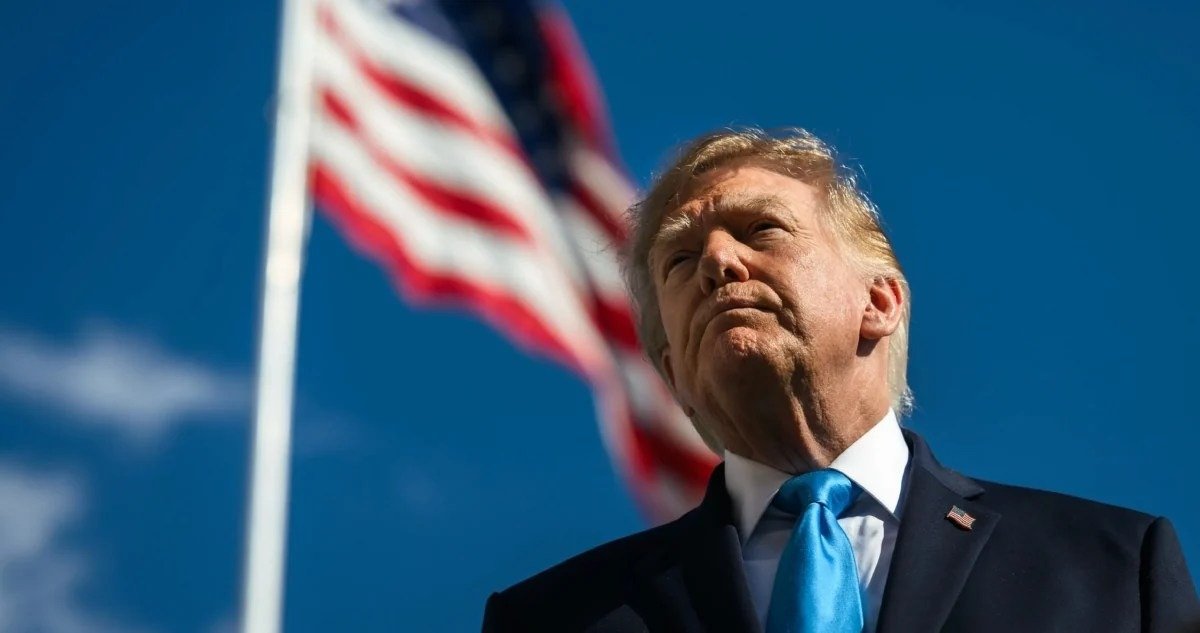
Donald Trump, President of the United States, on October 5, 2026. Photo: White House
The percentage of Latinos who supported Donald Trump in the 2024 elections is around 45 percent, although the figures vary between 44 and 48 percent, depending on the poll and the methodology used. One of the most cited estimates is that of the NBC News and Edison Research exit poll, which indicated that Trump obtained 45 percent of the Hispanic vote, compared with 53 percent for Kamala Harris.
That is, more than four out of ten Latino voters supported Trump, a higher percentage than the Republican himself obtained in the 2020 elections, when he received around 32 percent of the Latino vote, equivalent to three out of ten voters.
One of the aspects that drew the most attention was that Latino support for Trump grew compared with his first presidential election. In 2016, when he ran against Hillary Clinton, he obtained 28 percent of the Hispanic vote. Thus, he went from receiving the support of almost three out of ten Latino voters to more than four out of ten in 2024.
Latino support for Donald Trump and the Republican Party has been explained, according to studies and analysts, largely by the Republican’s promises, mainly on economic matters. Added to this was the narrative that he would go after migrants he described as “bad” or criminals, an approach that, according to various analyses and migrant activists, also contributed to the growth of his support among Latinos.
Ximena Bustamante explained that the behavior of the Latino vote in favor of Trump varied by region of the United States, although she noted that, in general terms, it was more men than women in this community who backed the Republican.
For his part, Marco Castillo noted that, according to what the Latino population has expressed in various media and studies, there is disappointment because the promises Trump made during his campaign, which seemed achievable, did not materialize once he came to power.
What Donald Trump promised and could have delivered was not seen in reality, and that is the disappointment: that he did not deliver, that he did not do the work he promised. That is the feeling among a large number.
Marco Castillo, Global Exchange
Another factor that the analyst identified as one of those that have most affected Latino communities are the operations of Immigration and Customs Enforcement (ICE), whose presence has spread to predominantly Latino and immigrant neighborhoods. Their residents have been subjected to harassment, intimidation, detentions and criminalization by immigration agents. He also noted that there have been killings of people in the course of these actions.
“We see ICE in Mexican American and Latino neighborhoods and communities harassing, intimidating, detaining, criminalizing and, in some cases, killing citizens, the vast majority of them people of color, some with immigration status,” he stated.
The Global Exchange representative considered that Latino communities have borne a good part of the consequences of this immigration policy and described ICE as a “paramilitary police” of Donald Trump’s government.
“Latino communities have been the ones that have suffered some of the greatest burdens of this persecution,” he expressed.
The Regret
However, two years later, Latino support for Trump and his popularity remain in free fall. In the run-up to the midterm elections, polls reflect the disenchantment of part of this electorate with the Republican.
Equis, in its national survey published in April, indicates that 61 percent disapprove of his immigration policy and 62 percent believe Trump seeks to deport as many undocumented people as possible, regardless of their background.
Meanwhile, a UnidosUS poll revealed in May that 25 percent of those who voted for Trump in 2024 would not do so again today. In addition, 68 percent believe the United States is on the wrong track and 66 percent believe Trump and the Republicans are not focused on improving the economy.
The figures support what is perceived among sectors of the Latino community that voted for Trump and that today feel disenchanted, disillusioned and even regretful. His tariff and anti-migrant policies, far from bringing them the prosperity he promised, have hit two fundamental aspects of their lives: family finances and daily life.
In particular, Donald Trump’s anti-migrant policy has not only affected those who crossed the border without documents, but has also disrupted the life of the Latino community in general, whose members have been direct or indirect victims of the deportations, detentions and abuses attributed to Immigration and Customs Enforcement (ICE) agents.
Latinos who believed that the siege and immigration persecution would be limited to those Trump labels as criminals have seen its effects also reach their own families. In the United States, many households are made up of people with different immigration statuses, so raids and detentions can affect relatives and people close to them, even when some of them are U.S. citizens.

Trump’s aggressive immigration policies are driving away the Latino vote. Photo: ICE
According to a ProPublica report published in early October, Immigration and Customs Enforcement (ICE) has detained 506 U.S. citizens during the Donald Trump administration, among them children and people who were simply recording immigration raids. The documented period runs from January 2025 to September 2026, that is, during the Republican’s second term.
Marco Castillo and Ximena Bustamante agreed that discontent with Trump’s second term has opened the possibility that part of that electorate will once again back the Democrats, particularly when it finds political alternatives that respond to its concerns.
Castillo explained that the disappointment of the Latino population, documented in various media, is due to the promises Trump made during his campaign that, so far, have not materialized. In addition, he noted that the frustration is also related to the presence of ICE in predominantly Latino and immigrant communities, where its agents carry out operations that have led to harassment, detentions and criminalization of their residents.
“So, we see ICE in Mexican American and Latino neighborhoods and communities harassing, intimidating, detaining, criminalizing and, in some cases, killing citizens, the vast majority of them people of color, some with immigration status.”
The codirector of Global Exchange considered that Latino communities have borne a good part of the consequences of the immigration persecution driven by Trump, which has also changed the perception of those who backed the Republican at the polls.
For her part, Ximena Bustamante noted that, although the anti-migrant policy has generated surprise and discontent among Latinos, regardless of whether they are migrants or U.S. citizens, the greatest frustration is related to the economy.
“There has been no economic recovery; what Donald Trump promised in that regard has not happened,” she stated.
Bustamante explained that Trump managed to push the discourse of the “good migrant” and the “bad migrant,” under the argument that his government would only go after those who committed crimes, but not Latino people who were already part of U.S. communities.
However, she noted that, during these two years, the Latino population has watched as it has become one of the main targets of ICE and other immigration agencies. In that sense, she considered that there is surprise at the scope of the operations, which have not been limited to people singled out as criminals, as Trump proposed during his campaign.
Although she acknowledged that the persecution against Latino communities has generated discontent, Bustamante insisted that the main reason for disenchantment is the failure to deliver on economic promises.
“I think that is where the breaking point really is,” she elaborated.
Given this scenario, discontent has also begun to be reflected in the electoral behavior of some sectors that backed Trump in 2024, according to the activists.
Castillo mentioned, for example, the candidacy of Mexican American singer Bobby Pulido, who is seeking a seat in the House of Representatives for a South Texas district in which Trump obtained significant support during the presidential elections.
The scenario, the activist maintained, reflects a change in the behavior of the Latino vote, since those who supported the Republican in 2024 do not necessarily constitute an electorate that identifies with the Republican Party.
Castillo also clarified that a portion of those voters leaned toward Trump in that election, but that does not mean they maintain their support for the Republican Party. On the contrary, he considered that a significant proportion of that electorate is returning to the Democratic Party or moving closer to sectors opposed to the president.
Bustamante added that this shift has also been observed in New York, where, as she explained, some Latinos who voted for Trump later backed Zohran Mamdani, identified with democratic socialism, in the city’s mayoral election.
The Mexican activist noted that this behavior shows that the Latino vote that favored Trump does not necessarily constitute permanent support for the Republican, but also responded to an expression of punishment against the Democratic establishment.
As an example, she mentioned Mamdani’s candidacy, which, as she explained, offered an alternative to voters concerned about the cost of living and other economic difficulties, which allowed some Latinos who had voted for Trump to change their electoral preference.
The analyst noted that, although the results of the November 3 general elections are yet to come, during the primaries changes were already observed in various areas that had backed Trump and where a shift toward Democratic candidates was subsequently recorded, particularly those identified with democratic socialism.
-
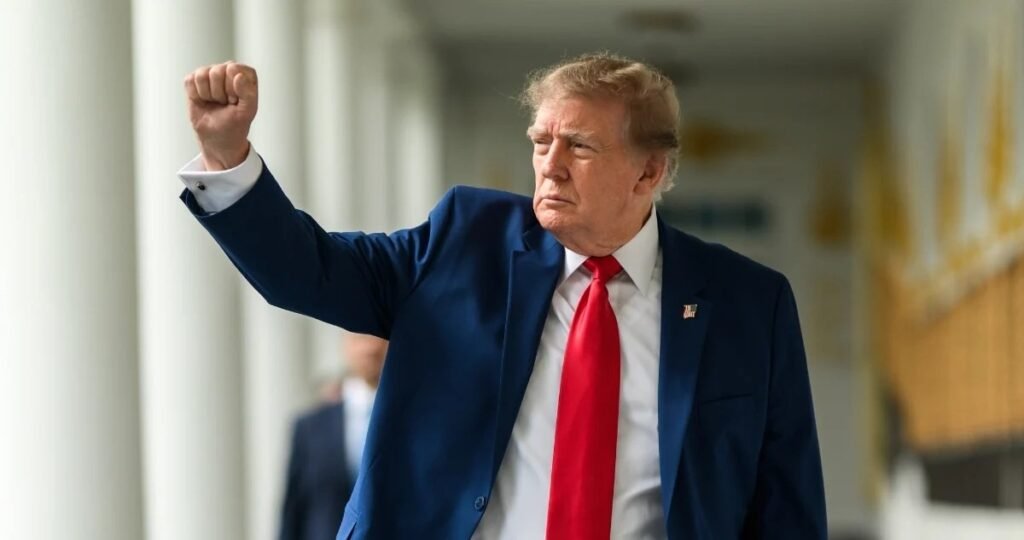
Latinos Brought Trump to Power. He Betrayed Them. Now They Could Sink Him
November 2, 2026
Activists say ICE raids and unkept economic promises are pushing Latino voters who backed Trump in 2024 back toward Democrats ahead of the midterms.
-
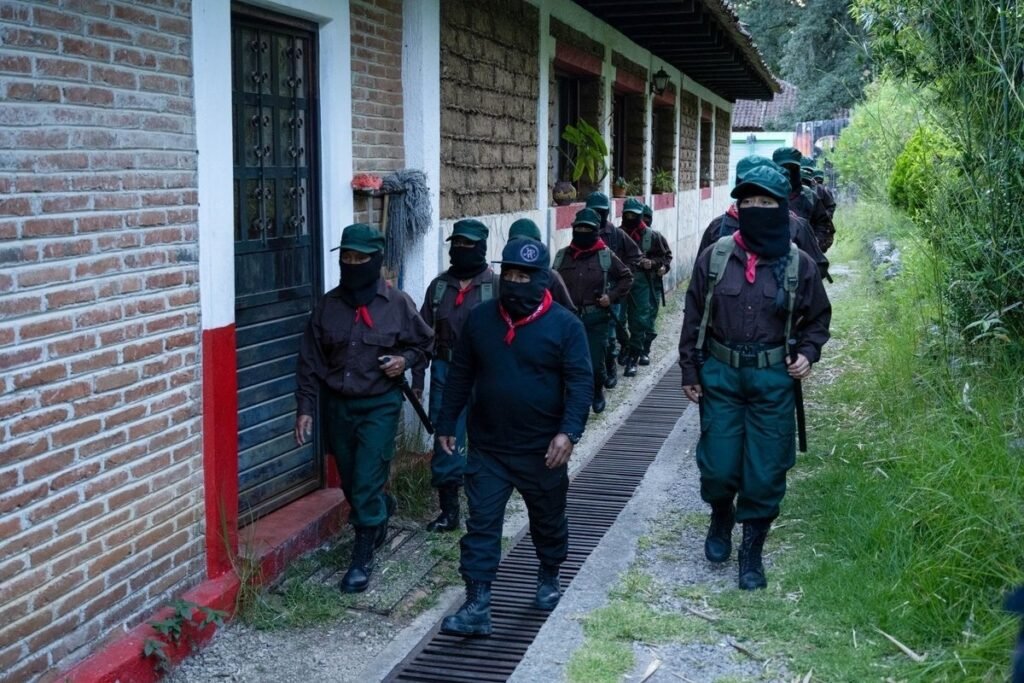
EZLN Says the Three Levels of Government Are Trying to Prevent It From Meeting With Searching Mothers in Mexico City
November 2, 2026
In a communiqué, the Zapatistas say 1,530 members will travel in December to meet families of the disappeared, citing what they call government provocations in Chiapas.
-
Mexican Economy Grows 3.2% Annually in the Third Quarter of 2026, Its Biggest Advance in Three Years
November 2, 2026November 2, 2026
Services and industry drove the expansion while agriculture contracted, and the economy has now grown year-on-year for four straight quarters.
The post Latinos Brought Trump to Power. He Betrayed Them. Now They Could Sink Him appeared first on Mexico Solidarity Media.
From Mexico Solidarity Media via This RSS Feed.