

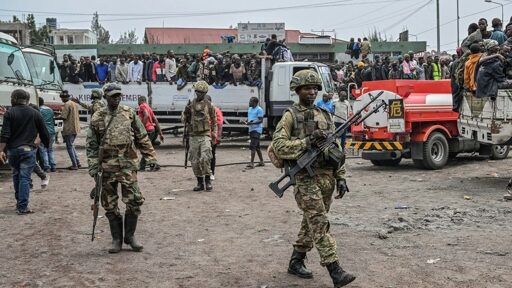

Mainstream news has rediscovered Africa, and it is recycling old narratives: armed conflict, state collapse, and humanitarian catastrophe. Tigray is at war again. Darfur and Kordofan bleed under the Rapid Support Forces. M23 carves up eastern Congo. Northern Mozambique is still emptying its villages. Across the Sahel, jihadist attacks and blockades strangle whole towns, and Somalia’s war grinds on into its fourth decade.
All of this is real. People are dying, and millions are displaced. But why is the story always told the same way it was told in the 1990s and early 2000s, as a continent of chaos and hunger, a cautionary tale, an example of what not to be? As an African reporter who covers these wars, I read the briefings and explainers sent out to the world and often struggle to recognize the places they describe.
Look at Sudan. Now one of the largest displacement crises in the world, routinely called “the forgotten war,” as if forgetting were something that happened to the press rather than something the press did. Congo is reported as “decades of ethnic violence” and “a complex web of armed groups,” while the minerals the rebels fight over, and who buys them, rarely make it into the analysis. Ethiopia’s wars become conflicts between ethnic groups – Amhara against Tigrayan, Tigrayan against Eritrean, as if history ended with ethnicity. Compare this to the attention, the maps, the expert panels and the explanations of strategy that the war in Ukraine receives every week.
That framing does three things. It flattens very different histories into one image of “African violence.” It turns politics into ethnicity. And it blames a supposedly unique African corruption, as if corruption were not a global industry.
What it hides is that one of the richest continents in natural resources is home to many of the poorest people in the world. This is no accident of culture. It is the result of imperialism, a word too often missing from these conversations.
Read more: Over half of Africa’s population suffered from food insecurity: UN report
The news files Africa’s wars in separate stories. Read together, they draw one map. In Sudan, gold from RSF-held mines flows to the United Arab Emirates. In eastern Congo, UN experts place Rwandan troops beside M23, and coltan from mines such as Rubaya passes through Rwanda into the supply chains for phones and electric-car batteries. In Mozambique, Rwandan soldiers, with European Union funding, guard the Cabo Delgado region where TotalEnergies is developing its gas project. On the Red Sea, Egypt, the Gulf states and Washington compete for the coastline Ethiopia and Eritrea are fighting over, and in September the United States lifted sanctions on Eritrea to advance its interests there. Even peace follows the pattern; when Congo and Rwanda signed the Washington Accords in December 2025, Donald Trump announced American deals to unlock the region’s critical minerals.
And the weapons? None of these armed groups manufactures its own. The permanent war economy of the West, and increasingly of the Gulf, needs markets and battlefields. Africa supplies both.
The “identity” cover story
This structure needs a cover story, and “tribe” is the oldest one. Identity is real, and people do mobilize through it. Yet it is telling that “tribe” is still the label reached for when these wars are analyzed.
Look at the resources being fought over. Ethnicity might tell who fights whom. It does not explain why the fighting pays. Many of the identities now presented as ancient hatreds were hardened, and sometimes made, by colonial rule. In Rwanda, Belgian administrators turned the fluid categories of Hutu and Tutsi into racial classifications, stamped on identity cards from the 1930s, with rights and privileges attached to each. In Sudan, the division of Darfur into “Arab” and “African” owes as much to Khartoum’s arming of the Janjaweed in the 2000s as to any older history. Colonial and post-colonial states governed through ethnicity, and their successors still do.
So, when coverage reaches for “tribe,” it does not just simplify. It takes a political product of the empire and presents it as the cause of the wars that the empire’s heirs now profit from.
How the wealth leaves
The word “imperialism” can sound like an accusation without a mechanism. But the mechanism is not hidden. It runs through ordinary channels. UNCTAD estimates that close to $89 billion leaves Africa every year as illicit capital flight, through trade mis-invoicing, tax evasion, and the export of extractive commodities. That is nearly as much as the continent receives in aid and foreign investment combined. Add the profits that multinational firms send home each year, and the picture of Africa as a charity case turns upside down. The continent is a net creditor to the world that lectures it.
Debt finishes the job. Loans taken under pressure, often to service earlier loans, now absorb budgets that should go to clinics and schools. Across much of the continent, governments pay more in interest to foreign creditors than they spend on the health of their own people. A state that cannot pay soldiers, nurses or teachers is then called “fragile,” and its fragility becomes the excuse for the next intervention.
How, then, should Africa’s wars be covered? Not by looking away from the suffering, but by refusing to treat it as natural or without history. Every report on a massacre in Darfur should say where Darfur’s gold goes. Every report on M23 should name the mines it holds and the countries its minerals pass through. Every report on a peace deal should ask who gains access to what. Name specific histories, specific companies and specific capitals, not a faceless “Africa.” These are the questions I try to bring to my own reporting, and the ones I would put to every newsroom that covers the continent.
The popular sentiment among young African people is dignity and sovereignty. And sovereignty belongs to people, not to whichever general holds the capital. That is why those organizing from below deserve our attention even more. Grassroots movements and organizations, which have kept food, medicine, and political life going through the war, and the popular movements across the Sahel that demanded an end to foreign occupation.
Read more: The struggle for African unity today, an interview with Hakim Adi
From BT News via This RSS Feed.