

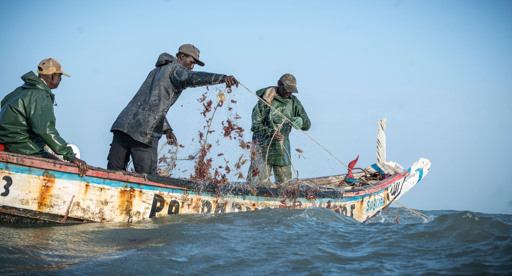
Competition between small-scale fishers and industrial vessels can threaten food security and livelihoods in coastal communities especially in the Global South. A new study looks at which countries are most vulnerable to this competition and other forms of conflict between the two sectors, such as disputes over fishing grounds or damage to gear. The study, published Oct. 22 in the journal Nature Food, introduces an index that scores 126 countries on their vulnerability to such conflicts. The scores are based on factors such as how much industrial activity occurs near shore, how reliant countries are on small-scale fishing for food and income, and how weak their governance systems are. Africa ranked as the most vulnerable region, followed by Oceania, Asia and Central and South America. West Africa and South Asia are the most vulnerable subregions, according to the index. At the country level, Guinea, Sierra Leone and Mozambique received the highest conflict vulnerability scores worldwide. “There are lots of diverse ways that industrial fisheries can impact small-scale fisheries,” Melissa Cronin, an assistant professor of fisheries oceanography at the University of Massachusetts Dartmouth in the U.S. and lead author of the study, told Mongabay. One of the most straightforward ways is via competition for the “exact same target fish species,” she said. “Because industrial vessels or large-scale vessels are so efficient technologically, they can fish much more quickly and … be this kind of bigger predator in the system and outcompete those small-scale fishers. Cronin said she’d become interested in the…This article was originally published on Mongabay
From Conservation news via This RSS Feed.