

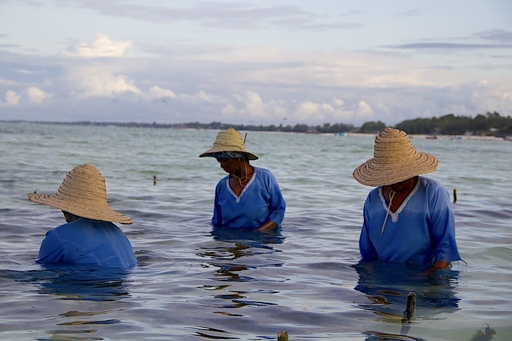
Along Zanzibar’s coastline, thousands of women rise with the tides to cultivate one of our islands’ most important natural resources. Day after day, they wade into the ocean, tending lines of seaweed that support households, strengthen communities, and contribute to a sector that has long been a source of livelihoods and opportunity. Their work reflects a remarkable combination of skill, perseverance, and adaptation. For decades, these women have sustained an industry that has connected Zanzibar to global markets while providing income in coastal communities. As climate change reshapes marine ecosystems and global demand evolves, the resilience of these farmers offers an important foundation on which to build the next chapter of the seaweed economy. Each of us is directly connected to this work: Mwinyi serves as First Lady of Zanzibar, Kurbiel leads the U.N. Joint SDG Fund, which supports Zanzibar’s seaweed sector, and Krusoe founded AltaSea, which has participated in international efforts to advance research and investment in the sector. Hands-on seaweed cultivation in Zanzibar’s coastal waters. “Mwani Mamas,” a collective of women seaweed farmers and artisans in Zanzibar, tend their crops using traditional farming methods. Image courtesy of Kevin Gaines/Kelp Ark. We come to this issue from different backgrounds, but we share a common conviction: Zanzibar’s seaweed farmers are not the challenge facing the industry. They are its greatest asset. The opportunity before us is to ensure that research, innovation, infrastructure, and investment evolve alongside their commitment and expertise. Across the world, agricultural and marine industries are increasingly turning…This article was originally published on Mongabay
From Conservation news via This RSS Feed.