

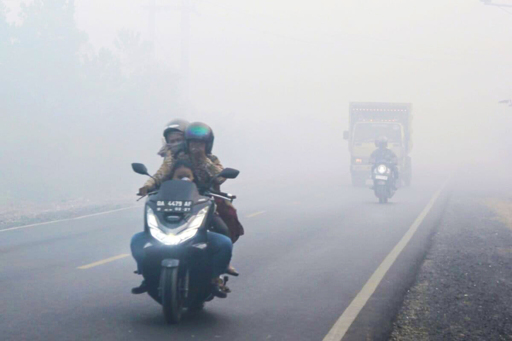
JAKARTA — Michael’s 20-month-old daughter began coughing and had shortness of breath in early October, as thick haze from wildfires blanketed Balikpapan, the capital of Indonesia’s East Kalimantan province. He and his wife took the toddler to a private hospital, where she was diagnosed with pneumonia. An X-ray showed an infiltrate in the upper part of the girl’s left lung. “We were told that one factor that could have contributed to the illness was the smoke, which has also been getting thicker in Balikpapan,” Michael told Mongabay Indonesia on Oct. 14, 2026. With the air quality index reaching “unhealthy” levels in the city, the couple limited their daughter’s time outdoors. A day later, more than 100 kilometers (62 miles) away, in the East Kalimantan city of Samarinda, a 14-month-old baby died after suddenly experiencing shortness of breath. The family of the toddler, Yazlyn Syanindita, suspects she died because of the thick smog enveloping the city. “Her shortness of breath was so sudden,” Yazlyn’s grandfather, Sarno, told Mongabay Indonesia. “She had no previous illnesses.” Her mother Cindy, 25, said what happened to her daughter shouldn’t happen to other children and urged the government not to downplay the impact of fires. “The government must not turn a blind eye,” she said, as quoted by BBC Indonesia. “Don’t say the haze isn’t severe. Many people are suffering from acute respiratory infections. Yesterday, in the inpatient ward, I saw three toddlers struggling to breathe.” Health risks also extend to those fighting the fires. At…This article was originally published on Mongabay
From Conservation news via This RSS Feed.