

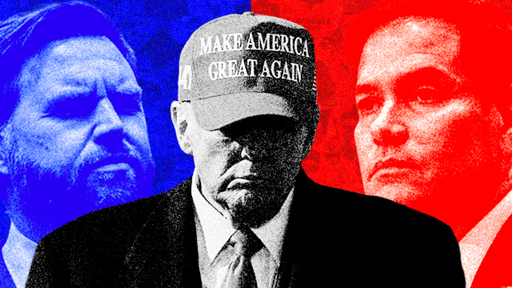
A Coalition Built on Contradictions
The coalition that enabled Trump’s return to the White House brings together economic interests, religious traditions, nationalism, conspiracy movements, sectors of the technology industry, and a popular base mobilized against the establishment. These forces may share a rejection of liberal elites, immigration, feminism, or the Left, but they do not necessarily share a strategy for the United States, a foreign policy, or a common economic project. In fact, they maintain significant differences and contradictions on these and other issues. The war against Iran and the stalemate in the conflict — which many interpret as a defeat for the United States — the relationship with Israel, the rising cost of living, and disputes over the future of MAGA have made these tensions increasingly visible.
The MAGA movement (Make America Great Again) was built on a combination of economic protectionism, religious conservatism, opposition to immigration, hostility toward liberal elites, and criticism of Washington’s traditional foreign policy. Its strength lay in bringing together different social sectors and political currents under a common slogan: globalization had harmed the United States, its leaders had abandoned workers, and the country needed to reclaim its sovereignty. The movement draws on earlier political phenomena, such as the growth of the Alt-Right in internet forums, while also incorporating other experiences, such as the Tea Party.
Nevertheless, this coalition also reflected an agreement among sectors of the American establishment on the need to regain ground in global competition through a much more aggressive imperialist policy. Thus, behind the rhetoric of national sovereignty and opposition to endless wars, there coexisted a determination to reaffirm U.S. hegemony through economic coercion, diplomatic pressure, and military intervention. So-called hard power — imposing one’s will through force — was the option chosen by part of the U.S. ruling class, which, in the process, decided to throw overboard the very “rules-based order” and “multilateralism” that U.S. imperialism itself had spent previous years establishing.
The following analysis examines the main tensions and disputes within MAGA through several key themes: U.S. foreign policy and the limits of interventionism; differing positions on Israel; the contradictions between anti-elitist rhetoric and the economic interests running through the coalition; and the struggle over the movement’s leadership and future after Trump.
America First (?) and The War Against Iran
Trump built part of his political identity by denouncing Washington’s military interventions. The wars in Iraq and Afghanistan, military spending, and previous administrations’ inability to translate U.S. international superiority into improvements for people’s lives were central elements of his criticism of the “establishment.”
However, this isolationism never meant abandoning U.S. imperialism. Trump challenges certain forms of intervention, but not Washington’s claimed right to shape the order of its strategic environment, impose conditions on other states, and use its economic and military superiority to defend its interests. Trumpism has reaffirmed both the Monroe Doctrine — which asserts the United States’ “right” to take control of Latin America, now cynically rebranded as the “Donroe Doctrine” — and the concepts of “American exceptionalism” and “manifest destiny.” These political and religious ideas proclaim that the United States has divine authorization to exercise predominant power over other territories and peoples. These conceptions have also helped construct a claim to superiority and a national mission used to justify U.S. imperialist policies and the defense of its declining global hegemony. At the same time, this aggressive imperialist policy, which coincides with the country’s historical decline, has sought to maintain a rhetoric of “taking care of home first” and of retreating toward its immediate geographical region. In doing so, it attempts to distinguish itself from the policies pursued by hawks in both the Republican and Democratic parties, who led the country into endless wars far from home.
The war against Iran brought this tension to the forefront. If U.S. workers are the priority, what concrete benefits do they gain from a conflict that consumes resources, increases international uncertainty, and affects energy prices? Why would an administration that promised to end endless wars once again commit itself to an intervention of uncertain duration? It is also important to consider that, unlike the wars in Iraq and Afghanistan, which were preceded by the September 11 attacks and extensive campaigns to legitimize military intervention, the war against Iran — a considerably more powerful adversary — was not preceded by a comparable effort to build public support. Although there had been agitation around an alleged Iranian nuclear threat and criticism of the authoritarian rule of the Ayatollahs, the intervention was not legitimized in advance to the same extent. As a result, from an early stage, a majority of the U.S. public, and even more so the populations of its European allies, questioned the motives and legitimacy of the intervention.
Trump’s dilemma is that he seeks to preserve the benefits of U.S. hegemony, which is increasingly challenged and in decline, without bearing indefinitely all its costs. This does not mean that the United States has ceased to be a dominant power. Rather, it faces growing difficulties in translating its economic, military, and technological superiority into a stable international order that is accepted by its allies and sustainable for its own society. Growing competition among global powers, structural economic problems within U.S. imperialism — including the increasing burden of its debt — the limits of military interventions, and the domestic costs of maintaining U.S. primacy all fuel a debate within the Right: how can the United States preserve its primacy and growing competition with China, which has become the main trading partner of some of its former allies, at a lower cost?
Latin America occupies a central place in this strategic reorientation. Faced with challenges to its global hegemony and growing competition among the major powers, Washington is seeking to strengthen its control over the Western Hemisphere and limit the autonomy of regional governments. The Donroe Doctrine expresses this ambition to reassert Latin America as an exclusive sphere of U.S. intervention, where Washington seeks to prioritize its economic interests and access to strategic resources while preventing its competitors from expanding their presence. This strategy includes interference in elections and threats by U.S. ambassadors against local politicians, journalists, and businesspeople, openly expressing a relationship of neocolonial subordination and dependency. The financial support provided to Javier Milei’s government in Argentina ahead of the 2025 elections, and the military operation in Venezuela on January 3, 2026, which culminated in the kidnapping of Nicolás Maduro and his forced transfer to the United States, illustrate two forms of intervention in Latin America. The first involves interference in electoral processes across the region, as in Colombia and Brazil. In some cases, this includes financial support conditional on the policies of allied governments, as occurred in Argentina. The second involves direct military intervention against governments considered adversaries, as in Venezuela. Although Washington has not succeeded in advancing along the same lines in Cuba, it has been pursuing a much broader offensive against the island. In this sense, America First does not mean abandoning interventionism. It means concentrating efforts on what Washington considers its “backyard,” a region it regards as fundamental to sustaining its power. The paradox is that, while Trump questions costly military commitments in other parts of the world, he reasserts the United States’ claimed right to intervene in Latin America and condition the sovereign decisions of its countries. Debates and disagreements over U.S. foreign policy are one of the main sources of crisis within MAGA, but they are not the only ones.
Christian Zionism and Isolationist Nationalists: MAGA’s Different Views on Israel
One of the main fractures within MAGA became apparent during the war waged by the United States and Israel against Iran. The conflict reignited a dispute running through the conservative movement: to what extent should Washington’s foreign policy be subordinated to the defense of Israel? For some factions, the relationship with the Zionist state constitutes a fundamental strategic alliance. For others, the war contradicts the America First slogan by committing U.S. resources to a conflict they consider unrelated to the country’s national priorities. The debate does not simply pit supporters of Israel against its opponents. It reflects disagreements over which interests the United States should prioritize, the scope of its military interventions, and the role it should play in West Asia.
One of the most important political bases of support for Israel is what is known as “Christian Zionism,” a movement with a strong presence among conservative evangelical groups. Its support is not based solely on geopolitical considerations. It also stems from a biblical interpretation according to which the Jewish people maintain a special relationship with God and the State of Israel is divinely promised as part of religious eschatology. Christians United for Israel (CUFI), one of the leading organizations in this movement, maintains that supporting Israel is a biblical obligation. For these groups, defending Israel is not merely a foreign policy decision; it is also an expression of religious faith. This religious conviction is intertwined with a conservative conception of social order and a commitment to U.S. international leadership. Israel is portrayed as a Western ally against enemies identified with political Islam, terrorism, and Washington’s adversaries. Support for Israel is also organized through networks of political influence. One of the most influential organizations, AIPAC (American Israel Public Affairs Committee), is a U.S.-based organization that promotes strengthening the alliance between the United States and Israel. It lobbies in favor of military and diplomatic assistance and participates in electoral contests by supporting candidates who favor this relationship.
Another current within MAGA is represented by figures such as Joe Kent and Tulsi Gabbard, who embody an isolationist form of U.S. nationalism. From this perspective, the United States should prioritize its domestic interests, protect its resources, and avoid becoming entangled in costly foreign wars that primarily serve the interests of other countries. Kent’s resignation as director of the National Counterterrorism Center in March 2026 made this fracture particularly visible: he argued that Iran posed no imminent threat to the United States and that pressure from Israel had helped drive Washington into the conflict. Gabbard, whose political trajectory has long been shaped by opposition to military interventionism, has also represented this current within the movement, although her public response to the war has been more cautious. The conflict over Iran thus exposes a fundamental contradiction within MAGA: between those who want to use U.S. military power to assert global dominance and those who believe that such commitments betray national priorities. What initially appeared to be a shared commitment to America First has become a source of growing division within Trump’s coalition.
The war turned these differences over Israel and Zionism into an open confrontation among prominent right-wing figures. Conservative journalist Tucker Carlson, who had strongly supported Trump during the election campaign, criticized the military intervention and questioned why the United States should bear the costs of a war closely tied to the Israeli government’s objectives. On the opposite side, Ben Shapiro and Mark Levin defended a much more belligerent policy and firm support for Israel. The dispute spread across conservative media and became increasingly personal, revealing that support for Trump does not guarantee agreement over how U.S. power should be exercised abroad. This confrontation has unfolded amid the stalemate in the war against Iran, which has failed to produce a swift and successful outcome, driving up international oil prices and contributing to Trump’s declining electoral fortunes.
Another figure in this debate is Nick Fuentes, a far-right white nationalist activist who combines opposition to U.S. support for Israel with explicit antisemitism. His position should not be confused with criticism of Israeli policy or objections to a military alliance. Fuentes turns “the Jews” into a collective enemy and invokes antisemitic prejudices to explain U.S. foreign policy. This distinction matters because the Right includes both unconditional defenders of Israel and currents that reject the alliance from nationalist and antisemitic positions. Both may share opposition to progressivism and liberal elites, but they disagree over who represents the nation, which interests the United States should defend, and how its relationship with Israel should be understood.
The dispute, therefore, does not simply pit a religious Right against a secular one (both Carlson and Fuentes are Catholics). It confronts different ways of defining U.S. nationalism and its relationship with global power. For Christian Zionists and conservatives most committed to Israel, maintaining the alliance is part of defending the West. For nationalists who question foreign interventions, military commitments to Israel may represent an abandonment of national priorities. For antisemites, including radical Catholic groups, the conflict is instead interpreted through conspiracy theories that assign collective responsibility to Jews for the decisions of the Israeli state and Washington. These positions can coexist temporarily within an electoral coalition, but the war against Iran and the failure to impose their political will have made it increasingly difficult to maintain them under a single political orientation.
The culture war helps explain another aspect of this coexistence. Although profound differences exist over Israel and foreign policy, various sectors of MAGA find common ground in opposition to feminism, LGBTQ+ rights, diversity policies, and what they portray as a progressive (“woke”) imposition on society. These campaigns defend a hierarchical conception of family, religion, and national identity. They also enable groups that do not necessarily share the same international strategy to come together. The “culture war” against the left does not eliminate the differences within the right; instead, it offers a common cause around which to mobilize part of its base.
In its most radical forms, this defense of traditional hierarchies even challenges historically won political rights. For example, a proposal known as One Family, One Vote has gained visibility among sectors of the new political Right. It proposes replacing individual voting rights with a single vote per family, generally exercised by the man considered the head of the household. The idea has circulated among influencers and Christian nationalist figures, although it does not currently constitute a legislative reform initiative with realistic prospects of approval. Its political significance lies in reopening the debate over women’s electoral autonomy and presenting the subordination of their decisions to male authority as a way of restoring family order.
However, reducing the culture war to a maneuver intended to distract the population from its economic problems would be insufficient. The affordability crisis, the cost of housing and healthcare, wages, and working conditions are material problems affecting U.S. society and are generating diverse political responses. The Right attempts to channel part of this discontent toward conflicts over identity, family, and cultural practices and customs. Yet this discontent can also lead to forms of collective organization that challenge corporate power. Union campaigns and workers’ struggles demonstrate that the response to economic insecurity is not limited to a cultural confrontation.
Against the Elites or Part of Them?
The Epstein scandal opened another front in the credibility crisis of a movement that had presented itself as a rebellion against corrupt elites. For years, part of the conspiratorial world surrounding Trump maintained that U.S. political, economic, and cultural institutions protected networks of power operating above public scrutiny. The QAnon movement was one of its main expressions. It claimed that George Soros and other Democratic Party financiers were behind a vast child-trafficking network. The promise to expose this corruption became an important component of the movement’s political identity. Given Epstein’s connections to powerful individuals, Trump’s undeniable involvement in the scandal, and questions surrounding the transparency of the investigation, the case acquired particular significance within this worldview.
The problem for Trump emerged when demands for transparency began targeting his own administration. Marjorie Taylor Greene, one of the figures most closely identified with Trumpism, confronted the president over the release of documents related to Epstein. The dispute escalated until Trump called her a traitor and withdrew his political support. Greene maintained that she had defended the victims against attempts to restrict the disclosure of information.
The confrontation over the Epstein documents shows that loyalty to Trump does not eliminate tensions within his own coalition. But the crisis also raises a longer-term political question: who will be able to hold this alliance together when Trump leaves the presidency? The succession struggle is not merely a competition between political leaders. It also presents different answers to the question of how U.S. power should be organized and what priorities its foreign policy should pursue.
JD Vance and Marco Rubio: The Battle for the Movement’s Future
The constitutional impossibility of Donald Trump being elected president again in 2028 opens up a succession struggle within the Republican Party and, above all, within the MAGA movement. In this contest, Vice President JD Vance and Secretary of State Marco Rubio have emerged as two of the figures with the strongest prospects of inheriting Trump’s leadership.
Vance is a Republican politician who reached the vice presidency after serving as a senator from Ohio. A former military serviceman and author of Hillbilly Elegy, in which he portrays his life experience through a meritocratic lens, he built his political profile by denouncing the consequences of deindustrialization and the abandonment of sectors of the U.S. working class. His discourse combines economic nationalism, social conservatism, and criticism of prolonged military interventions. Within MAGA, he particularly represents a current that believes the United States should concentrate its resources on economic competition, industrial reconstruction, and the defense of its strategic interests, while avoiding wars that do not provide direct benefits to the country.
Marco Rubio, by contrast, represents another tradition within the Republican Party. The son of Cuban immigrants, he served as a senator from Florida and built his career advocating an aggressive foreign policy toward governments considered adversaries of Washington, with particular attention to Latin America. As Trump’s secretary of state and national security adviser, Rubio represents an orientation more favorable to the use of the instruments available to U.S. imperialism: military power, economic coercion, the upholding of strategic alliances, and unwavering support for Israel. He was a key figure in the faction advocating direct intervention in Venezuela and maintains ties with right-wing leaders across Latin America. He is also part of the faction that has intensified pressure on Cuba.
The differences between Vance and Rubio show that the struggle over MAGA’s future involves competing strategies for sustaining the international position of the United States. But the debate also has an economic dimension: which sectors should benefit from state intervention, what role domestic industry should play, and what relationship should exist between political power and major corporations. The opposition between “globalists” and “anti-globalists” reveals another contradiction within the coalition.
The Contradictions Within MAGA and How We Can Defeat the Far Right
Trump turned criticism of globalism into a political banner. He attacked institutions such as the United Nations and the World Trade Organization, as well as free trade and multiculturalism. He denounced the relocation of industrial production abroad, trade deficits, and the loss of manufacturing jobs. His proposal to impose tariffs sought to strengthen certain productive sectors and use the U.S. market as an instrument of pressure on other countries. The alliance with major technology moguls represents a significant contradiction. MAGA presented itself as a rebellion against the “globalist elites,” yet it incorporated billionaires and business leaders such as Elon Musk, who seek to expand their influence over public decision-making.
The dispute between Steve Bannon and Elon Musk, along with Silicon Valley interests, reveals two different orientations within the Right. Bannon, anti-globalist ideologue, challenges the power of major technology corporations and denounces the influence of economic elites over the movement. The “technocapitalist” sectors, by contrast, seek a state capable of promoting innovation, reducing regulatory barriers, and strengthening U.S. technological and military competition. However, the anti-globalist far right does not represent an alternative to neoliberalism. Rather, it seeks to reorganize society according to new nationalist and hierarchical criteria, both among states and within each country, between employers and workers.
The war against Iran has particularly exposed the limits of Trump’s project to renew U.S. imperialism, but this does not make MAGA any less dangerous, as demonstrated by the offensive against Latin America and the possibility of a new escalation in West Asia. The contradictions within the Far Right show that it is not a homogeneous bloc. Disputes and crises may escalate if its plans encounter difficulties: the economic situation deteriorates, or external pressures from actors such as Israel, Ukraine, Russia, China, or the European Union come into play.
These contradictions also reflect the growing inability of reactionary positions to establish themselves among the population, as their warmongering, militaristic policies and restrictions on democratic freedoms generate strong opposition. Examples of these struggles include the uprisings against ICE in Minneapolis, demonstrations by Latin American immigrants in New York, and the No Kings protests that have swept across the United States in recent times.
The November midterm elections, in which the Republican Party appears likely to lose ground, could express a rejection of Trumpism. However, truly defeating MAGA and what it represents requires building a movement that confronts it directly, rooted in the working class and unwilling to compromise with economic power. A socialist and revolutionary movement is needed, both within the United States and internationally, to finally bury imperialism and its most reactionary manifestations, such as Trumpism.
This article was originally published in Spanish in La Izquierda Diario.
Translation by Matteo Polenta
The post The Fragmentation of MAGA and the Crisis of Trumpism appeared first on Left Voice.
From Left Voice via This RSS Feed.