

The Western Sahara MINURSO withdrawal begins after the UN mission’s mandate expired, raising concerns over cease-fire monitoring and regional stability.
Related: Lima’s Monumental Stadium Will no Longer be Pope’s Visit Venue
Western Sahara MINURSO Withdrawal: 35-Year UN Mission Begins Shutdown
The Western Sahara MINURSO withdrawal has formally begun after the United Nations mission’s mandate expired over the weekend. The UN said a reduced team will oversee the orderly departure of peacekeepers and the repatriation of military assets deployed since 1991.telesurtv
UN spokesperson Stéphane Dujarric confirmed the start of the mission’s dismantling after the Security Council failed to agree on a renewal. The closure ends 35 years of UN peacekeeping operations in the disputed territory.telesurtv
Secretary-General António Guterres urged all parties to exercise maximum restraint to prevent violence. He also said the diplomatic efforts of Special Envoy Staffan de Mistura will continue, even as the mission’s military presence ends.telesurtv
Why the Mandate Expired
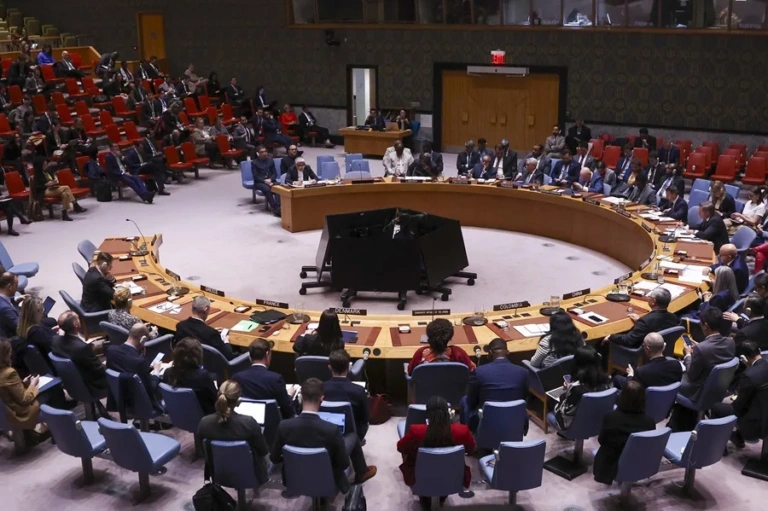
The withdrawal followed a diplomatic deadlock in the Security Council. Russia vetoed a U.S.-backed draft resolution that would have made autonomy under Moroccan sovereignty the sole basis for negotiations and removed the word “referendum” from the mission’s name.telesurtv+1
The U.S. proposal received 11 votes in favor, one against—Russia’s veto—and three abstentions from China, Pakistan, and Somalia. Russia argued that imposing unilateral solutions without thorough consultations with both parties would lead to a dead end.telesurtv
Russia had also proposed an alternative text that would have extended MINURSO until October 31, 2027, preserved its name, and reaffirmed earlier Security Council resolutions. That draft received only three votes in favor and did not reach the nine votes required for adoption.telesurtv
Because neither proposal passed, the mission’s mandate expired on Saturday, triggering the formal liquidation process.telesurtv+1
Polisario Welcomes the Veto
The Polisario Front welcomed Russia’s veto, saying it stopped a “deeply dangerous” U.S. course of action that risked legitimizing Moroccan occupation at the expense of Sahrawi self-determination.telesurtv
Polisario accused the U.S. delegation of presenting a biased draft that sought to eliminate the popular consultation originally envisioned in the peace process. The movement argues that the U.S. text would have reduced the space for other options under the Sahrawi people’s right to self-determination.telesurtv+1
After the vote, hundreds of Sahrawis demonstrated in the Tindouf refugee camps in Algeria, carrying flags of the Sahrawi Arab Democratic Republic and celebrating what they called a historic defeat for Morocco and its allies.telesurtv
Polisario’s representative at the UN, Sidi Mohamed Omar, said the U.S. draft failed to address the fundamental concerns of the Sahrawi people and represented a dangerous departure from international law and the decolonization framework.telesurtv
United Nations – Decolonization
Morocco Prepares an Orderly Exit
Moroccan authorities said they would guarantee the technical conditions for an “exemplary” departure of all UN monitoring personnel. The Moroccan Royal Cabinet said the mission’s personnel, vehicles, equipment, and symbols should leave the kingdom’s southern provinces in the coming days.telesurtv+1
Morocco views the non-renewal of MINURSO’s mandate as an important step toward closing the Western Sahara question at the United Nations. Rabat supports an autonomy plan under Moroccan sovereignty, a position backed by the United States and France.telesurtv
However, international analysts warn that the loss of on-the-ground monitoring leaves civilians more exposed and makes it harder to verify possible violations of the cease-fire that has been fragile since hostilities resumed.telesurtv
What MINURSO’s End Means
MINURSO was created in 1991 to organize a referendum in which Sahrawis would choose between independence and integration with Morocco. The vote never took place amid disputes over voter eligibility and repeated political obstacles.telesurtv
The mission’s departure removes the main international mechanism for monitoring the military situation in Western Sahara. It also ends a visible UN presence in a territory where Morocco controls roughly 70 percent of the land and the Polisario Front administers the remaining 30 percent east of the 2,700-kilometer sand wall known as the “berm.”telesurtv
The UN Secretariat said it will keep diplomatic channels open. But the end of the mission means that any future settlement will likely require a new multilateral mediation framework outside the departing military structure.telesurtv
Geopolitical Context
The Western Sahara dispute remains one of Africa’s longest-running territorial conflicts. Spain withdrew from the former colony in 1975, after which Morocco and Mauritania moved into the territory; Morocco later retained control over most of it, while Polisario continued its independence campaign.telesurtv
The conflict has broader implications for North Africa, the Sahel, and European security. Western Sahara borders Algeria and Mauritania, and renewed fighting could destabilize trade routes, refugee camps, and regional cooperation across the Maghreb.telesurtv+1
The U.S.-Russia confrontation in the Security Council also reflects a wider contest over the rules of international order. Washington sought to institutionalize Moroccan autonomy as the basis for peace, while Moscow and Polisario argued that the proposal predetermined the outcome and undermined self-determination.telesurtv+1
The MINURSO withdrawal leaves the territory without a UN military observer presence for the first time since 1991. That vacuum increases the risk of miscalculation between Moroccan forces and Polisario units, particularly in border areas where cease-fire violations have already been reported.telesurtv
International Court of Justice
A Fragile Path Ahead
The UN says its political mediation will continue, but the end of MINURSO removes the operational foundation on which past negotiations relied. The immediate challenge is to prevent the diplomatic failure from becoming a military escalation.telesurtv
For Sahrawi refugees in Tindouf, the closure of the mission deepens uncertainty after decades in displacement. For Morocco, it represents an opportunity to consolidate its autonomy proposal; for Polisario, it reinforces the argument that self-determination remains the central unresolved issue.telesurtv+1
The next phase will depend on whether regional powers and the wider international community can build a new mediation process. Without one, the Western Sahara conflict risks entering a more dangerous period with no peacekeeping presence, no agreed negotiating framework, and no clear path to a referendum.telesurtv+1
From teleSUR English via This RSS Feed.