

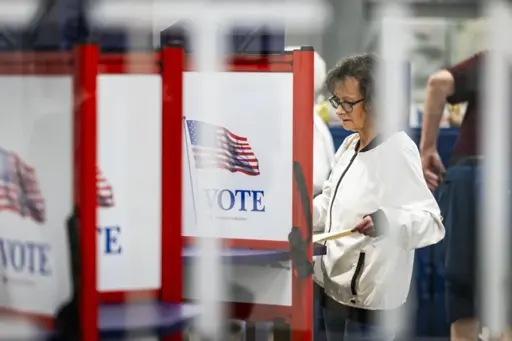
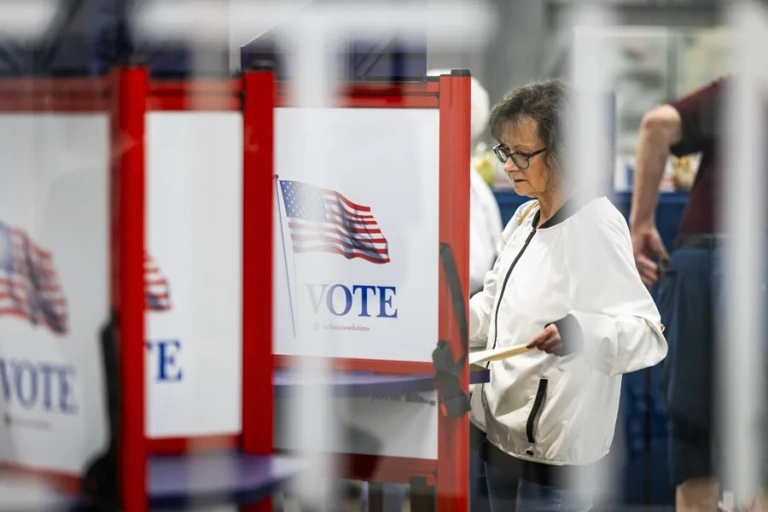
Latino voter mobilization is surging in Texas as rising living costs and deportations drive record turnout ahead of the U.S. midterms.
Related: Mexico Rejects Texas Land Claim on 9 Rio Bravo Islands
Latino Voter Mobilization: Cost of Living Fuels Record Texas Turnout
A surge in Latino voter mobilization is challenging decades of conservative dominance in Texas ahead of the November 3 U.S. midterm elections. Union leaders say rising living costs and fear created by immigration enforcement operations are pushing Hispanic, Black, and Asian working-class communities to vote in unusually high numbers.
Elsa Flores, president of the Service Employees International Union in Houston, said anger over the cost of food, fuel, and medical care has united working communities against current federal policies. She said those pressures, together with deportation operations, are accelerating Latino political participation across the state.[telesurtv]
Labor organizations argue that intensified raids by U.S. Immigration and Customs Enforcement (ICE) in multicultural neighborhoods are creating daily fear and harming local economies. Activists and labor-rights advocates say official persecution is turning anxiety into a decisive form of civic resistance at the ballot box.[telesurtv]
Why Texas Is Now Contested
Hispanic residents represent about 40 percent of Texas’s population, according to U.S. Census data. That demographic change has made the state a contested midterm battleground and weakened the assumption that conservative control is permanent.[telesurtv]
The governor’s race has become a central test of that shift. Democratic candidate Gina Hinojosa is challenging Republican Governor Greg Abbott and seeking to become Texas’s first Latina governor.[telesurtv]
Local analysts say young U.S.-born Latino citizens are voting in part to protect immigrant relatives and reverse federal immigration policies. For many families, the election is not an abstract political debate but a direct question of family safety and economic survival.[telesurtv]
Unions Organize First-Time Voters
The Houston service workers’ union recently unveiled a memorial mural at its headquarters honoring immigrants who died during immigration operations and highlighting community resistance. The initiative reflects coordination among teachers’ unions, communications workers, and hospitality employees.[telesurtv]
Their common objective is to register and mobilize first-time voters throughout Texas. Organizers are presenting the election as a fight over wages, health care, housing, and the right of immigrant families to live without fear.[telesurtv]
Union leaders say the same dynamic is emerging in other traditionally Republican states, including North Carolina, Ohio, Kansas, and Florida. They argue that growing participation by working-class minorities could reshape the national electoral map.[telesurtv]
External link: Service Employees International Union
Latino Voter Mobilization and Record Turnout
The mobilization is already visible in early-voting data. More than 51 million Americans had cast early ballots nationwide by Saturday, according to the University of Florida Election Lab, surpassing the previous midterm early-voting record of 45.9 million set in 2022.[telesurtv]
Voto Latino reported that more than 5.2 million Hispanic voters had voted early, an increase of 80 percent compared with 2022. Organization president María Teresa Kumar called the increase “the tsunami” the group had predicted.[telesurtv]
“We are not seeing a trickle,” Kumar said. “Latino voters are turning out early because they know exactly what is at stake: it is not an abstract debate, it is absolutely personal.”[telesurtv]
In Texas, more than 6.3 million people had voted by October 28, compared with 4.2 million at the same point four years earlier. Election Lab and Associated Press monitoring found especially strong early-voting increases in competitive Senate states, including Texas, Alaska, Iowa, Kansas, Maine, Michigan, and Ohio.[telesurtv]
External link: U.S. Election Assistance Commission
Cost of Living Becomes the Decisive Issue
The economy has become the central issue for many voters. teleSUR reported that U.S. inflation reached 3.7 percent year over year in September, with a 0.6 percent monthly increase driven largely by higher energy prices.[telesurtv]
For working-class Latino households, inflation compounds the uncertainty created by workplace raids, deportations, and reduced access to public services. Union leaders argue that the combination has turned economic hardship into political motivation.[telesurtv][telesurtv]
The 2026 midterms will determine all 435 seats in the House of Representatives, 35 of 100 Senate seats, and 36 governorships. The results will shape whether President Donald Trump’s second-term agenda faces a stronger legislative check.[telesurtv]
A National Political Realignment
Union leaders believe the Texas phenomenon reflects a broader structural shift in U.S. electoral politics. Rising participation by Latino, Black, Asian, and other working-class voters could alter the composition of Congress and state governments across the country.[telesurtv]
The pattern is especially consequential in states with large immigrant communities and competitive statewide races. In Texas, the Senate contest pits progressive Democrat James Talarico against Trump ally and state Attorney General Ken Paxton.[telesurtv]
Similar dynamics are developing in North Carolina, Ohio, Kansas, and Florida, where organizers report growing engagement among minority and working-class voters. The outcome could influence immigration policy, labor rights, and economic policy at both the federal and state levels.[telesurtv][telesurtv]
Geopolitical Context
The rise in Latino voter mobilization has implications beyond Texas. It reflects a broader struggle over the political direction of the United States at a time when immigration enforcement, inflation, and foreign policy have become closely connected in public debate.
The Trump administration’s immigration crackdown has become a major mobilizing issue for Latino communities. teleSUR reported that Trump threatened to send ICE to polling places, even as Hispanic voters turned out in record numbers in opposition to mass deportations.[telesurtv]
Internationally, the election will influence U.S. policy toward Latin America, trade, migration, and regional security. A Congress more responsive to Latino and working-class voters could pressure the administration to reconsider its approach to deportation, border enforcement, and economic policy affecting countries across the hemisphere.[telesurtv][telesurtv]
For political parties, the central lesson is that demographic change is now an immediate electoral force. The growing political weight of Latino communities is challenging long-standing assumptions about Texas, the South, and the national balance of power.[telesurtv]
From teleSUR English via This RSS Feed.