

Public money pays for transmission lines, ports, and guarantees, while private firms collect profits for decades. The public absorbs the risk and the debt; the corporations keep the gains.
By Enteng Bautista
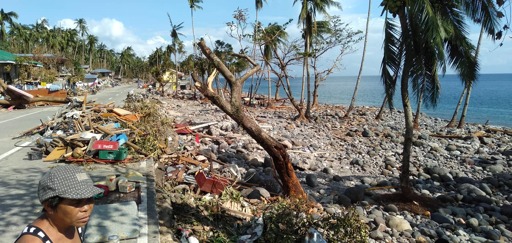
Every year, typhoons, floods, and landslides batter the Philippines, and every year the same story follows: the country is among the most climate-vulnerable in the world. In recent years, the Marcos Jr. administration’s answer is to borrow from private banks and international financing institutions (IFIs) such as the World Bank and the International Monetary Fund (IMF-WB).
The Philippines contributes very little to the greenhouse gases warming the planet, yet we are forced to take on debt to address a crisis we did not create. The IMF-WB has helped imperialist countries, primarily the United States, shape our economy around debt repayment, raw-material exports, and foreign control. For more than half a century, their intervention has driven the depletion of our natural resources, widespread poverty, and environmental destruction. A real alternative exists, and it begins with cutting our financial dependence on these institutions and breaking US imperialist control over our country.
How the debt trap was built
The Philippines was among the earliest testing grounds for structural adjustment: World Bank loans in 1980 and 1987, and 23 IMF programs between 1962 and 2000. From Marcos Sr. in the 1970s to Marcos Jr. today, the conditionalities of this debt trap have been implemented. Key measures included:
World Bank structural adjustment loans (1980–1987): tariff cuts, import liberalization, and a push toward export-oriented industry.
-
IMF programs (1980s): peso devaluation and floating, austerity, and prioritizing debt service. Automatic appropriation for debt payments dates back to Marcos-era decrees.
-
Privatization: the Asset Privatization Trust (1986), the Manila water concessions (1997), and the power sector under Electric Power Industry Reform Act (EPIRA) (2001).
-
Deregulation: Oil industry deregulation (1996–1998) and the Mining Act of 1995.
-
Investment liberalization: the Foreign Investments Act (1991) and the Build-Operate-Transfer law (1990).
-
Tax reforms: the Value-Added Tax (VAT) (1988) and its 2005 expansion, both pushed by IMF programs.
The script was consistent: lower or eliminate taxes on foreign and big firms, open our markets to imports and investment, privatize public services, cut public spending, and expand raw-material exports like minerals. The result was an economy kept agrarian, underdeveloped, and reliant on foreign capital.
Also linked to foreign debt is the devaluation of peso which made the situation worse. When the peso drops, our debt in foreign currency increases. To earn dollars, we must export more timber, minerals, and agricultural products, and to entice foreign investment, wages and labor rights must be suppressed. The burden has fallen hardest on landless farmers, fishers pushed out by commercial fleets, upland Indigenous communities, and low-wage workers who keep losing their livelihoods.
The Bataan Nuclear Power Plant shows how foreign debt burdens the people twice. Built under Marcos for roughly $2.3 billion, it never produced a single watt of electricity, yet Filipinos paid for it for decades. When the debt crisis hit in the 1980s, the government automatically allocated its budget to debt repayment while cutting funds for health and education.
Then came the Mining Act of 1995, which allowed 100-percent foreign-owned companies to hold large mining agreements. World Bank documents of the period treated limits on foreign ownership as an obstacle to be removed. Our minerals were extracted and shipped abroad, leaving communities with lost forests, poisoned rivers and seas, mine waste, militarization, and displacement. We never built the heavy industry that could have turned our own minerals into goods and jobs.
Greenwashing the debt
Today, the same institutions tell vulnerable countries they must fund climate resilience and clean energy. Since 2021, we have borrowed from the World Bank through disaster loans, policy loans, a community-resilience loan, and energy-transition loans. That adds up to more than $4 billion in under six years, every centavo to be repaid. Civil society research shows that in 2024, nearly 99 percent of climate- and disaster-related assistance came as loans, not grants. The climate crisis and the vulnerability of poor countries have become a business opportunity.
The energy-transition loans came as policy loans, released only when the government enacts reforms: opening renewables to full foreign ownership, creating a renewable energy market, preparing offshore wind auctions, expanding retail competition, and “de-risking” projects for private developers. Public money pays for transmission lines, ports, and guarantees, while private firms collect profits for decades. The public absorbs the risk and the debt; the corporations keep the gains.
We have seen this before. Privatization and deregulation turned electricity into a commodity, and consumers now pay for the profits of giants like Meralco. Applying the same logic to renewables does not make it just. A solar farm can take farmland, an offshore wind zone can lock fishers out of their own waters, and a transmission corridor can uproot a community. Clean energy controlled by corporations is still corporate control, bringing more environmental destruction and higher electricity rates.
The rush for critical minerals like nickel, copper, and cobalt is called “green extractivism”: the same old plunder under a new label. If foreign corporations still own the deposits, the technology, and the market, it is not a transition. Marcos Jr. recently signed an onerous Memorandum of Understanding with US President Donald Trump giving the US and its companies preference over our critical minerals. To hasten the process, he issued Executive Order No. 122, establishing a National Policy Framework for Developing the Critical Minerals Industry and reorganizing the Mining Industry Coordinating Council (MICC) to speed up the extraction, processing, and export of raw minerals.
Corruption is the other face of this dependence. Hundreds of billions of pesos borrowed for flood control, dredging, reforestation, climate mitigation, and disaster prevention often end up in the pockets of vulture officials in local governments, Congress, the Senate, and Malacañang. A government that serves foreign creditors and plunderers at the same time has no reason to serve its people.
What should we do?
I am not against climate action. We urgently need adaptation, renewable energy, ecosystem restoration, and an end to fossil-fuel dependence. But it must be under our own control, which I believe means:
-
Reversing neoliberal policies: nationalizing basic industries like mining, oil, and power, and repealing the Mining Act of 1995 and the EPIRA Law.
-
Ending automatic debt appropriations: redirecting most debt-service funds to public services and facilities.
-
Repudiating odious debts: refusing to repay loans tied to failed or corrupt projects like flood control schemes and megadams.
-
Climate reparations and disaster compensation, not new debt: loss-and-damage funds as grants, additional to existing aid, reaching communities directly with no privatization strings.
-
Domestic financing: funding adaptation by taxing fossil-fuel and mining companies, windfall profits, and extreme wealth, not by squeezing the poor.
-
Democratic energy control: rebuilding the government’s capacity to generate, store, and distribute renewable power, strengthening electric cooperatives, prioritizing rooftop and community solar and microgrids, and guaranteeing lifeline electricity.
-
Fossil-fuel workers must be assured income, retraining, and decent jobs; a just transition cannot mean replacing regular workers with contractual ones.
These reforms are worth fighting for, but the long-lasting solution lies deeper. We need national industrialization alongside genuine land reform, and ultimately the overturning of this rotten, bankrupt semi-colonial and semi-feudal society. Only then can real environmental rehabilitation begin, with sound use of our natural resources in service of our people’s needs.
The future we must fight for is free from imperialist dictates and plunder. Down with US imperialism!
The post Debt, plunder and disaster appeared first on Bulatlat.
From Bulatlat via This RSS Feed.